• Welcome to Photrio!
    Registration is fast and free. Join today to unlock search, see fewer ads, and access all forum features.
    Click here to sign up

learning zone system (books,tips, suggestions)

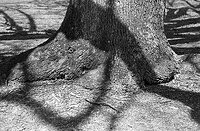
Tree with Big Shadows

Tree with Big Shadows

  • 2
  • 0
  • 59
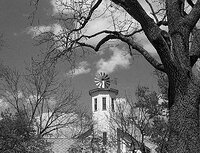
Everal Barn

A
Everal Barn

  • 3
  • 1
  • 68

Forum statistics

Threads
203,455
Messages
2,855,008
Members
101,851
Latest member
Si_Voltage
Recent bookmarks
0

menelajas

Member
Allowing Ads
Joined
Jun 13, 2008
Messages
26
Format
Medium Format
Hello,

I'm studding photography and for this semester I decided write term paper on Zone System (Not simplified but full XII system). I already have LF (4x5), Minolta one degree spotmeter, Foma film sheet...

The problem is that I'm in Lithuania, so I have to buy books from ebay or amazon. It would be great if you could suggest some books (tips) about zone system.

Maybe somebody have old books, which you are not using any more. I would buy it.

Is it worth buying scale or I can easily make it?
 
There have been many books written on the Zone System. Sadly, many give fals informaton.
The most accurate were thise written by Ansel Adams. Either the Old series "The Negative", or the series from the 1980's , "The Negative" are the most complete. The newer edition is easier to understand.
Also the books by Minor White -"Zone System Manual", or "Te New Zone SystemManual" are excellent.
The simplest explanation I have ever seen is in "Fred Archer on Portraiture". Fred was the collaborator with Ansel in the formation of the Zone System".
If you can luck into "The Zone Systemizer" by Zakia and Todd, you will be extremely lucky as it is the quickest accurate introduction into full use of The Zone System.

I just gave away copies of each of these books to students in an attempt to reduce my library size. IfIstil had an extra I would be happy to send it to you.

As for the scale, make it. It is more economical to do so with 35mm film. Aim at a white wall or card. Unfocus your camera so that there will be no detail and make exposures one f-stop apart. Best to make 12-14 exposures since I doubt that you have established a good working EI and development time. Develop and print the strip.Locate the 10 successive images counting from paper white toward black. This is a basic Zone scale. It may not be highly accurate at this time,but it is all you need.

Good luck
 
Thanks for informative respond:smile:.
 
i will check at the lab tomorrow for a copy of
The Zone Systemizer , i think i have one there, i took a bunch of books into the school to give to my students and i will see if anyone has chosen that book.
 
The Zone IV Workshop by Fred Picker is a good way to get your feet wet.
 
About 10 pages in "The Negative" will probably teach you all you need to know to "get it".
 
:smile: Great link bdial I'll definitely use it.
 
I would definitely get AA's The Negative in addition to any other source you may get. It is not difficult to understand as many will tell you it is. In fact, I found concepts more clearly described in "The Negative" and more easily understood than the same concepts being described in other sources.
 
The Zone System is really fairly simple to understand. The difficulty is the comprehensiveness the approach requires. Like everyone else, I would recommend Ansel Adams' "The Negative" as a great way to start.

Since you mention that you are writing a term paper on the subject, I'd assume that you would want to read everything that you could get your hands on in order to have a wide range of source material to draw upon.

Tim
 
The Zone System is really fairly simple to understand. The difficulty is the comprehensiveness the approach requires. Like everyone else, I would recommend Ansel Adams' "The Negative" as a great way to start. Tim

This is going to read long-ish, but I'll do it.
Tim, I do agree! A studious and enquiring mind is a valuable addition to the approach described by Adams in Ch.4, The Zone System (50 pages of juicy reading) in The Negative. Adams is at pains to explain the process carefully, but it can still come across as a bit confounding, and that's where practice, practice, comes in. Study it in a quiet place free from distractions (no dogs, kids, wife, computers, etc.!!:smile:

Now, I am expecting a few raised eyebrows with this little revelation: I actually dabble in a compacted Zone System with a brute-force Canon EOS 1N (set to fine spot meter), Fuji Velvia 100F and my 'magic wand': a Sekonic L758 1 deg. spot/incident. And what has that achieved? In addition to some perplexing errors, there have been numerous very revealing tid-bits about how the camera's meter (spot, fine spot mostly or CWA, but NOT evaluative) observes the scene as opposed to employing the Sekonic and a smaller-range Zone System. Incident readings in difficult light are most educational. With trannnies, the ZS is definitely narrower (necessarily so; tranny film doesn't have the generous latitude of B&W print film). I will point out that it is a bold leap for analogous photographers to stridently ignore the camera (it still is for me) and go by the Sekonic! I am not afraid to assert authority over a well-credentialled camera! :D

Most of my experiments to this time have taken place in diffuse light with some doubtful scenes (bright hazy to bright point light with highlights and shadows and spectral highs necessitating a "pull-the-scene-apart-bit-by-bit" approach with the Sekonic. As Adams himself points out, point light (i.e. bright sunny day, no clouds) brings up more complications and that is where individual development of negatives, as in LF, can help—to a point.

The Negative is a beaut book (I bought it from Amazon.com, ex USA saving $29.00 of RRP in Australia!!). I read chapter and verse over and over and there are tags on pages, additional scribbled notes, warnings, etc., etc. It joins me on camping and field trips, sitting on the front seat where I can refer to a section quickly.

 
I would recommend picking up a copy of "Using the View Camera" by Steve Simmons. He has a chapter dedicated to the zone system and it is what I used to refer to alot. He does a good job of breaking it down into a way I understood.

I have read the "The Negative" a lot and find that Steve Simmons book was more clear on applying zone system principles to the field and dark room.

Plus it will help you with your 4x5 system as well!!
 
Hello Jim,

If you can luck into "The Zone Systemizer" by Zakia and Todd, you will be extremely lucky as it is the quickest accurate introduction into full use of The Zone System.

I have been looking for that book, but I have only been able to find "The Zone Systemizer" by Zakia and Dowdell. Is that a different book?

Thanks in advance.
 
Photrio.com contains affiliate links to products. We may receive a commission for purchases made through these links.
To read our full affiliate disclosure statement please click Here.

PHOTRIO PARTNERS EQUALLY FUNDING OUR COMMUNITY:


Ilford ADOX Freestyle Photographic Stearman Press Weldon Color Lab Blue Moon Camera & Machine
Top Bottom