
• Welcome to Photrio!
    Registration is fast and free. Join today to unlock search, see fewer ads, and access all forum features.
    Click here to sign up

Kodak TMAX. My love and sorrow

Millers Lane

A
Millers Lane

  • 0
  • 0
  • 11
Friends

D
Friends

  • 0
  • 0
  • 31

Recent Classifieds

Forum statistics

Threads
202,891
Messages
2,847,117
Members
101,531
Latest member
F2_User
Recent bookmarks
0

romunas

Member
Allowing Ads
Joined
Aug 24, 2009
Messages
61
Location
Ukraine
Format
Medium Format
Hi everybody,

I have been developing KODAK TMAX 400 in D76 for some time already. And I have permanent problem with this film.
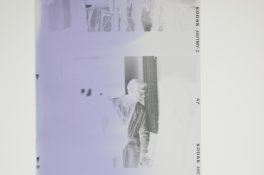
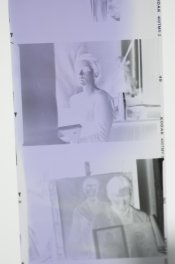
No matter how i developed this film, it always has a violet tint, but this tint appears in stains rather than evenly covering the film. I have used different types of fixers: acidic fixer, Ilford Rapid Fixer, Ilford Hypam fixer. But still have the problem. I have washed films for different amount of time and I have used Ilford washing technique. But still have the problem.

May be somebody knows how to develop TMAX and get the clear negatives?

This is the images of my problem.
haze-01.jpg
haze-02.jpg
 
Last edited by a moderator:
Fixer time to short or fixer exhausted.
 
hi

this might help

(there was a url link here which no longer exists)

have fuN !
john
 
I've been using TMax since the 90's and I learned early on that you need to over fix to clear the dye. The older tech bulletins also warned about early exhaustion of your fixer if you reuse it like I do. I usually fix for 6 minutes in fresh fixer and then give it an extra minute in the hypo as well. Seems to clear well with that.
 
Just four minutes?
Personally I never fix any film shorter than 5 minutes -- 7 for t-grained films. Extend your times and watch your results. You really can't overfix.

And Fluid, what do you mean "in the hypo as well"? Hypo is fixer. Do you mean hypo-clear/washaid?
 
Thank you! What should I do with films I already developed? Should I refix them?
And how to calculate the time for fixing TMAX? Today I have fixed one roll for 4 minutes.

From Kodak

Your fixer will be exhausted more rapidly with these films than with other films. If your negatives show a magenta (pink) stain after fixing, your fixer may be near exhaustion, or you may not have used a long enough time. If the stain is slight, it will not affect image stability, negative contrast, or printing times. You can remove a slight pink stain with KODAK Hypo Clearing Agent. However, if the stain is pronounced and irregular over the film surface, refix the film in fresh fixer.
 
I use alkaline TF4 fixer and even the last bit of magenta stain washes out within a couple of minutes after fixing.
 
I fix for 5 minutes then dump the fixer back into the jug. Then I fix again for 2 minutes or so. Always get better results that way.


Sent with typotalk
 
4 minutes is way too short, especially for TMax films. With fresh fixer, I usually fix for 6-7 minutes, then increase the times as additional rolls are processed. Better to fix longer than shorter.

As others have said here (and Kodak's documentation) TMax exhausts fixer quicker than other films. I tend to process fewer films per batch of fixer than with other films.
 
Have always used to fix the double of the time required to "clear" the film, and 2Âş fixing bath with the half of the time from the previous. When the fixer takes the double of the time compared to fresh, it's exhausted and replaced by fixer #2, and a fresh new fixer replaces it.

Cheers,

Renato
 
Have always used to fix the double of the time required to "clear" the film, and 2Âş fixing bath with the half of the time from the previous. When the fixer takes the double of the time compared to fresh, it's exhausted and replaced by fixer #2, and a fresh new fixer replaces it.

Cheers,

Renato

+1
always a good way to fix film !
#1 does most of the heavy lifting and #2 cleans-up ..
 
Refix the films and go longer.

You may want to consider a two bath fixer (search the forum for details). I test the first bath before processing with a piece of fully exposed but undeveloped film - when it takes longer than 1 minute to completely clear the film so you can see through it, I discard it and replace it with the second bath. Mix new fixer to then use as the second bath.
 
Thank you all! You are really cool :smile: I have solved myproblem. I have refixed my last film andafter washing it's clear! Sothe problem was too short fixing time. Also I think I should use Kodak fixer for Kodak films. Thank you again!

 
Normal film: clearing time x 2 = fixing time.
Tubular grain film: clearing time x 3 = fixing time. (TMax, Ilford Delta, Acros)
 
Thank you all! You are really cool :smile: I have solved myproblem. I have refixed my last film andafter washing it's clear! Sothe problem was too short fixing time. Also I think I should use Kodak fixer for Kodak films. Thank you again!

Great!
You can also use Fomafix, or Tetenal Superfix, or Adofix or Ilford Rapid Fixer. All made a lot closer to you.
In other words, you don't need to use a particular fixer, just the cheapest you can get, which I understand might be difficult where you are.
Enjoy your pics!
 
Normal film: clearing time x 2 = fixing time.
Tubular grain film: clearing time x 3 = fixing time. (TMax, Ilford Delta, Acros)

That's about it, except that from the films you mention only TMax is a T-grain film.
Acros and Fomapan 200 which you forgot to mention don't have a specific name, only that they are mixed technology films.
The Ilford Delta films use CCG technology and are not T-grain and certainly are not Koda films.
 
Refix the films and go longer.

You may want to consider a two bath fixer (search the forum for details). I test the first bath before processing with a piece of fully exposed but undeveloped film - when it takes longer than 1 minute to completely clear the film so you can see through it, I discard it and replace it with the second bath. Mix new fixer to then use as the second bath.

this isn't exactly correct.

in order to tell if the fixer is too saturated with silver to be of any use
you do a the test as you mentioned with a piece of film in the light ...
you see how long it takes FRESH FIXER THAT IS UNUSED
to clear the clipping of film to clear base ... double that time for fixing of film
( if it takes 45 seconds then fix the film for 90 seconds )
you only need to discard ( hopefully recycle, desilver, take to hazmat &c )
when it ends up taking 2x that original clear time, not 1 mins
( so 45 seconds first .. it would be 90 seconds )
[ always use the same film for your test because different films have different clear times ]

hypo (sodium thiosulfate ) takes longer to clear and fix then does speed/rapid ( ammonium thiosulfate )

good luck !
john
 
I always felt that the double the time to clear film is rather ambiguous. There's a much stricter variation of it, which gives a part of the film a head-start. So, take a piece of your film and put a drop of your fixer on it. Leave it there for 30''. It should start creating a clear spot. Drop this film in your fixer and count the time needed for the spot to disappear, while stirring. Double, or triple that time and you have your fixing time. You'll notice that its quite longer than you may have originally thought.
 
I always felt that the double the time to clear film is rather ambiguous. There's a much stricter variation of it, which gives a part of the film a head-start. So, take a piece of your film and put a drop of your fixer on it. Leave it there for 30''. It should start creating a clear spot. Drop this film in your fixer and count the time needed for the spot to disappear, while stirring. Double, or triple that time and you have your fixing time. You'll notice that its quite longer than you may have originally thought.

I may as well post this link to an article I put together....

(there was a url link here which no longer exists)
 
Photrio.com contains affiliate links to products. We may receive a commission for purchases made through these links.
To read our full affiliate disclosure statement please click Here.

PHOTRIO PARTNERS EQUALLY FUNDING OUR COMMUNITY:


Ilford ADOX Freestyle Photographic Stearman Press Weldon Color Lab Blue Moon Camera & Machine
Top Bottom