
• Welcome to Photrio!
    Registration is fast and free. Join today to unlock search, see fewer ads, and access all forum features.
    Click here to sign up

Kodak Hard Rubber Tanks (4x5)

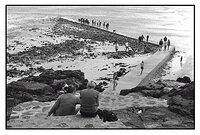
St Ives - UK

A
St Ives - UK

  • 0
  • 0
  • 12
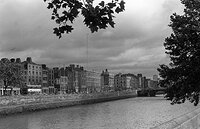
Across the Liffey

H
Across the Liffey

  • Tel
  • Feb 25, 2026
  • 1
  • 2
  • 22

Forum statistics

Threads
202,436
Messages
2,840,816
Members
101,332
Latest member
Paul William
Recent bookmarks
0

bobwysiwyg

Subscriber
Allowing Ads
Joined
Mar 28, 2008
Messages
1,627
Location
Ann Arbor, M
Format
Multi Format
Having only recently gotten my feet wet in LF with a used 4x5, I went with a Combi tank for development. Seems to work fine, or it did for me. As an aside, however, today I was given two, unused Kodak 4x5 hard rubber tanks. One is still in the original box and sealed. It's funny what shows up on your doorstep when folks hear you are "back" into film photography.

I'm curious as to how one used them. They have "floating lids?" It would seem, whether with the lid or without, developing with them is strictly a total darkness function given the gap around the lid edge?? Can anyone enlighten me on how they were used? Thanks.
 
Total darkness only, sorry. I've have three, and wish that I had another one (or two), but that's neither here nor there. I prefer them to trays when I'm developing a large number of sheets, but prefer trays for developing 8 or fewer sheets due to the volume required. The floating lids work fairly well if you wish to leave the chemicals for an extended period of time, but I would not recommend storing them in the tanks using the lids - they're more of a short term thing as I understand it, at least for most developers.

- Randy
 
You use stainless steel hangers that could hold 2 sheets of 4x5 film (if lucky) or 1 sheet if you are like me.

The hangers were suspended in the tank and the floating lids were only used when the tanks were filled and sitting idle for a day or two. You used a replenisher with this type of system, or you dumped after each use wich wasted a lot of developer.

PE
 
Last edited by a moderator:
Use a wood dowel with mini spring loaded clothes pins attached at the right height. Kodak mini clips with the rounded ends fit over a dowel or SS rod and do this job just as designed.

They work just like hangers.

PE
 
You use stainless steel hangers that could hold 2 sheets of 4x5 film (if lucky) or 1 sheet if you are like me.
PE

Do those Kodak hangers work w 2 sheets (back to back)??
I'd never thought of doing that but obviously it saves time if it works. I'm going to try it anyway but if there are any tricks to it please share!
 
Do those Kodak hangers work w 2 sheets (back to back)??
I'd never thought of doing that but obviously it saves time if it works. I'm going to try it anyway but if there are any tricks to it please share!

They do work, but you gotta be good or the backing materials don't wash off properly and sheets can stick together. If you separate them properly during the prewet, things work out ok.

Also, developer tends to collect in the buckle between sheet backs and therefore carryover is higher.

PE
 
Stainless steel film hangers for 4x5 were made in single sheet format, to fit a 4x5 hard rubber tank, and a 4-sheet format to work in the common 3.5 gallon Kodak, Cesco and other brands of tanks designed to work with 8x10. In fact if you have the 3.5 gallon tanks, with appropriate film hangers you can process 8x10, 5x7 and 4x5 sheets (4x5 on 4-up hangers). 5x7 film hangers were made in singles and doubles.
 
I don't understand why some people shy away from methods of processing film that require a few minutes of darkness. Most darkroom-style timers have glow-in-the-dark faces so developing times can be readily observed. For practical purposes, the available "daylight" tanks for 4x5 would be very difficult to load in a changing bag anyway, so you are going to have some "dark" time regardless of whether you process in a "daylight" tank with the lid on, or in a so-called "deep" tank with about 10 minutes more dark time. You can turn on the lights after the film has been in the fix for 1 minute, you know.
 
I like tanks and have complete sets for developing 2x3 to 8x10. It takes a little time to collect the hangers and you need extra space in the darkroom but they last a lifetime and work very well.
 
I don't understand why some people shy away from methods of processing film that require a few minutes of darkness.

Agreed.

Personally, I've reached the point where having the lights on is often only a minor convenience anyway. I know where every single thing is and exactly where to reach for it in the darkness, and where to put it back when I'm done.

I've even been known to process roll film in SS daylight tanks, but using timer beeps in total darkness, just for the quiet solitude. Or for the ability to develop different film types for different times by pulling the topmost reels earlier than the rest.

Ken
 
Many dislike sheetfilm hangers, Combi tanks, and even the smaller (non-expert) Jobo tanks due to the problems with development unevenness. Before you say "that doesn't happen to me" - get a good densitometer and do a little testing. Look for areas that should be fairly even - eg edges of skies or calm water.

The only even development is in trays (that means shuffling in the dark) or Jobo Expert tanks(that means loading in the dark) in either CPP2, ATL-x, or on the rollers of your choosing.

Forgot to mention that the sheet film hangers worked will with a nitrogen burst agitation. So if you still want to use sheet film hangers, build one of these ;-)
 
Last edited by a moderator:
I use tanks and I have tested my film with a densitometer. Good developement is possible from open tanks. It takes more than just lifting the hangers once in a while but it can be done.
 
I don't understand why some people shy away from methods of processing film that require a few minutes of darkness.

In my case, it is not a matter of shying away. Setting up an even reasonably satisfactory darkroom area won't likely happen until this fall, but I would still like to get some practice time in on my recently acquired 4x5.
 
I use tanks and I have tested my film with a densitometer. Good developement is possible from open tanks. It takes more than just lifting the hangers once in a while but it can be done.

Absolutely, and different films "may" require different styles of agitation of the hangers to get even results. I use a water presoak, and this seems to make a big difference also. I get even results with b/w negs on hangers without using Nitrogen agitation, even though I have and use Nitrogen burst for my color lines..but even Nitrogen burst has to be combined with manual agitation. I can process about 22 sheets of 5x7 b/w film on 11 double hangers at once and get good even results..using a water presoak and manual agitation only (no Nitrogen).
 
I found different films do require different styles in tanks for best results. For example I am very rough with Plus-X and Tri-X in tanks to avoid uneven developement but the same handeling of T-Max will cause streaking.
 
How odd. I use a prewet, but I use the normal Kodak method for all films and they come out just fine. Of course, I have not done any in a few years, but I don't think things have changed that much.

I have about 6 or more of these tanks and the Yankee tank with the light tight lid on it so you can process in the light.

PE
 
I have had some success, and just enough failures with hangers (with both Kodak 4x5 tanks and some larger 5x7's) to do all sheet film in trays now with continuous agitation, with great success. Most of my shooting has been with Trix, now the 320 stuff, 4x5.

My tank agitation method was (from the Army days):
2 min presoak
1 minute agitation - repeated lifts at 45 degrees, corner drain, each lift about 5 seconds, alternating direction.
then each 30 seconds two lifts, one each direction.
Hangers could be close enough to each other to touch, or spread a bit if not too many
Most negs were ok, but skies could be a problem, often enough that I threw up my hands and went to trays. (I also had surge issues with Pyrocat-MC)

PE - you mention the Kodak method. I did a search for it and found too many hits to run them down. What is it?
 
Same as yours above, but at the initial insertion, the hangers are lifted out and allowed to drop into the prewet a few times banging them as you go to dislodge bubbles on the surface of the film.

PE
 
Have you had success with TMX and TMY? They seemed far more prone to agitation issues, particularly through the edge holes in the hangers....
 
I have not done them in 4x5 yet although I have a 100 sheet box of TMX in the freezer right now. I have only done 35mm and 120 rolls. In fact, my last run of these, I ran them both at the same time and used D-76. I split the difference in development time, which was about 1/2 minute IIRC. I would have to look it up, but the prints looked fine.

Sorry, I just realized that the roll films were not TMX and TMY. My memory was jogged just after this post.

PE
 
Last edited by a moderator:
Hello
Not sure why people are getting so worked up about Kodak tanks. Also, why all the posts in the past tense? Three gallon tanks are, were, will be and remain a very practical way of processing sheet and roll film with a replenishable developer even if Kodak stopped making them years ago. (Others have since then.) Fine also for one shot. A 500ml bottle of Rodinal is perfect to make up a whole tank. Uneveness? Then practise your agitation technique perhaps combined with a pre wash tank. 18 rolls of 120 or 26 sheets of 5x4 or 13 sheets of 10x8 in one go. If you have the right cages, a combination of the above is possible. (Having said that, I still prefer to process 35mm in hand tanks to prevent surge marks.) If you are processing a few sheets or rolls here and there, they are not the most economical or the most practical, but for larger volumes, they really do work, and with clean s/s spirals, 120 film is very good edge to edge. Likewise for 5x4, but the agitation is very important.

Honest!
 
PS

Hello again
Having just read the oroiginal post, you really need tanks for dev, stop, fix and at least one wash tank. (Preferably two.) There should also be one other tank dedicated for wetting agent though it is possible to add it to the final wash. For small usuage, 3 gallon tanks are rather expensive and take up lots of room, but great if you have large batches. You can also find half size tanks which could be a good compromise. You could always convert your tanks, after a visit to the plumbers, to wash tanks for film.

Speaking of such things, I remember at college in the first term, we were showh how to process 5x4 in the Kodak tanks. One student who had missed the lesson, reckoned it must be a very similar method to processing roll film in a Paterson tank. (Lift the developing tank, agitate, tap the base etc.) Being a big strong lad, and using both hands, he treated the kodak tank in the same manner. There was a lot of noise; grunting, splashing and heaving coming from the process room. This method is not recommended!!!
 
Photrio.com contains affiliate links to products. We may receive a commission for purchases made through these links.
To read our full affiliate disclosure statement please click Here.

PHOTRIO PARTNERS EQUALLY FUNDING OUR COMMUNITY:


Ilford ADOX Freestyle Photographic Stearman Press Weldon Color Lab Blue Moon Camera & Machine
Top Bottom
