
• Welcome to Photrio!
    Registration is fast and free. Join today to unlock search, see fewer ads, and access all forum features.
    Click here to sign up

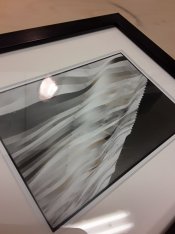
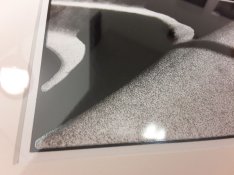
Is this de-silvering?

Recent Classifieds

Forum statistics

Threads
201,768
Messages
2,829,818
Members
100,935
Latest member
Fablesilence
Recent bookmarks
0

htil

Member
Allowing Ads
Joined
May 2, 2015
Messages
5
Location
Norway
Format
Multi Format
Hi folks,

I'm reading on this forum quite a while now, great source of knowlege. In one thread I found de-silvering with Rc-papers mentioned, but no more info about that. I think I have some cases of de-silvering going on but am not sure...

The thing is I have three framed Rc-prints showing some sort of degradation.
Around the edges of the black areas there is a silvery shine, at one of them this stuff seems to leech out into other parts of the photo and is turning brown-ish now. You have to look at them from an angle to see it well.
I framed them about two years ago.
Other unframed prints from the same pack of paper are perfectly fine. They are roughly the same age as the framed ones.

For smaller prints i use Rc paper 5x7 size from Foma. Fomaspeed fast grade "normal" glossy in this case.
The three are the only prints in this size I framed. Other framed prints on the same paper-type, just bigger, er fine.

My workflow for rc
Dev. 60 sec , in this case in Adox Neutol WA
Stop bath 15-20 sec
Fix 60 sec , Ilford rapid fixer
Wasch 10 min in slow running water

For framing I use archival materials for backing and mattes (cutting by my self), t-hinging with archival tape.
Doing this for all my prints, Rc and Fb.

So my question now is: What is this, and what is causing it? Bad fix (not fresh enough)? Bad wash? I don't get it, since this only happened to these three framed ones.

Hopefully one of you can help me to understand, and avoid this in the future.

Thanks

Heiko


IMG_20171203_182336_680.jpg IMG_20171203_182351_872.jpg IMG_20171203_182358_141.jpg IMG_20171203_182405_598.jpg IMG_20171203_182412_942.jpg
 

AgX

Member
Allowing Ads
Joined
Apr 5, 2007
Messages
29,972
Location
Germany
Format
Multi Format
There either still were or due to ambient effects orinigated silver-ions which diffused to the surface and got there reduced to form that silvery layer.
 

Bob Carnie

Subscriber
Allowing Ads
Joined
Apr 18, 2004
Messages
7,735
Location
toronto
Format
Med. Format RF
This is the common problem when putting RC prints behind glass in a frame. looks like de silvering to me...
 

AgX

Member
Allowing Ads
Joined
Apr 5, 2007
Messages
29,972
Location
Germany
Format
Multi Format
Reason likely is that the paper or even the baryta acts as sink for contaminants. In RC paper these are lacking respectively locked off.
 

Bob Carnie

Subscriber
Allowing Ads
Joined
Apr 18, 2004
Messages
7,735
Location
toronto
Format
Med. Format RF
Reason likely is that the paper or even the baryta acts as sink for contaminants. In RC paper these are lacking respectively locked off.
I think I agree with this.. within the frame there is no place for the contaminants to go where as the fibre paper may indeed soak it up... it has been noted that this de silvering of R C prints only seems to happen behind glass, but left in open will not.
 

AgX

Member
Allowing Ads
Joined
Apr 5, 2007
Messages
29,972
Location
Germany
Format
Multi Format
Reason likely is that the paper or even the baryta acts as sink for contaminants.
Not only for contaminants, also as sink for silver-ions.
One remedy could be using after standard processing Sistan or a similar bath that brings silver-ion scavengers into the emulsion.
 
OP
OP

htil

Member
Allowing Ads
Joined
May 2, 2015
Messages
5
Location
Norway
Format
Multi Format
Hmm, so to avoid this effect I guess I have to use fiber based paper only for framing.
If sistan could help, how about toning with selenium?
Either way, I think Rc goes only into the family album from now on.
Bit dissapointing though. I thought Rc came a long way now, seems not to be the case.

Thanks for the answers

Heiko
 

Bob Carnie

Subscriber
Allowing Ads
Joined
Apr 18, 2004
Messages
7,735
Location
toronto
Format
Med. Format RF
I stopped using RC in the late 80's because of this very effect. Most of the work I do is for framing so it was a easy choice for me.
 
OP
OP

htil

Member
Allowing Ads
Joined
May 2, 2015
Messages
5
Location
Norway
Format
Multi Format
Am ordering 5x7 fiber based paper now.
Will reprint and frame them.
 

Sirius Glass

Subscriber
Joined
Jan 18, 2007
Messages
50,814
Location
Southern California
Format
Multi Format
I use RC for proofs [mostly] and to do some experimenting with burning and dodging[sometimes] when I am making a large print. Once I have the technique I need I print it in fiber so it can be framed.
 

Bob Carnie

Subscriber
Allowing Ads
Joined
Apr 18, 2004
Messages
7,735
Location
toronto
Format
Med. Format RF
Am ordering 5x7 fiber based paper now.
Will reprint and frame them.
Good for you- increase your wash time a bit for your process.. I use 3 min dev- 30 sec Acid Stop- 2 min Rapid fix - second Rapid fix- slight wash- Selenium to taste- hypo clear five min- 40-1hour vertical wash.
 

MattKing

Moderator
Moderator
Joined
Apr 24, 2005
Messages
55,143
Location
Delta, BC Canada
Format
Medium Format
The upside of RC is that it is actually more resistant than fibre to some contaminants, and may withstand physical damage that fibre can't. So if you are going to put RC behind glass, make sure there is airflow.
 

Ian Grant

Subscriber
Allowing Ads
Joined
Aug 2, 2004
Messages
23,409
Location
West Midland
Format
Multi Format
It could be caused by poor fixing if you've exceeded the recommended capacity that would leave silver/thiosulphate he complexes in the emulsion.

I've had two framed RC B&W prints (not my own) on my walls since about 1990 and haven't seen this issue.

Ian
 

bsdunek

Member
Allowing Ads
Joined
Jul 27, 2006
Messages
1,611
Location
Michigan
Format
Multi Format
I think you're under fixing. I fix for at least two minutes in Rapid Fixer and wash for about five minutes. I've had similar problems with under fixing and washing.
 

Gerald C Koch

Member
Allowing Ads
Joined
Jul 12, 2010
Messages
8,131
Location
Southern USA
Format
Multi Format
The problem is caused by ozone reacting with the sizing (titanium dioxide), the plastic substrate and the silver image of the RC paper. Prints need to breath and 'hermetically' sealing them behind glass contributes to the problem. If you mount behind glass then leave the back open rather than sealed with tape and brown paper as is usual. Do not exhibit the prints is full sunlight which generates the ozone gas. Newer RC papers are formulated differently and do not present the problem.
 
Last edited:

Anon Ymous

Member
Allowing Ads
Joined
Feb 7, 2008
Messages
3,679
Location
Greece
Format
35mm
The only time I saw this happening to me was with some test strips. These had been fixed for less than the recommended time and rinsed briefly. The staining appeared within few months. Any other print I've made with RC paper, toned or not, framed, put in shoebox, whatever, hasn't shown any signs of deterioration. Considering your longish wash, perhaps fixing wasn't complete. Theoreticaly, 1' is enough, but this assumes reasonably fresh, not overworked fixer and a temperature of at least 20 degrees C. In any case, it's fairly easy to check for proper fixing using sepia, or selenium toner.
 

pentaxuser

Member
Joined
May 9, 2005
Messages
20,335
Location
Daventry, No
Format
35mm
. If you mount behind glass then leave the back open rather than sealed with tape and brown paper as is usual. Do not exhibit the prints is full sunlight which generates the ozone gas. Newer RC papers are formulated differently and do not present the problem.

Until I had seen the posts by Ian and Gerald I had got the impression from the posts until then that this was a problem that affected current RC papers. This may still be the case as we have opposing views but it would be nice to hear from the company that no doubt could enlighten us, namely Ilford.

If RC paper still suffers inherently from this problem when behind glass then it reduces its versatility and I'd have expected Ilford to have put out a warning and/or offered, if not a solution, then at least a way of mitigating the problem.

Of course until we hear from the paper producers we remain unsure which "side" is right

pentaxuser
 

AgX

Member
Allowing Ads
Joined
Apr 5, 2007
Messages
29,972
Location
Germany
Format
Multi Format
This is not a problem of RC paper alone, I have seen it with barytated paper without glass too.
 

Gerald C Koch

Member
Allowing Ads
Joined
Jul 12, 2010
Messages
8,131
Location
Southern USA
Format
Multi Format
The damaged prints can be restored. Just bleach using a rehalogenating bleach and then redevelop using a printi developer.
 
OP
OP

htil

Member
Allowing Ads
Joined
May 2, 2015
Messages
5
Location
Norway
Format
Multi Format
I remember that someone wrote that Ilford stated that their Rc papers er as much archival as their Fb papers now.
That does not mean that it is perfectly safe to put their Rc prints behind glass, but maybe it is. Who knows...
The three prints from my first post are on Foma paper. I don't know how archival their Rc paper is.

Anyways, for bigger prints i usually use fiber based paper nowadays. And for smaller prints I like to frame I will use fiber as well from now on.
Still using Rc for family snapps and such things, because of the convenience.

Might be the damadged prints were underfixed...
I allways mix fixer 1 + 4, and 60 sec for Rc should be enough.
I will fix Rc 90 -120 sec from now on, just to be save...

When the new paper arrives I'll reprint them, more fun than to try to restore them. ☺
 

AgX

Member
Allowing Ads
Joined
Apr 5, 2007
Messages
29,972
Location
Germany
Format
Multi Format
The damaged prints can be restored. Just bleach using a rehalogenating bleach and then redevelop using a printi developer.
How then would you avoid that the stain is not redeveloped, but the image well?
This would only work on the assumption that the stain-forming ions would be washed off, as they are not embedded in the gelatin.
 

Gerald C Koch

Member
Allowing Ads
Joined
Jul 12, 2010
Messages
8,131
Location
Southern USA
Format
Multi Format
How then would you avoid that the stain is not redeveloped, but the image well?
This would only work on the assumption that the stain-forming ions would be washed off, as they are not embedded in the gelatin.

There was a video a few months ago on APUG of a man in Japan who restores faded, silvered and stained prints. He bleaches the print using permanganate and then redevelops it. The bleach will also remove some stains. Silvered prints are not on;y a problem with RC papers but also FB ones too. The appearance of the prints afterwards was quite dramatic. Silvering not only occurs with prints but also with negatives. This is usually caused by insufficient fixing and washing.
 
Photrio.com contains affiliate links to products. We may receive a commission for purchases made through these links.
To read our full affiliate disclosure statement please click Here.

PHOTRIO PARTNERS EQUALLY FUNDING OUR COMMUNITY:


Ilford ADOX Freestyle Photographic Stearman Press Weldon Color Lab Blue Moon Camera & Machine
Top Bottom