
On a trip to Louisiana and Mississippi planned for the month of August, I plan to shoot both color and black and white images (35mm and 2 1/4 in E100G and E100VS; 35 mm in Tri-X and Delta 3200, and PanF Plus in 2 1/4). However, having recently perused the Leica website, I am intrigued by the infrared thread, and have considered adding shooting some black and white infrared film to my efforts. Given that Kodak discontinued its offering sometime back, what are my options? It is my understanding that Ilford's offering - SFX - is not a true infrared film? If this is so, how does the film differ from conventional infrared? Are there still films available that are considered true infrared? Any recommendations? I am interested in shooting only in 2 1/4 if that bears on recommendations.
-
Welcome to Photrio!Registration is fast and free. Join today to unlock search, see fewer ads, and access all forum features.Click here to sign up
You are using an out of date browser. It may not display this or other websites correctly.
You should upgrade or use an alternative browser.
You should upgrade or use an alternative browser.
Infrared Film: Any Recommendations?
-
A
- Thread starter BradleyK
- Start date
Recent Classifieds
-
Sold SOLD! RW Vacuum Fidelity Elite 4x5 (5 units) & 8x10 (4 units) Film Holders
- Started by B.S.Kumar
-
For Sale Cable Release Adapters for Leica, Nikon, Yashica, Rollei
- Started by Jon Shiu
-
Free Stoesser Pin Registration Punch
- Started by Roger Thoms
-
Want to Buy 4 x 5 Back for Agfa Ansco Universal View Camera
- Started by sharpnikkor
Forum statistics

Helinophoto
Member
Well, you have Rollei 400 infrared http://www.digitaltruth.com/products/rollei_infrared.php
Rollei 80s, 400s and superpan 200 also have sensitivity in the near infrared spectrum, although they are not true IR films:
80s: http://www.flickr.com/photos/goyaboy/6067354659/
400s: http://www.flickr.com/photos/fed_v/5436818093/
Superpan 200: http://www.flickr.com/photos/skp_pics/4241979342/in/photostream
You also have EFKE infrared films (aura and non-aura), but can be grainy in 35mm (pretty low resolution too, but this may all differ on what developer you use). AFAIK the EFKE is the one that is the closest to Kodak in woods effect and tonality.
I haven't tried it in medium format yet.
Probably demands a really good exposure, I would believe that you are looking at ISO 1-3 and 1-5 second exposure in full sunnlight at f11-f16(?)
I haven't tried the Ilford SFX yet (I do have a roll or two in my freezer in 120). Here are some reviews and comments on that film
http://www.photographyreview.com/cat/film/black-and-white-film/ilford/sfx-200/prd_83278_3119crx.aspx
http://www.amazon.com/Ilford-Infrared-135-36-36-exp-ISO-200/dp/B00005YWB2
If I were you, I would definitely go with the Rollei 400 IR and develop it in ie. HC 110, from this review, Rodinal seems to give excessive grain, mileage may vary with dilution and exposure perhaps:
http://www.markcassino.com/b2evolution/index.php/rollei_ir_400_first_impressions
These are all available in 35mm and in 120.
A few comparison articles:
Rollei vs Efke: http://www.digitaltruth.com/products/product_tests/infrared_film_002.php
Rollei, Efke Ilford SFX and Kodak HIE:
Part 1: http://www.digitaltruth.com/products/product_tests/infrared_film_004.php
Part 2: http://www.digitaltruth.com/products/product_tests/infrared_film_004-2.php
More tests and examples of Rollei, Efke, Ilford and Kodak:
http://www.digitaltruth.com/products/product_tests/infrared_film_005.php
Rollei 80s, 400s and superpan 200 also have sensitivity in the near infrared spectrum, although they are not true IR films:
80s: http://www.flickr.com/photos/goyaboy/6067354659/
400s: http://www.flickr.com/photos/fed_v/5436818093/
Superpan 200: http://www.flickr.com/photos/skp_pics/4241979342/in/photostream
You also have EFKE infrared films (aura and non-aura), but can be grainy in 35mm (pretty low resolution too, but this may all differ on what developer you use). AFAIK the EFKE is the one that is the closest to Kodak in woods effect and tonality.
I haven't tried it in medium format yet.
Probably demands a really good exposure, I would believe that you are looking at ISO 1-3 and 1-5 second exposure in full sunnlight at f11-f16(?)
I haven't tried the Ilford SFX yet (I do have a roll or two in my freezer in 120). Here are some reviews and comments on that film
http://www.photographyreview.com/cat/film/black-and-white-film/ilford/sfx-200/prd_83278_3119crx.aspx
http://www.amazon.com/Ilford-Infrared-135-36-36-exp-ISO-200/dp/B00005YWB2
If I were you, I would definitely go with the Rollei 400 IR and develop it in ie. HC 110, from this review, Rodinal seems to give excessive grain, mileage may vary with dilution and exposure perhaps:
http://www.markcassino.com/b2evolution/index.php/rollei_ir_400_first_impressions
These are all available in 35mm and in 120.
A few comparison articles:
Rollei vs Efke: http://www.digitaltruth.com/products/product_tests/infrared_film_002.php
Rollei, Efke Ilford SFX and Kodak HIE:
Part 1: http://www.digitaltruth.com/products/product_tests/infrared_film_004.php
Part 2: http://www.digitaltruth.com/products/product_tests/infrared_film_004-2.php
More tests and examples of Rollei, Efke, Ilford and Kodak:
http://www.digitaltruth.com/products/product_tests/infrared_film_005.php
Last edited by a moderator:
If you compare the datasheets for Rollei Retro 400S and Rollei Infrared 400S, you may notice that the listed spectral sensitivity curve is practically identical for the two films. Retro 400S is a few cents cheaper.Well, you have Rollei 400 infrared http://www.digitaltruth.com/products/rollei_infrared.php
Rollei 80s, 400s and superpan 200 also have sensitivity in the near infrared spectrum, although they are not true IR films:
Rollei Retro 400S | Datasheet (Avipan 400S)
Rollei Infrared 400S | Datasheet

Check on the speed of the newer IR films, may of them seem to be tripod only films, but check this for yourself
I gave up IR photography when Kodak ceased production of HIE - My last six rolls are in the freezer for a planned Autumn project when the current boring flat blue skies liven up again - Here is an IR pic from HIE from 2005
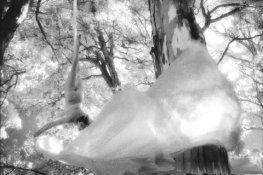
I gave up IR photography when Kodak ceased production of HIE - My last six rolls are in the freezer for a planned Autumn project when the current boring flat blue skies liven up again - Here is an IR pic from HIE from 2005

If you want that real IR look then the Efke 820 Aura is the one to go for, perticulerly if you like HIE.
- Joined
- Mar 12, 2009
- Messages
- 23
- Format
- Medium Format
If you compare the datasheets for Rollei Retro 400S and Rollei Infrared 400S, you may notice that the listed spectral sensitivity curve is practically identical for the two films. Retro 400S is a few cents cheaper.
Rollei Retro 400S | Datasheet (Avipan 400S)
Rollei Infrared 400S | Datasheet
And if you compare the datasheets of Rollei Infrared 400S and Superpan, you may notice that Superpan is more sensitive to IR than Rollei Infrared 400S. Strange but true.

I would recommend superpan and a deep red filter (filter factor EV + ~2-3) or #72 (EV + ~6-8) if you need faster exposures; a #87 requires very long exposures (EV + ~10-12) but gives very strong "effects." I have some examples from superpan and Rollei IR in my apug gallery.
August will be mighty hazy down there, you might like IR for cuting some haze, but you'll probably need to shoot around high noon to get reasonable exposures with a 72 or deeper filter- too much moisture in the atmosphere really increases the exposure time. It's sometimes hard to judge in mid summer, So bracket heavily.
The current IR are films are all fairly similar- go with whatever works for your wallet. The only major difference is in the anti-halation or lack thereof. The bases are a bit different too.
August will be mighty hazy down there, you might like IR for cuting some haze, but you'll probably need to shoot around high noon to get reasonable exposures with a 72 or deeper filter- too much moisture in the atmosphere really increases the exposure time. It's sometimes hard to judge in mid summer, So bracket heavily.
The current IR are films are all fairly similar- go with whatever works for your wallet. The only major difference is in the anti-halation or lack thereof. The bases are a bit different too.
Last edited by a moderator:

I used Rollei 80s and Superpan 200 for IR work. These are quite normal films with excellent sharpness and good endurance outside a fridge. I use a 720 nm filter. This filter takes 3 stops at these films.

I've only used the Rollei IR400 and the Efke Aura and non-Aura, so I can't comment about the others. I use an 720 nm filter I got cheap from ebay, but it seems to work fine.
I like Efke the best for IR because it gives a more pronounced effect. Unfortunately I've had problems with zillions of specks on their film in the past which I attribute to quality issues because it follows the batch number. Anytime I get a new batch number, I test a few frames before committing it to anything. I just shoot a few frames, cut it off, develop it, and inspect it. I have not seen the specks on the last two batches, so maybe they corrected the problem.
The Rollei IR400 is also nice, but the sensitivity spectrum doesn't extend as far down into the longer wavelengths. It's also a remarkably good general purpose 400 speed film, so it's easy to mix IR with non-IR pictures. Finally, the IR400 is fast enough to use hand held if you open the lens up enough. If you're shooting an SLR that may seem silly since you can't see through the lens when you have the filter attached, but I've done it when shooting with a wide angle lens. You focus through the lens, then adjust the focus to compensate for the IR, then add the filter and point the camera where you think it should be. The focus compensation is important because you're probably going to have to open the lens up to get fast enough shutter speeds. Of course, when you're shooting without the filter, no compensation is necessary.
I like Efke the best for IR because it gives a more pronounced effect. Unfortunately I've had problems with zillions of specks on their film in the past which I attribute to quality issues because it follows the batch number. Anytime I get a new batch number, I test a few frames before committing it to anything. I just shoot a few frames, cut it off, develop it, and inspect it. I have not seen the specks on the last two batches, so maybe they corrected the problem.
The Rollei IR400 is also nice, but the sensitivity spectrum doesn't extend as far down into the longer wavelengths. It's also a remarkably good general purpose 400 speed film, so it's easy to mix IR with non-IR pictures. Finally, the IR400 is fast enough to use hand held if you open the lens up enough. If you're shooting an SLR that may seem silly since you can't see through the lens when you have the filter attached, but I've done it when shooting with a wide angle lens. You focus through the lens, then adjust the focus to compensate for the IR, then add the filter and point the camera where you think it should be. The focus compensation is important because you're probably going to have to open the lens up to get fast enough shutter speeds. Of course, when you're shooting without the filter, no compensation is necessary.

I used about 100 sheets of Efke Aura this year with a B+W 092 filter and am in love with the stuff for it's look and all the handling aspects...I have posted a few images in my gallery..Evan Clarke
I have a very deep red filter, which was pricey.
Jeff
Jeff

Dear BradleyK,
Try them ahead of time and don't discount SFX. While it does not look like other infrared films, I personally find the images attractive. Where to start? I always start with the manufacturer's recommendations.
Neal Wydra
Try them ahead of time and don't discount SFX. While it does not look like other infrared films, I personally find the images attractive. Where to start? I always start with the manufacturer's recommendations.
Neal Wydra

DWThomas
Subscriber
I did a bit of work with IR in the summer of 2010 and have a few random observations.
SLRs make it difficult -- you can't see squat through an IR filter. My experience decades earlier was with a 4x5 and a wireframe finder. Using my Bronica SQ-A (arguably my best film camera) I got way too much practice installing and removing filters.
The best of what I think of as IR effects was with the Efke IR820 material (I used the non-aura version in 120). I don't think it's as nice grain and resolution-wise as the Rollei IR400.
For strong IR effects, a 760 nM filter works well with the IR820; needs lo-o-ong exposure -- as in 12 stops over unfiltered -- with the IR400. A 720 nM filter may give a bit less effect, but easier exposures.
Assuming use of a small aperture to help compensate for IR focusing being slightly different, exposures can run to seconds, so assume tripod work.
IR400 is also a very nice pan film without the filter, but alas, it costs about as much as two or three rolls of other nice pan film.
The manufacturers recommend shooting one frame without a filter and at the claimed ISO to verify your camera/exposure/processing. That's a pretty good idea, especially on the first roll.
Bracketing exposure is a Good Thing(tm).
There is a (there was a url link here which no longer exists) from a while back that may be useful.
Have fun with it!
DaveT
SLRs make it difficult -- you can't see squat through an IR filter. My experience decades earlier was with a 4x5 and a wireframe finder. Using my Bronica SQ-A (arguably my best film camera) I got way too much practice installing and removing filters.
The best of what I think of as IR effects was with the Efke IR820 material (I used the non-aura version in 120). I don't think it's as nice grain and resolution-wise as the Rollei IR400.
For strong IR effects, a 760 nM filter works well with the IR820; needs lo-o-ong exposure -- as in 12 stops over unfiltered -- with the IR400. A 720 nM filter may give a bit less effect, but easier exposures.
Assuming use of a small aperture to help compensate for IR focusing being slightly different, exposures can run to seconds, so assume tripod work.
IR400 is also a very nice pan film without the filter, but alas, it costs about as much as two or three rolls of other nice pan film.
The manufacturers recommend shooting one frame without a filter and at the claimed ISO to verify your camera/exposure/processing. That's a pretty good idea, especially on the first roll.
Bracketing exposure is a Good Thing(tm).
There is a (there was a url link here which no longer exists) from a while back that may be useful.
Have fun with it!
DaveT
Last edited by a moderator:
I still have some Konica IR 750 in 120... frozen... you see IR effects even with deep orange filter.
| Photrio.com contains affiliate links to products. We may receive a commission for purchases made through these links. To read our full affiliate disclosure statement please click Here. |
PHOTRIO PARTNERS EQUALLY FUNDING OUR COMMUNITY:  |