• Welcome to Photrio!
    Registration is fast and free. Join today to unlock search, see fewer ads, and access all forum features.
    Click here to sign up

Ilford Film Reciprocity

Recent Classifieds

Forum statistics

Threads
202,825
Messages
2,845,968
Members
101,547
Latest member
roglem
Recent bookmarks
1
Thank you
 
Thank you, David. This is very timely information for me, as I've set up a procedure for testing the reciprocity behavior of my two favorite Ilford sheet films soon. It'll be interesting to see how the test results compare with your data. The only variable in my procedure that I've concerns about is the use of stacked ND filters to reduce the light level reaching the film plane (while maintaining a constant illumination of the target), as there may be an issue of accumulated ND tolerances. However, the results should be good for at least "ballpark" data. My measurements will consider exposures out to about 4+ minutes; longer adjusted exposures would raise concerns (to me) whether the light levels in the field can be expected to remain constant. They will also tell me when contrast reduction will be needed, using my standard agitation technique.
 
Last edited:
That really is so easy to have reciprocity factors for all films at your fingertips, who would've thought of this even only a short time ago.

I took a picture of the chart with my phone, it now resides in my mobile; so handy.

Mick.
 
I couldn't verify the latest FP4+ technical information sheet date on the Ilford website and presume that the 2010-dated sheet I have would be reasonably close. I noticed that the formula for FP4+, tc=tm^1.26 gives times about half as long as the chart. For 30s measured, the chart would recommend about 154s, and the formula about 73s. Am I doing this right? Thanks. ( I'm not a frequent poster, so I hope my photo of the chart will show up :smile:.
 
Dang,
Photo of chart file size too big and I'm not smart enough to fix it (analog only old guy)
 
Most educational and useful. Math isn't my strong point!
No such thing as short exposures for me: some of them are quite long (around 15-20 secs). Recent shots in very flat, dull coastal weather have been outstanding (long exposures).
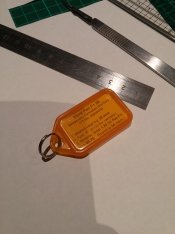
Bits of paper get wet, get lose, tear and crumple. I want things that last and are easily found. Thusly, a keytag to attach to the camera for my fav B&W.: PanF+.

PanF+ RF procedure_all formats.jpg
 

Attachments

  • 2017-08-27 11.04.52.jpg
    2017-08-27 11.04.52.jpg
    1.2 MB · Views: 165
Interesting info. Thanks for posting. There's not a huge variation in factors for the Ilford films. I love scientific data like this.
 
After re-reading the list of Ilford films in the Ilford chart, I am now wondering if their factor of 1.31 for XP2, could be used for normal C41 films?

Mick.
 
I've just done myself a big favour and downloaded everything I can from the Ilford website. Cool posters available there too. I know they've been mentioned here before but they are still very, very cool.
 
Guess I need to start carrying my slip stick with me while photographing.
 
I couldn't verify the latest FP4+ technical information sheet date on the Ilford website and presume that the 2010-dated sheet I have would be reasonably close. I noticed that the formula for FP4+, tc=tm^1.26 gives times about half as long as the chart. For 30s measured, the chart would recommend about 154s, and the formula about 73s. Am I doing this right? Thanks.

I had similar results with HP5+. I'm pretty sure I'm "doing this right" with the scientific calculator. (I matched the example in the data sheet, for instance.)
 
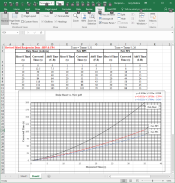
Maybe this screenshot is helpful. I plotted the data from Ilford's website to compare to the info from their revisions shown on the new pdf. The curves are best fit 2nd order polynomials through the data points.
 

Attachments

  • 2017-08-27.png
    2017-08-27.png
    97.6 KB · Views: 303
Maybe this screenshot is helpful. I plotted the data from Ilford's website to compare to the info from their revisions shown on the new pdf. The curves are best fit 2nd order polynomials through the data points.

Okay. So which set of adjusted times does one use?

Just trying to clear things up for those who don't understand things like scientific calculators or 2nd order polynomials ... :wondering:
 
So it sounds like my rule-of-thumb of just doubling the time is about right for most of my films. I'll leave the slide rule at home for FP4+, my most used film -- but I have some Efke100IR in 11x14 that suffers greatly from resiprocity failure. Based on what I just developed (a 3-minute and a 30-sec exposure), I'll try to keep the exposures under 30 seconds and increase exposure by two stops.
 
Okay. So which set of adjusted times does one use?

Just trying to clear things up for those who don't understand things like scientific calculators or 2nd order polynomials ... :wondering:

Good point, David. To clarify, the curve shown in my plot as 'Data Sheet' is the one Ilford has posted on their film data sheets for many years and did not change for their other films, thus raising many questions. I've queried them in the past about that situation and was told that they are a small operation (apparently a comparison to Kodak at that time) and that a serious worker should do his/her own testing. It seems they've done enough testing of their films to enable them publish the pdf we're now given. This testing is not inexpensive, so if one does not wish to do the testing then the pdf can be used as a starting point and adjustments can be made by trial and error following field results. My two most used films are sheet films, HP5+ and FP4+, so that's why I plotted those to see - out of curiosity - how they compare to the curves still being presented in the data sheets for those films (and others). I used MS Excel to generate those plots, letting Excel use Ilford's simple formulas to calculate the individual data points, and then used Excel's curve-fitting options to put smooth curves through those data points. Most calculators nowadays (including PC calculators) have the ability to calculate a number raised to ANY power. As I said in my previous post, my test procedures will allow me to nail down the dev time adjustments (e.g., N-1, N-2, etc.) to account for the increase in contrast that inevitably results from the reciprocity corrections.
 
The charts currently in all our individual film fact sheets are calculated with the above method using a factor of 1.48. The people who came up with this factor left the company many years ago so I have no idea how it was derived. It was because of our customers questioning this factor that we did the work.

David
 
The charts currently in all our individual film fact sheets are calculated with the above method using a factor of 1.48. The people who came up with this factor left the company many years ago so I have no idea how it was derived. It was because of our customers questioning this factor that we did the work.

David
Thanks, David. That clears it up.
 
Thanks to David and Ilford for this extremely useful data!

It sure would be nice to have such data for a wide range of films from all manufacturers. I'm wondering if anyone here has done similar testing for a reciprocity-failure-correction factor for other films (Kodak, Foma, etc.). Posting those data here would be a great help.

Best,

Doremus
 
Photrio.com contains affiliate links to products. We may receive a commission for purchases made through these links.
To read our full affiliate disclosure statement please click Here.

PHOTRIO PARTNERS EQUALLY FUNDING OUR COMMUNITY:


Ilford ADOX Freestyle Photographic Stearman Press Weldon Color Lab Blue Moon Camera & Machine
Top Bottom