• Welcome to Photrio!
    Registration is fast and free. Join today to unlock search, see fewer ads, and access all forum features.
    Click here to sign up

Ilford Delta

Emi on Fomapan 400

A
Emi on Fomapan 400

  • 0
  • 0
  • 8
Venice

A
Venice

  • 0
  • 0
  • 55

Recent Classifieds

Forum statistics

Threads
201,795
Messages
2,830,256
Members
100,952
Latest member
pcwelch
Recent bookmarks
0

pentaxuser

Member
Joined
May 9, 2005
Messages
20,335
Location
Daventry, No
Format
35mm
I'd try the inversion agitation time using D76 1+1 for the next speed up i.e. use the D76 time for 3200. Most agree that D3200 benefits from being developed at one speed beyond what is used. It worked for me with DDX but should work for the likes of D76. I'd then reduce the time by 15% for a Jobo. My caveat is that I haven't used a Jobo for 3200 but John Hicks has (see the articles in Ed Buffalo's Unblinkingeye site) with DDX and the reduction was 15%. I'd be surprised if 15% with D76 doesn't get you close

Hopefully there is someone here who has used D3200 at 1600 with D76 1+1 on a Jobo processor but if not, give it a go as above

Let us know how it goes

pentaxuser
 
OP
OP
Dwayne Martin

Dwayne Martin

Member
Allowing Ads
Joined
Mar 23, 2014
Messages
269
Location
SW Florida
Format
4x5 Format
I'd try the inversion agitation time using D76 1+1 for the next speed up i.e. use the D76 time for 3200. Most agree that D3200 benefits from being developed at one speed beyond what is used. It worked for me with DDX but should work for the likes of D76. I'd then reduce the time by 15% for a Jobo. My caveat is that I haven't used a Jobo for 3200 but John Hicks has (see the articles in Ed Buffalo's Unblinkingeye site) with DDX and the reduction was 15%. I'd be surprised if 15% with D76 doesn't get you close

Hopefully there is someone here who has used D3200 at 1600 with D76 1+1 on a Jobo processor but if not, give it a go as above

Let us know how it goes

pentaxuser
Thanks for that! I read the article in the unblinking eye as you suggested. I'll give it a spin and hope for the best...
Dwayne
 

klownshed

Member
Allowing Ads
Joined
May 3, 2012
Messages
441
Location
Dorset, UK
Format
Multi Format
I use a Jobo CPE2+ for B&W development but haven't yet used Delta 3200.

But everything I have used, including HP5+ at 1600 works best for the normal time (for non rotary processors) but with a 5 min pre wash.

I tried reducing times by 15% a few times without a prewash which always resulted in over development.

That's by no means an exhaustive scientific test! But I have found that Jobo's instructions for a 5 minute pre wash without altering the time works well for me every time.

BTW You should find a time for delta 3200 at 1600 in the massive development chart.
 
OP
OP
Dwayne Martin

Dwayne Martin

Member
Allowing Ads
Joined
Mar 23, 2014
Messages
269
Location
SW Florida
Format
4x5 Format
I use a Jobo CPE2+ for B&W development but haven't yet used Delta 3200.

But everything I have used, including HP5+ at 1600 works best for the normal time (for non rotary processors) but with a 5 min pre wash.

I tried reducing times by 15% a few times without a prewash which always resulted in over development.

That's by no means an exhaustive scientific test! But I have found that Jobo's instructions for a 5 minute pre wash without altering the time works well for me every time.

BTW You should find a time for delta 3200 at 1600 in the massive development chart.

Your experience vs mine makes me think our shutters are often the wild card, and difficult to verify to boot.
A very very competent friend worked out my optimum development time for me with a densitometer and a fancy algorithm based on 5, FP4 125 4x5 negatives shot with my speedgraphic at box speed, all developed at different times. All this was done in my house with my equipment. This included a 5 minute wash (simply because that's what I've always done), D-76 1:1 at 20c, a stop bath and a 5 minute fix. My perfect time with normal conditions is 8.5 minutes. This is some 25% less time than the Ilford recommended time for this recipe. So I don't know what else could explain how we can both get good results with such differences in development time. Who knows how far out of whack my speedgraphic is. According to a shutter tester I picked up recently only a couple of the speeds are even in the right galaxy. I suspect I can't trust the tester either because I usually get good exposures with the camera.
Anyway thanks for chiming in, I appreciate it.
Dwayne
 
OP
OP
Dwayne Martin

Dwayne Martin

Member
Allowing Ads
Joined
Mar 23, 2014
Messages
269
Location
SW Florida
Format
4x5 Format
dwayne

do you by chance have a dark green safelight
do "develop by inspection "
if so you can pinpoint your perfect development time !
if not, sounds like you need a dark green safelight !

here's some more light reading :smile:
http://www.michaelandpaula.com/mp/devinsp.html

Thanks, that would solve a lot of problems for me. I'm actually planing an addition on my house that will include a darkroom! I've never really considered setting up a dark space just for developing until now, but maybe I'll do that.
I enjoyed that article a lot,
Dwayne
 

klownshed

Member
Allowing Ads
Joined
May 3, 2012
Messages
441
Location
Dorset, UK
Format
Multi Format
Your experience vs mine makes me think our shutters are often the wild card, and difficult to verify to boot.

Development is the one area that I don't want to mess about and experiment. I just want a good negative, and once I have a combination of film and developer I like that's it, I don't want to introduce too many variables into that part of the process.

So I tend to stick with the manufacturer's recommendations. But when using a rotary processor, Ilford and Jobo give different recommendations. Ilford suggest the normal time less 15% for rotary processors with no pre-wash. Jobo suggest the normal time but with a 5 minute prewash.

I tend to use HP5+ at 400 with ID11 1:1, HP5+ at 1600 in Microphen stock (with an extra 10% on the time for each subsequent roll) in both 35mm and 120.

I've now put over a 100 rolls through my Jobo, and every time I use Jobo's method I get a good development results. Every time I use Ilford's method I get overdevelopment (And usually I find Ilford spot on for all their times, methods, etc.). Which leads me to believe that the time isn't as significant a factor as the pre-wash with constant agitation, because if you develop normally without a rotary processor and cut the development by 15%, you will still get useable negatives. As I mentioned., I use Microphen which suggests adding 10% time to each roll. If I forget how many rolls I've put through, it still works fine. 20 seconds here and there make no difference. Not doing the pre-wash however makes a huge difference. So in my mind, rotary = pre-wash and the times are all approximate anyway (or they'd not all be such convenient times as 8'00" in the charts!).

I've had disasters with development timings before, either by being distracted or timer meltdown, etc. and even when I've been minutes out I've ended up with useable, recoverable negatives.

But that's just me and a my tests are unscientific and statistically irrelevant. ;-)

As for the accuracy of shutters, etc. I use a variety of cameras, both 35mm and medium format and have acceptable results with every combination I've tried. When I use a pre-wash.

Accuracy in photography is a bit of a myth. There are so many variables and tolerances. Your film isn't exactly ISO 100. Your meter doesn't meter exactly 18% grey (and if it does, how it averages the light reading changes depending on the colour and material of whatever you're photographing), your shutter doesn't take precisely 1/125 of a second to traverse the frame, etc.

It's an exercise in minimising the tolerances and variables. And with B&W film at least, there's more than enough wiggle room.

So I don't worry if I take an extra 5 seconds emptying the tank. I don't worry if it takes me 10 seconds extra to get the lid off to pour in the stop bath. But I always pre-wash. For exactly, approximately round about 5 minutes. ish. And that makes the Jobo work for me.
 
OP
OP
Dwayne Martin

Dwayne Martin

Member
Allowing Ads
Joined
Mar 23, 2014
Messages
269
Location
SW Florida
Format
4x5 Format
Development is the one area that I don't want to mess about and experiment. I just want a good negative, and once I have a combination of film and developer I like that's it, I don't want to introduce too many variables into that part of the process.

So I tend to stick with the manufacturer's recommendations. But when using a rotary processor, Ilford and Jobo give different recommendations. Ilford suggest the normal time less 15% for rotary processors with no pre-wash. Jobo suggest the normal time but with a 5 minute prewash.

I tend to use HP5+ at 400 with ID11 1:1, HP5+ at 1600 in Microphen stock (with an extra 10% on the time for each subsequent roll) in both 35mm and 120.

I've now put over a 100 rolls through my Jobo, and every time I use Jobo's method I get a good development results. Every time I use Ilford's method I get overdevelopment (And usually I find Ilford spot on for all their times, methods, etc.). Which leads me to believe that the time isn't as significant a factor as the pre-wash with constant agitation, because if you develop normally without a rotary processor and cut the development by 15%, you will still get useable negatives. As I mentioned., I use Microphen which suggests adding 10% time to each roll. If I forget how many rolls I've put through, it still works fine. 20 seconds here and there make no difference. Not doing the pre-wash however makes a huge difference. So in my mind, rotary = pre-wash and the times are all approximate anyway (or they'd not all be such convenient times as 8'00" in the charts!).

I've had disasters with development timings before, either by being distracted or timer meltdown, etc. and even when I've been minutes out I've ended up with useable, recoverable negatives.

But that's just me and a my tests are unscientific and statistically irrelevant. ;-)

As for the accuracy of shutters, etc. I use a variety of cameras, both 35mm and medium format and have acceptable results with every combination I've tried. When I use a pre-wash.

Accuracy in photography is a bit of a myth. There are so many variables and tolerances. Your film isn't exactly ISO 100. Your meter doesn't meter exactly 18% grey (and if it does, how it averages the light reading changes depending on the colour and material of whatever you're photographing), your shutter doesn't take precisely 1/125 of a second to traverse the frame, etc.

It's an exercise in minimising the tolerances and variables. And with B&W film at least, there's more than enough wiggle room.

So I don't worry if I take an extra 5 seconds emptying the tank. I don't worry if it takes me 10 seconds extra to get the lid off to pour in the stop bath. But I always pre-wash. For exactly, approximately round about 5 minutes. ish. And that makes the Jobo work for me.
Speaking of disasters, recently I was washing FP4 in my jobo, there was music playing pretty loud and my wife was talking to me. Well I forgot to dump the wash water and I dumped my developer in. The first indication that something was off was when all of the developer wouldn't fit and it began to pour back out the little drain tube as I was pouring (I have the lift version). Still I plowed forward all the while drinking red wine. Well I'm pretty sure the damn negatives look even better than they usually do! So that would be round about 250ml developer and 500ml water......
 
OP
OP
Dwayne Martin

Dwayne Martin

Member
Allowing Ads
Joined
Mar 23, 2014
Messages
269
Location
SW Florida
Format
4x5 Format
I'd try the inversion agitation time using D76 1+1 for the next speed up i.e. use the D76 time for 3200. Most agree that D3200 benefits from being developed at one speed beyond what is used. It worked for me with DDX but should work for the likes of D76. I'd then reduce the time by 15% for a Jobo. My caveat is that I haven't used a Jobo for 3200 but John Hicks has (see the articles in Ed Buffalo's Unblinkingeye site) with DDX and the reduction was 15%. I'd be surprised if 15% with D76 doesn't get you close

Hopefully there is someone here who has used D3200 at 1600 with D76 1+1 on a Jobo processor but if not, give it a go as above

Let us know how it goes

pentaxuser
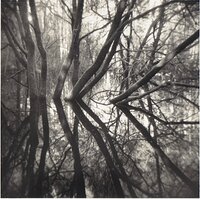
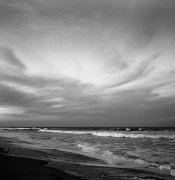
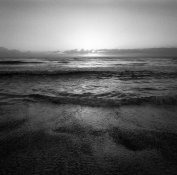
I took your advice and ended up with a development time of 10 minutes, and got these results.
 

Attachments

  • img184.jpg
    img184.jpg
    549.7 KB · Views: 106
  • img190.jpg
    img190.jpg
    352.1 KB · Views: 130
OP
OP
Dwayne Martin

Dwayne Martin

Member
Allowing Ads
Joined
Mar 23, 2014
Messages
269
Location
SW Florida
Format
4x5 Format
I'd try the inversion agitation time using D76 1+1 for the next speed up i.e. use the D76 time for 3200. Most agree that D3200 benefits from being developed at one speed beyond what is used. It worked for me with DDX but should work for the likes of D76. I'd then reduce the time by 15% for a Jobo. My caveat is that I haven't used a Jobo for 3200 but John Hicks has (see the articles in Ed Buffalo's Unblinkingeye site) with DDX and the reduction was 15%. I'd be surprised if 15% with D76 doesn't get you close

Hopefully there is someone here who has used D3200 at 1600 with D76 1+1 on a Jobo processor but if not, give it a go as above

Let us know how it goes

pentaxuser
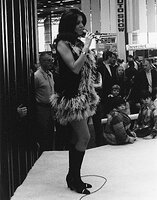
I felt like maybe the highlights could use a touch more development so I went to 10min 30 secs and got this portrait. Actually this was the roll of film I was concerned most about, I took the seascapes as a test. Some of the shots on this roll where a little bit denser than this one but definitely not too dense.

So for all interested parties, my method was= Delta 3200, EI 1600, D-76 1:1 in a Jobo with a 5min wash, 10min 30secs @20c. As suggested by Pentaxuser this is development for EI 3200, or at least close.....
Thanks,
Dwayne
 

Attachments

  • img217.jpg
    img217.jpg
    236.5 KB · Views: 114
Photrio.com contains affiliate links to products. We may receive a commission for purchases made through these links.
To read our full affiliate disclosure statement please click Here.

PHOTRIO PARTNERS EQUALLY FUNDING OUR COMMUNITY:



Ilford ADOX Freestyle Photographic Stearman Press Weldon Color Lab Blue Moon Camera & Machine
Top Bottom