
• Welcome to Photrio!
    Registration is fast and free. Join today to unlock search, see fewer ads, and access all forum features.
    Click here to sign up

I was thinking about "outflanking" prints and I just don't get how it's better.

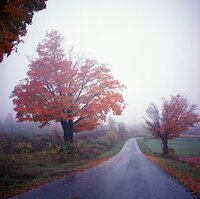
Rainy Day Trees

A
Rainy Day Trees

  • 6
  • 1
  • 98
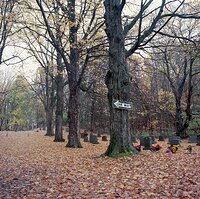
One Way

A
One Way

  • 3
  • 1
  • 97

Recent Classifieds

Forum statistics

Threads
203,157
Messages
2,850,726
Members
101,703
Latest member
yppnq
Recent bookmarks
2
I forgot, vc filter are same exposure for middle grey only, highlights & shadows change from grade to grade.

This may be true for your enlarger and filter set but is not true for all enlargers and all filter sets. For example, Ilford VC filters speed point is on a highlight and not a middle grey. And it varies for different papers and with the age of the paper, it loses contrast over time and the speed point moves towards highlights.
So don't count on it being a middle grey. The only way you can know for sure is to test with some very new paper. But that isn't much use if you are using paper which is 2 or 3 years old.
 
Last edited by a moderator:
By picking an time which you assume will overexpose a bit, if you're correct, then you've successfully eliminated all the longer exposure times. If you drop back a stop, 1/2 the exposure time, and it's over, drop back again, if it's under, then you've bracketed the possible exposure times. E.g. 30 is over and 15 is under, then you know the exposure range is somewhere between, and it's not too hard to eyeball it and get close to what you want at that point. I usually use a combination of this technique and test strips. I cut a sheet of paper into long and narrow and try to position them so they hit both the highlights and shadows. A few test strips and I can choose the right contrast filter and get the starting exposure. Then modify as above. But I'm not darkroom expert, so find a technique that works for you.

What this procedure reminds me of is a binary tree. Start with your possibilities, divide by two (i.e. this is underexposed, so that eliminates all the shorter exposure times), keep dividing by two, and you've quickly homed in on your exposure time.
 
Also, I wanted to mention that when I do test strips in third-stop increments on grade 2 paper, I ask myself if I would be happy to have the print end up looking like the step darker than the step I actually like... to account for drydown. I figure if that darker step looks good, I can print at the exposure time for the lighter step and let drydown take me a little darker.

When the last step on the test strip is the one that looks best, I can't be sure of what drydown will do.
 
Photrio.com contains affiliate links to products. We may receive a commission for purchases made through these links.
To read our full affiliate disclosure statement please click Here.

PHOTRIO PARTNERS EQUALLY FUNDING OUR COMMUNITY:


Ilford ADOX Freestyle Photographic Stearman Press Weldon Color Lab Blue Moon Camera & Machine
Top Bottom
