• Welcome to Photrio!
    Registration is fast and free. Join today to unlock search, see fewer ads, and access all forum features.
    Click here to sign up

HP5+, what developer for this look?

Recent Classifieds

Forum statistics

Threads
201,760
Messages
2,829,669
Members
100,929
Latest member
WBM
Recent bookmarks
0

MFP

Member
Allowing Ads
Joined
Dec 26, 2008
Messages
37
Format
35mm
Hey APUG,

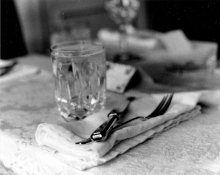
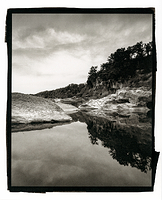
So I had these two images of Ilford HP5+ film developed through a service that sends out their B&W film before I could develop my own negatives, and then printed them in my darkroom a while later on some ILFORD MGIV paper. I love the look of this entire roll, and I want to know what film developer I could possibly use to get a similar look with future rolls. I have tmax dev ready, but I have a feeling it will not create the desired effect as tmax is, i believe, meant for detail in shadows and finer grain.

Thanks for responding

 

Attachments

  • image10 (1).jpg
    image10 (1).jpg
    97.2 KB · Views: 452
  • Image11 (1).jpg
    Image11 (1).jpg
    128.4 KB · Views: 438

mattk

Member
Allowing Ads
Joined
Mar 26, 2006
Messages
283
Location
Minnesota, U
Format
Medium Format
Are those 35mm? I use HC-110. If you want to kick up the contrast and grain, just agitiate a bit more with slightly longer dev time.
 

2F/2F

Member
Allowing Ads
Joined
Apr 29, 2008
Messages
8,031
Location
Los Angeles,
Format
Multi Format
Any general-purpose developer will do it. ID-11, HC, etc. The key is knowing how to get what you want from any developer, rather than assigning too much importance to the "built-in" differences between developers. If you like the contrast, that starts with exposure. Exposure can be tweaked to make your dark areas darker. Then you can develop until you get the lighter areas how you like them.

I'd start by shooting the film as if it was a 500 film, and adding 10 - 15 % to your development.

You can also call the lab and asked what they used. However, it will likely be different than consumer one-shot developers. But if you find out what they use, and come back here with the answer, I'll bet someone can tell you the off-the shelf "consumer" developer that is most similar.
 

pentaxuser

Member
Joined
May 9, 2005
Messages
20,335
Location
Daventry, No
Format
35mm
they are in fact 35mm. Would agitating for 5 sec. every 30 sec. make a difference over 10 sec. every 60 sec. in increasing contrast?

Not in my opinion. Agitation time over whatever dev time is used would be exactly the same. A little more contrast might be obtained by agitating more vigorously using a cocktail bartender type of shake.

pentaxuser
 
OP
OP
MFP

MFP

Member
Allowing Ads
Joined
Dec 26, 2008
Messages
37
Format
35mm
Any general-purpose developer will do it. ID-11, HC, etc. The key is knowing how to get what you want from any developer, rather than assigning too much importance to the "built-in" differences between developers. If you like the contrast, that starts with exposure. Exposure can be tweaked to make your dark areas darker. Then you can develop until you get the lighter areas how you like them.

I'd start by shooting the film as if it was a 500 film, and adding 10 - 15 % to your development.

You can also call the lab and asked what they used. However, it will likely be different than consumer one-shot developers. But if you find out what they use, and come back here with the answer, I'll bet someone can tell you the off-the shelf "consumer" developer that is most similar.

I'm not sure that changing the way I expose things would make a difference, as I always expose things the same way, and the difference in contrast between HP5+ and other films I have shot is evident in very different exposure situations throughout the roll. Also I know that the shop did not push process in any way.

I will definitely try increasing agitation and try the 'bartender method' as mentioned above. I'm wondering, however, if with such an agitation method, would tmax developer still be able to achieve the effect that is in the photographs that I linked?
 

Doug Webb

Member
Allowing Ads
Joined
Jul 10, 2005
Messages
105
Format
Large Format
This may sound like an odd question, but I'm not sure what you like about the images, because to me they look somewhat different. I don't mean that I don't like them, but if there is something about them that you can describe that you are after, that might help in getting an answer that you find helpful. Almost any developer could probably come close to what I am seeing in your images. I have loved the look of almost every image I have gotten with HP5 that did not have some major exposure or development problem and I wonder if it is HP5 that you are coming to love. I have used XTOL, TMAX developer, DDX, and PMK with HP5 and I really had no problems with any of them
Good luck,
Doug Webb
 
OP
OP
MFP

MFP

Member
Allowing Ads
Joined
Dec 26, 2008
Messages
37
Format
35mm
What I'm looking for is really the contrast and the "visible but not overly excessive" grain. Its the lack of boring, smooth grays that I see in kodak films that I have developed. I know that it is a large part the result of the film, but I'm basically trying to figure out if Tmax developer will give the results shown in the pictures or if I should need to use a different developer like XTOL. Basically it looks like it was pushed yet it wasn't.
 
Last edited by a moderator:

Venchka

Member
Allowing Ads
Joined
Sep 9, 2006
Messages
692
Location
Wood County, Texas
Format
35mm
Did you ask the lab what developer and processing methods they used? Temp.? Agitation? That shouldn't be too hard to replicate.

Personally, I really enjoy my HP5+ negatives (120 & 4x5) exposed at 250 and developed in Xtol 1:3, continuous agitation in a Jobo tank, 68F for 10 minutes.
 

An Le-qun

Member
Allowing Ads
Joined
Mar 6, 2008
Messages
82
Format
4x5 Format
That's the same look I get from HP5+ rated at 1600, developed in Xtol 1:1 for 18-20 minutes, depending on temperature. Vigorous agitation for first 10", then 2 inversions per minute (on the minute) for first 12 minutes, then 4 inversions (again, on the minute) for the remaining minutes. Developed in a Paterson 2-reel tank, with Dallas water, early in the morning. Sorry, I got carried away. But the only part that isn't serious is the part about "early in the morning." But I also agree with Doug Webb--HP5+ is really versatile and responsive (I hope that's a fair paraphrase).
 

2F/2F

Member
Allowing Ads
Joined
Apr 29, 2008
Messages
8,031
Location
Los Angeles,
Format
Multi Format
There is nothing in those pix that a general-purpose developer and standard agitation procedures cannot achieve.

Just because the shop did not push the film does not mean that they did not develop it to a higher contrast than you do by hand. Manufacturer's recommended developing times are the ones that worked for the manufacturers, not for all of us. Variables in shooting and processing create the need to experiment and tweak things a bit in order to match the manufacturers results. The key to calibration of this sort is matching the luminance range at the scene to the tonal range of the printing paper. If you shot in a 10-EV luminance range, and your prints look flat using filters 2 or 2-1/2, then your development time needs to be longer in order to match the contrast that the manufacturers achieved in their testing.

It is not mainly a question of which developer to use. It is mainly a question of learning to develop to suit your desired contrast. You can simply develop your film to a higher contrast using whatever developer you now use. The most basic way to do this is by developing longer than you do now. Whether or not you also use exposure as a way to manipulate contrast depends on whether or not you want to change how the darker areas of your print turn out. I mentioned exposure because this has an extreme effect on contrast. If you are using an in-camera reflected meter exactly as the meter recommends, then you are always metering the same way, but you are not always exposing the same way. Doing this, where shadows and highlights fall tonewise has to do with how your metering pattern falls over the elements within each individual composition.

Since you think your pix are coming out too flat, I might start experimenting with adding a little time to your development, while keeping agitation the same. This will give you more control, repeatability, and ability to analyze and compare the effects than will changing the method of agitation. As I said in the other post, perhaps start with adding 10% or so.
 
Last edited by a moderator:

Stan160

Member
Allowing Ads
Joined
Apr 24, 2006
Messages
475
Location
Frimley, Surrey
Format
35mm
That's the same look I get from HP5+ rated at 1600

That's what I was thinking. Similar look to several rolls I shot at a wedding, mostly indoors on a gloomy November day, with the film rated at 1600 and developed in Ilfotec DD-X for whatever the time I looked up on the Massive Dev Chart was. Normal agitation (for me): Continuous for the first 30 seconds, then four gentle tank inversions at the start of each minute.

Ian
 

Doug Webb

Member
Allowing Ads
Joined
Jul 10, 2005
Messages
105
Format
Large Format
Okay, I think I understand what you are after. The good news is that you shouldn't have any problem getting this effect with HP5 and TMAX developer. There is a lot of contrast in both images and it looks like maybe more contrast than any film could handle without overexposing and underdeveloping, and possibly not even then, so if you always choose scenes like these that have really bright areas (like the bright area behind the guy and the bright area on the lower edge of the napkin) your chances of getting negatives like this are very high. Try this with your TMAX developer, shoot an entire roll of one scene with a lot of contrast, spool about a third of the roll of film onto a reel and develop it for the noraml time at the normal temperature according to the directions you have from Ilford for HP5. If that first strip isn't what you are after, develop the next third of the roll for 15% less time, if you still don't have what you want develop the third strip for 15% more than normal development time you used on the first strip. One of the strips will be closest to what you want and you can go up or down from there. Keep the agitation the same for each development run.
Good luck
Doug Webb
 

mabman

Member
Allowing Ads
Joined
Jun 7, 2007
Messages
834
Location
Winnipeg, MB
Format
35mm
It may depend on where you are (or where you sent it out to) - I've asked a few labs in North America and unless otherwise specified the popular developers here seem to be Xtol or TMAX as already mentioned, often in rotary processors.

But, as already mentioned, no reason you couldn't get similar results with a variety of developers depending on technique.
 
OP
OP
MFP

MFP

Member
Allowing Ads
Joined
Dec 26, 2008
Messages
37
Format
35mm
I had done plenty of flickr and google image search for HP5+ developer combinations, and got fed up and came here. Today I was surprised, as when I went the camera shop they were actually able to do several phone calls and get the development information, it was HC-110, which is great, so I'm going to test out it and some development techniques or tweaks that were suggested and see how they turn out.
 
Photrio.com contains affiliate links to products. We may receive a commission for purchases made through these links.
To read our full affiliate disclosure statement please click Here.

PHOTRIO PARTNERS EQUALLY FUNDING OUR COMMUNITY:


Ilford ADOX Freestyle Photographic Stearman Press Weldon Color Lab Blue Moon Camera & Machine
Top Bottom