• Welcome to Photrio!
    Registration is fast and free. Join today to unlock search, see fewer ads, and access all forum features.
    Click here to sign up

HP5+ at 100 ISO

Recent Classifieds

Forum statistics

Threads
202,919
Messages
2,847,545
Members
101,533
Latest member
jasonfrags81
Recent bookmarks
2

norm123

Member
Allowing Ads
Joined
Sep 18, 2010
Messages
276
Location
Montréal
Format
Multi Format
Hi all

Yesterday I did a mistake while taking some informal portraits in my backyard. I shot HP5+ with a RB67 camera for candid portraits of family. I shot it at 100 ISO. The light was contrasty,full sun of late afternoon. What do I do when I'll develop? My usual all-purpose developer is D-76 1+1 and I shoot HP5+ normally at 250 ISO. I loved the results. I have a new batch of D-76 stock solution and my first goal is to develop this film with it. I didn't see anything about it with Massive Chart Development. I figure I'll develop with N-2. I also have PMK, D-23 (one bath from PF) and Perceptol in the darkroom I can prepare.

I need some tips.

Regards
 
I would develop normally.
 
If your usual EI is 250, and you accidentally used EI100 then that is just about N-1 isn't it? Why choose N-2 development??

Bear in mind the subject contrast too, if it was flatter, then you could just develop exactly as you would with your usual EI250 film -- as it was contrasty lighting (use reflectors!) then over-exposing it while pulling it one stop in development is probably going to work adequately.

These things are not high-precision procedures usually . . .
 
Here's what Ilford say about underexposing HP5. For some strange reason they don't list any times or temps for developing in D76 though. I wonder why? :]

I don't shoot that film but once in a blue moon, but if it were Tri-X, or most any other flexible type film, I would either develop as usual or give it a little longer in the developer.

http://www.ilfordphoto.com/Webfiles/20062102012331472.pdf
 
Last edited by a moderator:
Here's what Ilford say about underexposing HP5. For some strange reason they don't list any times or temps for developing in D76 though. I wonder why? :]

I don't shoot that film but once in a blue moon, but if it were Tri-X, or most any other flexible type film, I would either develop as usual or give it a little longer in the developer.

http://www.ilfordphoto.com/Webfiles/20062102012331472.pdf

He didn't under expose, he over exposed it and only by a stop and a bit from what he normally does. So I would follow advice already given and develop as you normally do.

The straight line portion of HP5 will easily go up to 14 stops or so, which means all you have effectively done is slide everything up the curve a stop and a bit. This will give you more shadow detail/separation than you usually get but should be printable without too much hassle by just using longer print times than normal.
The only thing you may consider doing is reducing dev time by approx 20% to compensate for high contrast lighting of the subject but that is a subjective call based on whether you thought the subject was going to be too contrasty before you knew you had over exposed it. i.e. give it whatever development you would have done before you knew it is over exposed.
 
Last edited by a moderator:
The straight line portion of HP5 will easily go up to 14 stops or so, which means all you have effectively done is slide everything up the curve a stop and a bit.

Yep.

This will give you more shadow detail/separation than you usually get but should be printable without too much hassle by just using longer print times than normal.

Yep, if you want that detail just dodge a little when printing.

The only thing you may consider doing is reducing dev time by approx 20% to compensate for high contrast lighting of the subject but that is a subjective call based on whether you thought the subject was going to be too contrasty before you knew you had over exposed it.

If either VC paper or scanning is being used I would still just develop normally.
 
Develop normally. You won't be able to tell the difference, assuming your exposure is on the straight line... There will be a little more density - proportionally applied over the entire scale.

You can go with your original N-2 plan, (or as RobC suggested -20% from normal).

I rarely use N-2 "really".

I'll mark the film N-2 but develop it N-1 anyway...
 
I think the main point to remember in this scenario is that you haven't increased film contrast by over exposing. You have just increased film density at each point by same amount. i.e. you haven't changed the slope of the curve.
 
Give Perceptol a try at either 1+1 or stock. Generally this fine grain developer needs a one stop reduction in film speed so you are down to 200 and depending on your metering method etc you real film speed may be, say, 320 -250 so you are now very close to 100 and well within HP5+'s tolerance

pentaxuser
 
Interestingly, I just shot some HP5-plus in a speed graphic using the rear shutter and had this exact same problem. I had 6 shots in the grafmatic, and as you may be aware a speed graphic requires you to re-wind the shutter curtain after each shot or you are, unintentionally, shooting at 1/50 instead of 1/250.

Which is precisely what I did. Took one shot at 1/250, took the next in exactly the same light, the exact same subject, at 1/50.

You guessed it: Both frames processed the same way in the same tank and both came out just fine, hunky dory, no difference I could tell from a quick look at the negatives and certainly both easily printed.

So soup the film normal and rest easy. Film latitude has your back.
 
Ah, dyslexia strikes again. OK, I made that excuse up.

Sorry, I misread your post. In that case I would develop it normally (at least I got that part right). A little over exposure is often no big deal. Under exposure can cause some issues. We're not talking about much of an over exposure either, as Mark mentioned.
 
Last edited by a moderator:
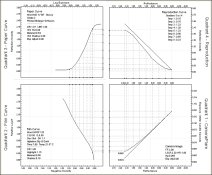
Here is HP5P exposed normally.

HP5P - Normal.jpg

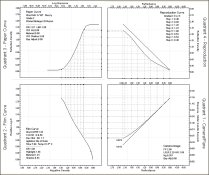
Here is HP5P over exposed two stops.

HP5P - 2 Stops Over Exposed.jpg

In this example processed in Xtol, because of the short toe and the slight shouldering, the density range didn't change with over exposure. Generally, moving off the toe will increase the density range slightly with short toed films, and more with long toed films.
 
Last edited by a moderator:
For portraits overexposure by 1.5 stops might give you your best prints ever, especially if you don't like shadowy eye sockets. I would develop normally.
 
Hello,

I'm attaching a link of someone who tested HP5+ for ISO 0.7 to 1600, each one develoved in HC110 from 4'45" to 13'30". There are samples of each combination. As you could see, there is a very wide range of combinations that are very good, may be not perfect, but enough to not realise.

http://www.galerie-photo.com/la-matrice-rlz.html
 
Give Perceptol a try at either 1+1 or stock. Generally this fine grain developer needs a one stop reduction in film speed so you are down to 200 and depending on your metering method etc you real film speed may be, say, 320 -250 so you are now very close to 100 and well within HP5+'s tolerance

pentaxuser

I'm thinking it will be winner. I'll try it.

D-76 probably will do the job properly too.

Thanks for everybody.
 
Since you have Perceptol available, you may as well use it. This sort of scenario is just what Perceptol is for.

Perceptol stock 13 mins @ 20C/68F would give you normal contrast at EI 250 according to the Ilford powder developer data sheet. This reduces your overexposure from 2 stops to 1.3 stops. This is only 0.7 stops more over-exposed than your usual ISO 250.

While I agree that you would probably get perfectly good results from normal development in D-76, you will get more grain and denser negatives due to the over exposure. Perceptol will help with both these problems. I would especially recommend Perceptol if you ever intend to scan the negs, since the additional density if you develop normally will probably compromise your highlight detail when scanned. For optical printing it shouldn't be much of a problem, just longer exposure times.
 
Photrio.com contains affiliate links to products. We may receive a commission for purchases made through these links.
To read our full affiliate disclosure statement please click Here.

PHOTRIO PARTNERS EQUALLY FUNDING OUR COMMUNITY:


Ilford ADOX Freestyle Photographic Stearman Press Weldon Color Lab Blue Moon Camera & Machine
Top Bottom