• Welcome to Photrio!
    Registration is fast and free. Join today to unlock search, see fewer ads, and access all forum features.
    Click here to sign up

How to push Cinestill 800T?

Millstone, High Water

A
Millstone, High Water

  • sly
  • Dec 17, 2025
  • 1
  • 3
  • 41
The Party

A
The Party

  • 0
  • 0
  • 39

Recent Classifieds

Forum statistics

Threads
201,242
Messages
2,821,063
Members
100,611
Latest member
Dewey evans
Recent bookmarks
0

Skycreeper

Member
Allowing Ads
Joined
Aug 11, 2024
Messages
42
Location
China, Chengdu
Format
Medium Format
Hi all, received good help here in this forum for my last post about Portra. Appreciate all the wonderful help. I am quite new to film development and trying different things out so I have another burning question. Hope that I am not taking to much resources out of this forum.
Tried to push Cinestill 800T to 3200. I searched online and some say need to add 20% developing time per stop, some say add 1mins per stop. Some say even more. I decided to go for 4mins 45s. The result is extreme underexposure. No details in shadows, just noise.
When I asked my chemicals vendor for advice, he recommends to push max for 1 stop only. Development time should be 5mins. Anything beyond, he said will result in a mess.
But I saw so many nice 3200 iso shots online. How is it done? Should I extend my developing time even further than 5mins? To how long? Or is Cinestill 800 indeed a mess when pushed to 3200? Any other tips for pushing?
Here are some examples of my failed attempt.

IMG_1583.jpg


IMG_1578.jpg
 

Film-Niko

Member
Allowing Ads
Joined
Jan 22, 2009
Messages
708
Format
Multi Format
I decided to go for 4mins 45s. The result is extreme underexposure. No details in shadows, just noise.

Well, you have left the world of marketing and film esoteric 😉, and entered the real world = world of physics 😎😄
CineStill 800T is Kodak movie film Vision 3 500T ISO 500/28° film, but with remjet removed.
So when you expose it with an Exposure Index of 3200/36°, it is almost three stops underexposed, that means the film has got a bit more than only 1/8 of the light needed for proper shadow detail.
With so little light in the shadows it is normal and physically obvious that there is a massive lack of shadow detail.

With push processing you cannot recover shadow detail. Period. Light cannot be replaced by anything!
With push processing you can only get higher densities (more detail) in the mid tones and in the higher zones of the characteristic curve (the lights). But with the disadvantage of a much higher contrast and the danger to get too high densities in the lights.
With push processing you will not get visible higher densities (detail) in the shadows.

There are better options in lots of situations than such a strong push process:
1) Use a lens with a wider aperture.
2) Use a lens with an image stabilizer.
3) Use a tripod.
4) Get the needed light into the shadows by using a fill-in flash.
 

brbo

Member
Joined
Dec 28, 2011
Messages
2,327
Location
EU
Format
Multi Format
As said, you will need to get more light to the film. No way around it. People will tell you anything, from developing longer, higher temp, blah blah... The best one is "you can easily push 2-3 stops, but you have to meter accordingly". No sh*t, Sherlock!

This is Vision3 5219 (500T) at ISO1600 (C-41, 4:15m) and I think that's already pushing the limits...


Unless you are fine with totally empty shadows...


Rudeofus

Member
Joined
Aug 13, 2009
Messages
5,115
Location
EU
Format
Medium Format
While these pics certainly don't look like digital ISO3200 pics, they do have an interesting style, which depending on motive can be quite interesting. They certainly have a mystical look, somehow it diffuses through the image, that the scenery was quite dark ...

You may or may not like it ...
 

cmacd123

Subscriber
Allowing Ads
Joined
May 24, 2007
Messages
4,331
Location
Stittsville, Ontario
Format
35mm
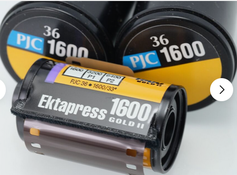
at one time in the distant past Kodak did make a fairly fast Still film in the EKtapress series, intended for Photo journalists. PJC-135 (5030) at 1600. which could be pushed to 3200 or 6400. (picture screen shot for an e-bay seller)
of course with the perfect timing kodak is known for, this was about the time that news Photographers switched to using Dig-it-al Cameras.
 

Attachments

  • EKTAPRESS1600.png
    EKTAPRESS1600.png
    241.2 KB · Views: 50
OP
OP
Skycreeper

Skycreeper

Member
Allowing Ads
Joined
Aug 11, 2024
Messages
42
Location
China, Chengdu
Format
Medium Format
Thank you all for your support. Looks like Cinestill is not meant to be pushed 2 stops. Next time I try 1 stop max.

While these pics certainly don't look like digital ISO3200 pics, they do have an interesting style, which depending on motive can be quite interesting. They certainly have a mystical look, somehow it diffuses through the image, that the scenery was quite dark ...

You may or may not like it ...

These were the better examples. They do have some artistic style. Rest of my role came out unbearable.
 

koraks

Moderator
Moderator
Allowing Ads
Joined
Nov 29, 2018
Messages
26,134
Location
Europe
Format
Multi Format
Looks like Cinestill is not meant to be pushed 2 stops.

Not just Cinestill. There are really only two current-production films out there that are intended to be pushed by more than a stop, and both are B&W. Ilford Delta 3200 and Kodak TMAX3200. Both are 1000-1250 ISO, but designed to give a desirable curve shape when underexposed and overdeveloped.

Cinestill as noted by @Film-Niko rounds up the sensitivity of their film because of the higher contrast you get when cross-processing Vision3 film in C41 developer. However, Cinestill 800 really is still only a 500 ISO speed film. Expecting it to do 3200 is really well beyond reasonable limits.

These were the better examples.

The portrait of the woman is OK. The other shot is pretty much toast, but you were shooting under challenging light and it seems that the light meter in your camera biased towards the more brightly lit areas of the scene, while the areas of interest may have been the shadow areas. I say this based on the second example of the people sitting by the window with the blue lighting in the background. In a situation like that, you may have to use partial/spot metering and then dial in a suitable exposure correction.

So in part you're expecting something from the film it can't do, and in part you appear to be running into limitations of your own metering technique.
 

lamerko

Member
Joined
Oct 27, 2022
Messages
778
Location
Bulgaria
Format
Multi Format
It depends. If you shoot during the day in good light, you can push two stops. If you have a spot meter and measure in the shadows, you can successfully push up to three stops on many of the films. On the other hand, in low-light scenes and averaged reflected light metering, you'll lose detail in most of the frame - no amount of processing will help because there's simply nothing there.
 

koraks

Moderator
Moderator
Allowing Ads
Joined
Nov 29, 2018
Messages
26,134
Location
Europe
Format
Multi Format
If you shoot during the day in good light, you can push two stops

It really doesn't matter at what time the light is made. If not enough hits the film, there's no image. You're likely referring to another variant of "you can push just fine a long as you sufficiently overexpose at the same time"...
 

LomoSnap

Member
Allowing Ads
Joined
Apr 19, 2023
Messages
61
Location
China Nanjing
Format
Med. Format RF
If you use the ECN2 process, then Push 1 = 3 minutes 40 seconds; Push 2 = 4 minutes 40 seconds
I have used Kodak Vision3 5219@push 2 to get good results, handheld shooting under street lights at night (~EI2000 f2.8 1/30s)
Due to the of the film sensitometric curve, any information below the toe is difficult to record, so the push process will not help.
It is not easy, it is more suitable for shooting some picture that are not sensitive to color shift, rather than portraits. For night portraits, using flash may be a good idea.
Untitled48.jpg
Untitled45-2.jpg
 

bluechromis

Subscriber
Allowing Ads
Joined
Sep 11, 2015
Messages
693
Format
35mm
Hi all, received good help here in this forum for my last post about Portra. Appreciate all the wonderful help. I am quite new to film development and trying different things out so I have another burning question. Hope that I am not taking to much resources out of this forum.
Tried to push Cinestill 800T to 3200. I searched online and some say need to add 20% developing time per stop, some say add 1mins per stop. Some say even more. I decided to go for 4mins 45s. The result is extreme underexposure. No details in shadows, just noise.
When I asked my chemicals vendor for advice, he recommends to push max for 1 stop only. Development time should be 5mins. Anything beyond, he said will result in a mess.
But I saw so many nice 3200 iso shots online. How is it done? Should I extend my developing time even further than 5mins? To how long? Or is Cinestill 800 indeed a mess when pushed to 3200? Any other tips for pushing?
Here are some examples of my failed attempt.

View attachment 377139

View attachment 377138

For the second one, I wonder if it might be partly a metering issue. Could the meter have been over-influenced by the bright background, leading to underexposure of the foreground?
 
OP
OP
Skycreeper

Skycreeper

Member
Allowing Ads
Joined
Aug 11, 2024
Messages
42
Location
China, Chengdu
Format
Medium Format

If you use the ECN2 process, then Push 1 = 3 minutes 40 seconds; Push 2 = 4 minutes 40 seconds
I have used Kodak Vision3 5219@push 2 to get good results, handheld shooting under street lights at night (~EI2000 f2.8 1/30s)
Due to the of the film sensitometric curve, any information below the toe is difficult to record, so the push process will not help.
It is not easy, it is more suitable for shooting some picture that are not sensitive to color shift, rather than portraits. For night portraits, using flash may be a good idea.
Thanks for the advice. Your images look nice and clean. Are they 6x7?
Do you think pushing 5219 yields better result than cinestill 800? I have not tried ECN2 development yet. Maybe next time I push cinestill to 1600 first then compare it to your result with 5219 @2000.
The portrait of the woman is OK. The other shot is pretty much toast, but you were shooting under challenging light and it seems that the light meter in your camera biased towards the more brightly lit areas of the scene, while the areas of interest may have been the shadow areas. I say this based on the second example of the people sitting by the window with the blue lighting in the background. In a situation like that, you may have to use partial/spot metering and then dial in a suitable exposure correction.

So in part you're expecting something from the film it can't do, and in part you appear to be running into limitations of your own metering technique.

For the second one, I wonder if it might be partly a metering issue. Could the meter have been over-influenced by the bright background, leading to underexposure of the foreground?
I am using evaluative metering to balance things out. If I spot meter for the dark areas, it will bring two problems, highlights get blown out (which is already in place to some extend at the table under the light), and shutter speed will be too slow. Admittedly, It is a difficult environment to balance lighting, but I expected better results.
I think I can get better results in daytime when there is more light, but then what's the point of pushing?
 

koraks

Moderator
Moderator
Allowing Ads
Joined
Nov 29, 2018
Messages
26,134
Location
Europe
Format
Multi Format
Do you think pushing 5219 yields better result than cinestill 800?

It's the same film. Cinestill just doesn't have the remjet backing. In terms of push processing, they'll behave the same.

I am using evaluative metering to balance things out.

So your light meter has favored the highlights and your shadows turn to black mush.

highlights get blown out

It's awfully difficult to get anything to really blow out on negative film. Especially on a film like this.

shutter speed will be too slow

That's what you get in low light situations...

I think I can get better results in daytime when there is more light, but then what's the point of pushing?

There you go.
 

Anon Ymous

Member
Allowing Ads
Joined
Feb 7, 2008
Messages
3,675
Location
Greece
Format
35mm
It really doesn't matter at what time the light is made. If not enough hits the film, there's no image. You're likely referring to another variant of "you can push just fine a long as you sufficiently overexpose at the same time"...

Well, I suspect he means pushing in more evenly lit scenes, without too dark shadows. With subject brightness range being rather limited, I could see how this could give more acceptable results, although by the time pushing is mentioned, some compromises have been made. And a nearly 3 stop push is too much.
 

Film-Niko

Member
Allowing Ads
Joined
Jan 22, 2009
Messages
708
Format
Multi Format
It depends. If you shoot during the day in good light, you can push two stops.

Does not make sense, as in such a situation pushing is simply not needed. Because you have enough light.
Pushing in such a situation would just significantly decrease the image quality.

If you have a spot meter and measure in the shadows, you can successfully push up to three stops on many of the films.

The ISO norm for light sensitivity of films is based on the value of logD 0.1 above base fog for Zone I.
If you maesure the light in the shadow(s), you measure for Zone II or III, defining the area in which you want to have still or enough shadow detail (according to your preferences).
So for example you measure for Zone II, and then close the aperture by three stops, as you want Zone V as your normal value for the rest of the image. And you develop normally.

But if you measure for the shadows, take that value as value for the whole image (means your are setting your shadows at Zone V), and then even push process, you'll get huge overexposure and overdevelopment, both your midtones and highlights will get much too high densities, your tonality and colors will crash.
 

Film-Niko

Member
Allowing Ads
Joined
Jan 22, 2009
Messages
708
Format
Multi Format
I think I can get better results in daytime when there is more light, but then what's the point of pushing?

Pushing is generally an emergency solution. As you have always visibly less quality by pushing.
It should only be done if all the other, much better solutions (see the list of much better options in my post above) are not possible (which is only very very rarely the case).
 
OP
OP
Skycreeper

Skycreeper

Member
Allowing Ads
Joined
Aug 11, 2024
Messages
42
Location
China, Chengdu
Format
Medium Format
Pushing is generally an emergency solution. As you have always visibly less quality by pushing.
It should only be done if all the other, much better solutions (see the list of much better options in my post above) are not possible (which is only very very rarely the case).

Yes you are right with the options. That is why I always buy the lens with largest aperture, in this case it is the 45 2.8. Unfortunately, it is still not enough, and there is no IS available in the pentax 645 system. As for option 3, I am already bringing a big film camera to dinner, wouldn't dare to bring a tripod and shoot in the middle of the restaurant. Same with flash, too much disturbance. Sometimes the situation is limiting.
Next time I push to 1600 max and try to hold my hand more steady.
 
OP
OP
Skycreeper

Skycreeper

Member
Allowing Ads
Joined
Aug 11, 2024
Messages
42
Location
China, Chengdu
Format
Medium Format
Anyone has suggestions on a good noise reduction software to remove excessive film noise? My ACR noise removal doesn't work well here, neither does Topaz Denoise. These are more suitable for digital noise I guess.
 
OP
OP
Skycreeper

Skycreeper

Member
Allowing Ads
Joined
Aug 11, 2024
Messages
42
Location
China, Chengdu
Format
Medium Format
To be brutally honest, I'd just pick a tool more suitable for the job. I.e. digital. Film is great, of course, but it has its limitations. What you're trying to use it for currently is just not what it's very suited for.

Currently, the only function of my R6 is to scan film. Film rocks :smile:
 

Film-Niko

Member
Allowing Ads
Joined
Jan 22, 2009
Messages
708
Format
Multi Format
Yes you are right with the options. That is why I always buy the lens with largest aperture, in this case it is the 45 2.8. Unfortunately, it is still not enough, and there is no IS available in the pentax 645 system. As for option 3, I am already bringing a big film camera to dinner, wouldn't dare to bring a tripod and shoot in the middle of the restaurant. Same with flash, too much disturbance. Sometimes the situation is limiting.
Next time I push to 1600 max and try to hold my hand more steady.

O.k., I understand your situation.
As the Brits say "horses for courses" or simply, get the best tool for the job.
And medium format is not the best tool for such situations.

You want to shoot film, not digital: So go for the better 35mm film solution.
For example a Nikon F6, which has by far the best mirror and shutter dampening system of all SLRs on the market. You can successfully use slower shutter speeds with that camera compared to other SLRs.
Because of that a 1/25s or 1/30s shutter speed with a 28mm or 35mm focal length lens is no problem at all to get perfectly sharp photos (based on my own experience).
And use one of the current, modern, much improved (to former lens designs) 1.4/35 or 1.4/28mm lenses: They offer very good optical performance already at open, widest aperture of 1.4 .
By that combination you already gain 2-3 stops compared to your Pentax 645 with 2.8/45 lens combination.
Or use a VR (Vibration Reduction) or IS (Image Stabilization) lens.

Another option:
A 35mm rangefinder camera (e.g. Leica M model, Zeiss Ikon ZM or Voigtländer Bessa model), also in combination with one of the current modern, much improved lenses with 1.2 or 1.4 open aperture in the 28 to 35mm focus lens range from Voigtländer, Leica, Zeiss.
If you have a very stable hand, with a rangefinder you may even hold 1/15s relatively stable with sufficient sharpness.
 
OP
OP
Skycreeper

Skycreeper

Member
Allowing Ads
Joined
Aug 11, 2024
Messages
42
Location
China, Chengdu
Format
Medium Format
O.k., I understand your situation.
As the Brits say "horses for courses" or simply, get the best tool for the job.
And medium format is not the best tool for such situations.

You want to shoot film, not digital: So go for the better 35mm film solution.
For example a Nikon F6, which has by far the best mirror and shutter dampening system of all SLRs on the market. You can successfully use slower shutter speeds with that camera compared to other SLRs.
Because of that a 1/25s or 1/30s shutter speed with a 28mm or 35mm focal length lens is no problem at all to get perfectly sharp photos (based on my own experience).
And use one of the current, modern, much improved (to former lens designs) 1.4/35 or 1.4/28mm lenses: They offer very good optical performance already at open, widest aperture of 1.4 .
By that combination you already gain 2-3 stops compared to your Pentax 645 with 2.8/45 lens combination.
Or use a VR (Vibration Reduction) or IS (Image Stabilization) lens.

Another option:
A 35mm rangefinder camera (e.g. Leica M model, Zeiss Ikon ZM or Voigtländer Bessa model), also in combination with one of the current modern, much improved lenses with 1.2 or 1.4 open aperture in the 28 to 35mm focus lens range from Voigtländer, Leica, Zeiss.
If you have a very stable hand, with a rangefinder you may even hold 1/15s relatively stable with sufficient sharpness.

Oh GAS is singing so beautifully.
I have a EOS7 and Sigma 35 1.4. Will do a comparison of 120 and 135 in such circumstances.
 

koraks

Moderator
Moderator
Allowing Ads
Joined
Nov 29, 2018
Messages
26,134
Location
Europe
Format
Multi Format
I have a EOS7 and Sigma 35 1.4.

That's a much more sensible combination than the 645 with whatever lens you put on it.
If you can get your hands on a decent stabilized lens, this will help a lot, too. I personally often use a EF 35/2 IS for this kind of thing.

The premium cameras mentioned by @Film-Niko are certainly nice and also very suitable for the reasons he details, but really not a necessity. Your EOS7 will do (more than) fine.
 

Film-Niko

Member
Allowing Ads
Joined
Jan 22, 2009
Messages
708
Format
Multi Format
I have a EOS7 and Sigma 35 1.4. Will do a comparison of 120 and 135 in such circumstances.

Do you have the current Sigma Art 1.4/35?
That would be a perfect lens for such situations. It is one of the best 35mm lenses ever designed, and gives very sharp and brillant results at open, widest aperture. Perfect for such low light situations.

And I agree with koraks concerning the Canon EF 2/35 IS. Also an excellent lens for such situations.

Your Canon EOS 7 is also a very good and suitable tool.
So it looks like you already have what you need.
 
OP
OP
Skycreeper

Skycreeper

Member
Allowing Ads
Joined
Aug 11, 2024
Messages
42
Location
China, Chengdu
Format
Medium Format
Do you have the current Sigma Art 1.4/35?
That would be a perfect lens for such situations. It is one of the best 35mm lenses ever designed, and gives very sharp and brillant results at open, widest aperture. Perfect for such low light situations.

And I agree with koraks concerning the Canon EF 2/35 IS. Also an excellent lens for such situations.

Your Canon EOS 7 is also a very good and suitable tool.
So it looks like you already have what you need.

Yes it is the Art. Decent lens indeed, wish it mounted on my 645n....
 
Last edited:
Photrio.com contains affiliate links to products. We may receive a commission for purchases made through these links.
To read our full affiliate disclosure statement please click Here.

PHOTRIO PARTNERS EQUALLY FUNDING OUR COMMUNITY:


Ilford ADOX Freestyle Photographic Stearman Press Weldon Color Lab Blue Moon Camera & Machine
Top Bottom