• Welcome to Photrio!
    Registration is fast and free. Join today to unlock search, see fewer ads, and access all forum features.
    Click here to sign up

How do I create pics with that 3D look?

Millers Lane

A
Millers Lane

  • 1
  • 1
  • 23
Friends

D
Friends

  • 1
  • 0
  • 33

Recent Classifieds

Forum statistics

Threads
202,891
Messages
2,847,125
Members
101,531
Latest member
F2_User
Recent bookmarks
0

Jonnysound

Member
Allowing Ads
Joined
Aug 3, 2017
Messages
11
Location
England
Format
35mm
Hi.

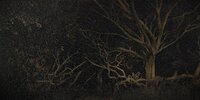
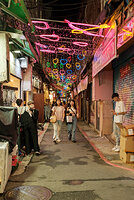
I want to make my pics look like the ones ive attached below, looks like a wide aperture and sharp lens. I assume its something expensive like leica and carl zeiss :cry:, but i dont want to spend thousands (maybe £500, i dont know). Ive read about contax carl zeiss 50mm f1.7* T Planar Lens (AE). If it is that, then what camera body? I like using kodak ektar 100 and im going to try those kodak vision 3 cinefilms. I dont know what lens does that and what body? One that could go with the om1 would be good. (I had a kind of similar look when ive used my zorki 4k) i like rangefinders.

My cams
Zorki 4K
Olympus Trip 35
Olympus OM1n
 

Attachments

  • Screenshot_2017-08-10-23-56-00-1.png
    Screenshot_2017-08-10-23-56-00-1.png
    1 MB · Views: 344
  • Screenshot_2017-08-10-23-55-00-1.png
    Screenshot_2017-08-10-23-55-00-1.png
    1.2 MB · Views: 335
I assume the look you are looking for is the in focus foreground and out of focus background. That is generated, as stated above, by using a large aperturw like 1.4 or 1.8.
The effect will be more pronounced if you have a longer lens, for example an 85mm to 135mm for 35mm film (longer than that will also work).

claudio
 
You are doing quite well. Do not think about it, just enjoy your photography.
 
I assume the look you are looking for is the in focus foreground and out of focus background. That is generated, as stated above, by using a large aperturw like 1.4 or 1.8.
The effect will be more pronounced if you have a longer lens, for example an 85mm to 135mm for 35mm film (longer than that will also work).

claudio
Ok thanks, Just found a few lenses, the lowest is 3.5f some are 4f minimum, would that still work? (75-150mm 4f minimum). Currently have a 50mm 1.8f lens
 
50mm at 1.8 will work. Another variable to keep in mind is that the closer you are to the subject you want in focus, the more pronounced the out of focus background.
The zoom at 4f and at 150mm would work too.

claudio
 
Last edited:
Use your 50, that's a good lens. Olympus made an 85 f:2 that would be perfect used at wide apertures. I use either 85 or 105 to isolate subjects in that manner, but your 50 will do it, especially close up.
 
Medium format is the way go.

A contrasty prime lens (with fewer elements than zoom) in the right light and sharp contrasty saturated film. Ektar and Velvia are great.
 
If you want a "3D," feel like you're right there kind of look, I would certainly not use a long focal length, which will flatten and abstract your background and give no Z-axis impression of your subject. These references were taken, indeed, with a wide aperture, but also with a 50mm or wider lens, which is equally important to their look. They are subjects that exist in a space and have Z-axis depth. I would advise a 50mm or 35mm f/1.4 lens.

In 35mm, I've only shot with Contax/Zeiss and Nikon glass, mostly with their 50mm offerings. The Zeiss images had a much more dimensional subjective rendering; my Nikon images looked much flatter - this was a strong subjective impression that went beyond contrast and micro-contrast and is difficult to put into words. No doubt a summicron would also be very beautiful and sculptural.

When I got my used Contax RTSII and 50mm f/1.4 in 2007, I probably spent $450 for both together. I don't know what they cost now.
 
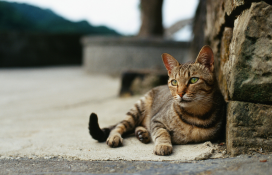
I would guess that the cat was photographed using a slightly longer than "normal" lens because I see some flattening of perspective.
Mostly, your examples are relying on shallow depth of field to achieve the look you like.
Another really important element though is lighting.
 
Lots of good recommendations here, and I'd like to emphasize that you don't need expensive gear to get this look. Your OM-1 is more than capable and there are plenty of excellent Zuiko lenses. Just good lighting and the right subject will make more of a difference than anything else. Try shooting from different angles than the usual "eye-level". Using longer lenses can give you feeling of compressed space and emphasize shallow depth-of-field. Shooting wide open with normal or wider lenses will also give that effect, but you've got to get closer to the subject and pay more attention to the backgrounds. There's not really a formula or "best equipment" recommendation for this, just use a camera you like and take a lot of photos.

Sometimes it comes down to the right timing/subject and just pure dumb luck...

Bronica SQ-A, 80mm lens
Roan_1_sm.jpg
 
Hi.

I want to make my pics look like the ones ive attached below, looks like a wide aperture and sharp lens. I assume its something expensive like leica and carl zeiss :cry:, but i dont want to spend thousands (maybe £500, i dont know). Ive read about contax carl zeiss 50mm f1.7* T Planar Lens (AE). If it is that, then what camera body? I like using kodak ektar 100 and im going to try those kodak vision 3 cinefilms. I dont know what lens does that and what body? One that could go with the om1 would be good. (I had a kind of similar look when ive used my zorki 4k) i like rangefinders.

My cams
Zorki 4K
Olympus Trip 35
Olympus OM1n
they indeed look like a wide aperture with a very narrow depth of field; my Nikon 85mm f/1.8 can do this.
 
Bokeh fans will spend a fortune on wide aperture lenses. Or you can shoot a cheap 75-300mm zoom at minimum focus and maximum aperture. The DoF will be tiny.
 
Just google "Depth of field" You'll find your answer. :smile:
 
You've got a 50mm f1.8 -- it will do what you want. Other lenses may give you shallower DOF, but at f1.8 and close-ish focus you'll have as little DOF as you can handle and it can take photos similar to the ones above with ease. Set the Aperture to 1.8 and you'll see the effect through the viewfinder. Watch what happens as you change the focus and you can see the relationship between DOF and focus distance without even having to shoot a frame.

You'll also want a slowish film if you're shooting at 1.8 outside in good light.
 
I want to make my pics look like the ones ive attached below
Just as a matter of interest, are those pictures public domain or have you taken screenshots of someone else's copyright images and reproduced them here without attribution?
 
I would say the cat photo is definitely a slightly long lens, 85- 105mm on a 35mm camera. A Jupiter 9 on your Zorki or a Zuiko 100mm; either will give you that slightly flattened shallow DOF if used at a wide aperture and not set you back more than $100.
 
Just as a matter of interest, are those pictures public domain or have you taken screenshots of someone else's copyright images and reproduced them here without attribution?

Surely this falls within fair use.
 
You can create the illusion of depth with any camera. Values, how light or dark an object is, the eyes see lighter values as expanding while darker values recede. Also painters have used visual tricks to create depth by having objects in the foreground sharp and the background being hazy and having less detail. My point is it's not the equipment per se, but your skills as an artist to create the effects you want. Lots of artist tutorials on composition on YouTube.


If you constantly practice good composition, it will be second nature.
 
Surely this falls within fair use.
Yeah, it does.

The law as written states:
"Notwithstanding the provisions of sections 106 and 106A, the fair use of a copyrighted work, including such use by reproduction in copies or phonorecords or by any other means specified by that section, for purposes such as criticism, comment, news reporting, teaching (including multiple copies for classroom use), scholarship, or research, is not an infringement of copyright."

This clearly is for the purposes of comment and teaching (or to be taught, in this case, how to achieve that effect), and has in no way limited the copyright owner's (if these are not public domain anyway) rights. Worst case scenario, you'd get a C and D letter which you could either fight (and probably win) or just take the photos down and avoid all of that mess without facing any real legal trouble. The photos served their purpose by this point anyway.

Anyway, like others have said, it's just a product of a wide aperture and longer focal length. You might be able to find an Olympus 50mm f/1.4 for not too much money, or a 100mm f/2.8 for a bit more. Also, the closer you focus the lens, the more blurred the background will be.

The Jupiter 8 50mm/f2 for your Zorki will do a nice job if shot wide open. And it's dirt cheap! Plus it does a nice job with the blurring of the background, without making it too distracting.
 
Not sure it matters, but I found one of them here:
https://www.flickr.com/photos/dnh500/14391644297

There is a right way to do what you wanted to accomplish, and a wrong way. The right way is to grab the link (URL) where the original image resides, and paste it into your post. The wrong way (because it violates Flickr's TOS and the Intellectual Property of the photographer) is to take a screen shot or a copy of the image and repost it on APUG's servers. You opted for the latter, and its considered bad form, and a minor violation of the photographers IP.
 
Yes, as stated, a longer focal length can give you the sort of compression - open it up. Play with it a bit - shoot a few comparison shots and see how the look changes for you. Then adjust and reshoot. At the risk of getting a bunch of nasty comments :smile: digital works really well for this type of playing (at least for me). The theory is the same though.
 
At the risk of being a bit cheeky and perhaps even a bit off topic, I have to say that the best way of achieving a 3d look is using a stereoscopic camera! BTW, you can also take 3d photos using any regular "mono" camera and taking two shots sequentially, transposing the camera laterally about 3 inches between the exposures. In the case of a stereoscopic image pair however, you want maximum depth of field (hyperfocal) and use small apertures.

There is much good advice by the contributers above.
 
The definition of space within the composition is also key. A wider lens helps with up close subjects as they tend to "tease apart" a scene. The spaces behind the cat are fantastic.
 
Photrio.com contains affiliate links to products. We may receive a commission for purchases made through these links.
To read our full affiliate disclosure statement please click Here.

PHOTRIO PARTNERS EQUALLY FUNDING OUR COMMUNITY:


Ilford ADOX Freestyle Photographic Stearman Press Weldon Color Lab Blue Moon Camera & Machine
Top Bottom