• Welcome to Photrio!
    Registration is fast and free. Join today to unlock search, see fewer ads, and access all forum features.
    Click here to sign up

High contrast print developers

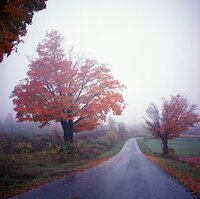
Rainy Day Trees

A
Rainy Day Trees

  • 6
  • 1
  • 88
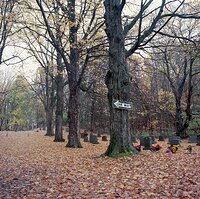
One Way

A
One Way

  • 3
  • 1
  • 87

Forum statistics

Threads
203,156
Messages
2,850,709
Members
101,704
Latest member
yppnq
Recent bookmarks
0
Both graded. Sorry, I forgot that. In fact, most graded papers today are both blue and green sensitive.

PE
 
The article in Photographic Techniques that I have referred to before, by Dickinson and Zawadski, shows that manny VC papers have such poor VC characteristics that they are not of professional quality for many print contrasts. They show curves of several products but do not name them. I believe that only two papers in their test procedure passed and would get what I would call a high quality mark.

VC papers are not easy to build. I think that Kodak, Fuji and Ilford had/have the best going.

PE

And so one of the poor performing curves may have been Kentmere Fineprint.

Tom.
 
Searching on the Photo Techniques website;

'Variable-Contrast Papers by Dick Dickerson and Silvia Zawadzki.
The history and science behind papers, how to evaluate printing papers. Vol. 26, No. 2, page 18, year 2005.'

Is this the article?

Tom.
 
I believe that is the one. If so, it has at least a full page of curves.

And, of course, Ctein's book "Post Exposure" has a very complete treatment of this subject with photographs and figures.

PE
 
Much more... And less, at the same time. It is an article compared to a book. They are different. Apples to Oranges...

PE
 
'Variable-Contrast Papers by Dick Dickerson and Silvia Zawadzki. The history and science behind papers, how to evaluate printing papers. Vol. 26, No. 2, page 18, year 2005.'

Is this the article?

Tom.

I still have not located a copy of this yet!
 
Back to the original subject, most references say that you can not get much of an increase in contrast in the print by simply changing the developer - maybe a grade, if you are very lucky. The single grade papers are usually the most adaptable this way. There are several high contrast print developers listed for those who mix there own. Agfa 108, Edwal 120, Gevaert GD-4, D-171, and the high contrast mixes for D-64 and Beers come to mind. Undiluted D-19b is sometimes recommended, and undiluted Dektol would probably show an effect. PE's suggestion on raising the pH is certainly an easy way to go with premixed developers. Just add an appropriate amount of sodium carbonate (washing soda), trisodium phosphate (TSP), or sodium hydroxide (lye). Intensification with selenium toner gives a half to three quarters of a grade increase in contrast pretty easily with a fairly modest increase in density.
 
Today, many emulsions are self limiting and develop to a given point then pretty much stop. This behavior was not true in years gone by when increasing development time or developer strength gave increasing contrast, then increasing fog and then poor images.

I have left some modern paper in developers for a considerable time with no change in fog or contrast. Speed may or may not go up, but if it does go up, it can often be misinterpreted as a contrast increase unless one reads a step scale along with the print.

PE
 
2. ID-14 developer at full strength would appear to give higher contrast, even to the Kentmere paper, but paper choice made a more significant difference. ID-14 developer may give more flexibility printing low contrast negatives on the ILFORD paper as the filtration settings on the enlarger can be lower.

Tom did you make any comparisons with Dokumol? I would be very interested in the results.

For those who have experience with mixing your own, how much sodium carbonate should be added to a litre of pre-mixed developer to increase contrast?

Thanks
 
A 20% increase in Carbonate above the original level makes quite a significant difference, with something like PQ Universla/Multigrade/ D72/Dektol this roughly equates to adding around 5-7 gms per litre of working strength solution.

Ian
 
Back to the original subject, most references say that you can
not get much of an increase in contrast in the print by simply
changing the developer; maybe a grade, if you're very lucky.
The single grade papers are usually the most adaptable ... .

There are several high contrast print developers listed for those
who mix there own. Agfa 108, Edwal 120, Gevaert GD-4, D-171,
and the high contrast mixes for D-64 and Beers come to mind.
Undiluted D-19b is sometimes recommended, and undiluted
Dektol would probably show an effect. PE's suggestion on
raising the pH is certainly an easy way to go with
premixed developers.

"Maybe a grade" Not bad and I've tested and gotten that
and a little more. I've read that less than a 1/4 grade change
is difficult to perceive. With a contrast control developer such
as Beer's or Adams' Ansco 130 fractional grades are possible.

Hydroquinone is used in those two and likely many other
developers for an increase in contrast. To do so it must
be active; at high ph. When active it disproportionately
develops the more exposed areas of the film or paper.

Slavich has been mentioned. From my tests I think it
possible it may just make grade 6; SIX. That's from
my tests of grade 2 which made grade 4 using
Beer's 7, the high contrast blend. Dan
 
Tom did you make any comparisons with Dokumol? I would be very interested in the results.

Gary,

I didn't make any comparisons with Dokumol. However, Tetenal do seem to market Dokumol as a high contrast and cold tone developer but I've not used it; and the tone may well depend on the type of emulsion. ID-14 with the ILFORD MGIVFB GLOSS paper produced a neutral tone.

Tom.
 
Most condenser enlargers use a diffuse bulb and so offer very little increase in contrast compared to a colour head.

Ian

Thats not my experience. My Ahel condenser (opal bulb) was well over a grade higher in contrast, and if my recollection is correct closer to 1.5 grades, more contrasty than my devere 5x4 or 10x8 colour heads. So much so that negs I printed with considerable difficulty with grade 1 or 0.5 were printing straight at middle grades on either colour head.

Rgds
 
Gary,

I didn't make any comparisons with Dokumol. However, Tetenal do seem to market Dokumol as a high contrast and cold tone developer but I've not used it; and the tone may well depend on the type of emulsion. ID-14 with the ILFORD MGIVFB GLOSS paper produced a neutral tone.

Tom.

I'll maybe buy some scales and try mixing some ID 14 to do a comparison.
 
Variable-Contrast Papers by Dick Dickerson and Silvia Zawadzki

'Variable-Contrast Papers by Dick Dickerson and Silvia Zawadzki.
The history and science behind papers, how to evaluate printing papers. Vol. 26, No. 2, page 18, year 2005.'

- This article is worth reading for its clear discussion of some of the issues involved with variable contrast paper design; including dye sensitization and monodisperse v. polydisperse emulsions, and how these effect the practical printing qualities of the paper.

Tom.
 
Tom:
In the emulsion making section PE has explained the differences between mono and poly disperse emulsions. In the article he discusses how the affect both paper and film qualities, iirc.

Ben
 
Photrio.com contains affiliate links to products. We may receive a commission for purchases made through these links.
To read our full affiliate disclosure statement please click Here.

PHOTRIO PARTNERS EQUALLY FUNDING OUR COMMUNITY:



Ilford ADOX Freestyle Photographic Stearman Press Weldon Color Lab Blue Moon Camera & Machine
Top Bottom