• Welcome to Photrio!
    Registration is fast and free. Join today to unlock search, see fewer ads, and access all forum features.
    Click here to sign up

Help: What would you cover?

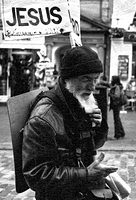
Coburg Street

A
Coburg Street

  • 0
  • 1
  • 55
Jesus

A
Jesus

  • 0
  • 1
  • 51

Recent Classifieds

Forum statistics

Threads
201,737
Messages
2,829,355
Members
100,923
Latest member
GB-A2
Recent bookmarks
0

esanford

Member
Allowing Ads
Joined
Apr 4, 2004
Messages
637
Location
Hertford Nor
Format
Medium Format
After an outstanding response to my question: Why Do you shoot film?, I have a final request for help. If you were preparing to deliver a workshop on traditional film for photography for a fairly general audience of mostly amateur photographers,

What 3 Topics would you be sure to cover?


As with my last request, I would appreciate the thoughts of as many of you who would care to share them.

Thanks again,


Ed Sanford
 

removed account4

Subscriber
Allowing Ads
Joined
Jun 21, 2003
Messages
29,832
Format
Hybrid
composition.

have them look at art ( paintings from long ago ).
then have them photograph "stuff" + learn how their
composition was good or bad .. and go from there.

photographing people - -same thing as above ...

good luck!
sounds like a great class :smile:

john
 

BradS

Member
Allowing Ads
Joined
Sep 28, 2004
Messages
8,130
Location
Soulsbyville, California
Format
35mm
Right off the top of my head:

1) Exposure calculations - using: S + L = A + T. That is, film speed plus light or brightness value equals aperture value plus time value. Some books refer to it as the APEX system...which, I think stands for Additive systems for Photographic Exposure. It seems that this concept has been completely lost although it is necessarily, how every in camera exposure meter works.

2) Perspective is completely determined by lens position. Shape is determined by the relationship of the film plane to the object.

3) Take notes all the way through the process....composition, exposure, development, printing and examination of the final print. I would teach what notes to make and how they are useful.
 

phaedrus

Member
Allowing Ads
Joined
Aug 19, 2006
Messages
466
Location
Waltershause
Format
Multi Format
Usage of film is a vast field, it used to be all of photography. My key points would be:
Usage of black & white film, exposure - density response and a simplified version of the zone system.
Usage of colour film, when and what for to use negative or slide film.
How to get from the negative to a print in the wet darkroom and a hybrid workflow.
As I now realize, that's too much for a workshop, it's more of a curriculum for a course.
 

TheFlyingCamera

Membership Council
Advertiser
Allowing Ads
Joined
May 24, 2005
Messages
11,599
Location
Washington DC
Format
Multi Format
First off, how long do you have for this workshop? is it a 1-hour lecture, or is this a semester-long series of classes, three hours each? What I would cover would vary greatly based on the scope of this workshop. For a short presentation with no hands-on component, I would discuss the basics of film as a medium (strengths: longevity, exposure latitude, creative potential; weaknesses: darkroom dependency, inability to review final negatives onsite, etc). Then I would segue in to printing from film - the enlarging process, paper choice, black-and-white and color. I would bring along examples of wet-darkroom process prints so people could see and touch a fiber-based black-and-white print and understand the difference between that and an inkjet print. Unless you have hours on end, I would keep technical disussion of things like the Zone system to a minimum.
 
OP
OP
esanford

esanford

Member
Allowing Ads
Joined
Apr 4, 2004
Messages
637
Location
Hertford Nor
Format
Medium Format
First off, how long do you have for this workshop? is it a 1-hour lecture, or is this a semester-long series of classes, three hours each? What I would cover would vary greatly based on the scope of this workshop. For a short presentation with no hands-on component, I would discuss the basics of film as a medium (strengths: longevity, exposure latitude, creative potential; weaknesses: darkroom dependency, inability to review final negatives onsite, etc). Then I would segue in to printing from film - the enlarging process, paper choice, black-and-white and color. I would bring along examples of wet-darkroom process prints so people could see and touch a fiber-based black-and-white print and understand the difference between that and an inkjet print. Unless you have hours on end, I would keep technical disussion of things like the Zone system to a minimum.

Good Question... I only have 2 hours

Thanks for asking...

Ed Sanford
 

TheFlyingCamera

Membership Council
Advertiser
Allowing Ads
Joined
May 24, 2005
Messages
11,599
Location
Washington DC
Format
Multi Format
If you have the time, I'd put in a brief history of photography from Daguerre and Talbot to the arrival of film in the 1880s. Give a bit of context behind the significance of film as a technological innovation and what that meant for people in general and photography in particular. Then go on to discuss the state of film today - black-and-white negative, color negative and color transparency, how they differ from each other, and then discuss the benefits, as mentioned before. Focus on what film can DO, in a positive way.
 

PhotoJim

Member
Allowing Ads
Joined
Oct 9, 2005
Messages
2,314
Location
Regina, SK, CA
Format
35mm
Scott's (The Flying Camera's) ideas are great. I won't bother with my own detailed reply because he nailed it.

One advantage of showing historical photographs is that you can show how archival film photography is. There are photos still in existence from the 1830s. Obviously, with digital we have the potential to preserve every image without any loss, but that seems not to happen because of the bother involved.

The Monica Lewinsky-Bill Clinton photograph would be another good one to show. All the digital photographers at that photo opportunity deleted the images, as far as can be determined, because they didn't seem important. The only surviving photos of the two in the same frame are on film, because you can't delete film. This really underscores the importance of preserving all images. Even if your audience shoots digital after your presentation, they might change how they shoot it.
 
OP
OP
esanford

esanford

Member
Allowing Ads
Joined
Apr 4, 2004
Messages
637
Location
Hertford Nor
Format
Medium Format
The Monica Lewinsky-Bill Clinton photograph would be another good one to show. All the digital photographers at that photo opportunity deleted the images, as far as can be determined, because they didn't seem important.

Do you know where I can find the documentation for this fact? That's pretty powerful... Oh... Which photograph? I've seen two out there.

Ed Sanford
 

DannL

Member
Allowing Ads
Joined
Jan 11, 2006
Messages
586
Location
Oklahoma
Format
Multi Format
1. Cameras/Lenses - Getting the most from your camera and lens.

2. Negative Development - Getting it right.

3. Print Development. - The reason to photograph.
 
Last edited by a moderator:

Vonder

Member
Allowing Ads
Joined
Jun 16, 2007
Messages
1,237
Location
Foo
Format
35mm
Archival will mean nothing to a bunch of "kids". If that's your audience, you're doomed from the get-go. Nobody under 25 thinks about the far future, like, when they're 40. :smile:

For older audiences, archival will be relevant if they can connect with the concept. I have many slides my dad took while in the Navy in the 1950s. Tell them that while many of the things they photograph may seem neat, to them, what will be treasured are images of themself, with friends, and family.

Tell them what film is, tell them how light reacts with silver, and then how the reversal of the reversed image results in a photograph. Those'd be my top 3.
 

keithwms

Member
Allowing Ads
Joined
Oct 14, 2006
Messages
6,220
Location
Charlottesvi
Format
Multi Format
# Topics I'd recommend covering:

(1) composition & exposure. The nuts and bolts details of film exposure are quite different from digital because of the different film options, their characteristic sensitivity curves, their different kinds of grain, and reciprocity and so forth. You could spend a whole lecture just on what's so different about film in the various formats and how this relates to detail, tonality, dynamic range etc. I'd make a passing reference to the many different kinds of cameras that film users still use- from 35mm RFs to SLRs to medium format to LF view cameras etc. Equipment diversity is something that most digital users are not at all familiar with. Look, sometimes you get questions like: "why don't you just buy a 5D and t&s lens be done?" We need to try very hard not to scoff at such questions because the person who asks them probably doesn't know how ridiculous a proposition that is.

(2) silver printing and toning - just explain how many creative and individual output options you have. I would emphasize that these prints are handcrafted and individual... as opposed to mass produced and identical. Digital shooters need to hear, in a calm and rational and nonconfrontational way, why we still do what we do and why they might do it too.

(3) alt printing (e.g. cyano) - just give a flavour of the many output options you have and please remind people that even if your capture is digital, you can still do alt prints.

Topics (2) and (3) could be done with small contact prints. I did this recently with a class, we cleared some polaroid type 55 negs and then contact printed them. Even the most avid digital users are blown away to see type 55 in use!
 

Sino

Member
Allowing Ads
Joined
Feb 19, 2005
Messages
166
Location
Chania, Gree
Format
Multi Format
As it has already been pointed out, if you're teaching to people under the age of 25, be positive and show them how fun shooting/developing/printing film can be. I wish I had a teacher when I was that age to show me all the neat little things I know of today in a 'cool' way instead of all the mambo-jumbo "should know" stuff.

-Sino.
 

PhotoBob

Subscriber
Allowing Ads
Joined
Feb 16, 2006
Messages
590
Location
Abbotsford, BC
Format
Multi Format
Query answers

This will probably depend a lot upon the type of photography one does.
It will also depend upon one's experience and comfort level in conducting workshops.
Nevertheless, here are a few suggestions.
First, composition, learning to appreciate the scenic landscape for instance.
Second, exposure, explore how depth-of-field and selective focus and panning affect an image. Consider light, it would be nice to appreciate how the light on a scene will change throughout the day.
Third, Get out there and capture those landscapes. In the field, more questions are likely to arise that are relevant to the photographer. Here is where some one-on-one tutoring can be very valuable.
I think it is also important as an instructor to keep learning as well. Perhaps something a student says in response to another's question or things like that.
Hope this is of some relevance.
 

walter23

Member
Allowing Ads
Joined
Sep 19, 2006
Messages
1,206
Location
Victoria BC
Format
4x5 Format
If the point was film, I wouldn't devote the workshop strictly to composition & exposure and those things which you can pick up in any workshop whether digital or film. I'd probably give an introduction to those things if the audience needed it, but I'd stress the unique things that film can provide that you can't get digitally. And I don't mean intangibles that the film hardcore would cling to like "soul" or "feel", I mean demonstrable physical differences.

1. Printing processes that give results very unique to film (e.g. alt process prints, silver gelatin and toning, liquid emulsions painted on various substrates, etc).
2. Large format view cameras (and maybe ULF, and a bit on antique cameras / lenses)
4. Pinhole photography (you really need a fair bit of surface area to get good pinhole results - a DSLR sensor just won't cut it)
5. Resolution of LF negatives & transparencies, scanning and digital output (like it or not, this is the most viable option for colour LF work for most people)
6. And an overview of basic darkroom work (film developing and printing).

For field work, let people maybe choose a format or build a pinhole camera and go make some negatives, then get people to develop them and print them somehow (for large format, maybe with cyanotype or van dyke).


After an outstanding response to my question: Why Do you shoot film?, I have a final request for help. If you were preparing to deliver a workshop on traditional film for photography for a fairly general audience of mostly amateur photographers,

What 3 Topics would you be sure to cover?


As with my last request, I would appreciate the thoughts of as many of you who would care to share them.

Thanks again,


Ed Sanford
 
Last edited by a moderator:

Kino

Subscriber
Allowing Ads
Joined
Jan 20, 2006
Messages
7,947
Location
Orange, Virginia
Format
Multi Format
If I was running the show, I'd bring a nice b&w negative to the class, take them in the darkroom, print it and let them see the image come up; very first thing.

THEN go on and give them the classes in photo arts...

Its the magic that counts.
 

eddym

Member
Allowing Ads
Joined
Jan 22, 2006
Messages
1,924
Location
Puerto Rico
Format
Multi Format
1. Exposure; the relationship of aperture and shutter speed.
2. Film speed; the relationship to exposure.
3. How much light is out there; starting with sunny 16 and relating it to 1 & 2.

If you can do that in 2 hours, you've done well.
 

David Brown

Member
Allowing Ads
Joined
Feb 16, 2004
Messages
4,060
Location
Earth
Format
Multi Format
If you were preparing to deliver a workshop on traditional film for photography for a fairly general audience of mostly amateur photographers, What 3 Topics would you be sure to cover?

Make-up of the audience is a big variable, as stated. But, all things being equal, I have actually been giving this a lot of thought. Besides this forum, I also participate on a state-based forum (in Texas) that is about half the size of APUG, but is 99% digital. However, whenever film is mentioned, an "old" camera (25 years :rolleyes:smile: is discovered, or black and white comes up, there is always very positive response. What I have discovered is that the majority of these folks think that one CAN'T do film or darkroom anymore because the equipment and/or materials are not available. Afterall, there's no darkroom section at the Wolf/Ritz where they bought their gear! :wink:

So, I have been mulling around an idea for a workshop for B&W film. I wouldn't talk about composition, art, or even exposure; or anything that would be common to the digital shooters that would be my audience (some of which are full time professionals). What I would do is get some of these folks together to demonstrate to them that film is alive and well - and available! :smile:

I would develop a roll of film, and then make prints in a darkroom. Giving detailed instruction along the way, and always with hand-outs and references. This would be the the visual/activity part of the day, but have for them information on:
  • where to get gear and supplies
  • film formats and the advantages of each
  • the costs necessary to set up a basic home darkroom
  • costs/avalability/sources for the plethora of used, high quality gear
  • products available (film, paper, chemistry, etc.)
  • peer support (like us)
In other words, really "evangelize" (if you will) for film and analog processes. It would NOT be an A vs D speech. In fact, digital wouldn't even have to be mentioned - at least until someone in the group brought it up. :wink:

Oh, and besides the prints you make as a demo, show them some really high quality mounted fiber prints. One (good) picture is worth 1000 words ...
 

nsurit

Subscriber
Allowing Ads
Joined
Jan 27, 2005
Messages
1,809
Location
Texas Hill Country
Format
Multi Format
What I've found is that those who show up are really there because they want to take better photographs. At some level they know the results they are producing are less than thrilling. One could develop a workshop around the following three topics and spend whatever amount of time allotted to doing so. My three are:

Turn off the flash.

Get closer to your subject.

Take lots of pictures.

Bill Barber
 

MattKing

Moderator
Moderator
Allowing Ads
Joined
Apr 24, 2005
Messages
55,116
Location
Delta, BC Canada
Format
Medium Format
I'd try to concentrate on the features of film that are more likely to differentiate it from digital, but I'd also try to highlight anything that shows how film is even more viable in a digital world.

I might try something like this:

1) Shoot something in Black and White that is capable of being made into a very good print, but also capable of being scanned effectively.

2) If possible, it should be on film that is at least MF and exhibit shallow depth of field - something that is fairly hard to do with the smaller sensors prevalent in digital.

3) Show the group a scanned image on a computer screen. It should be reasonably impressive in this mode.

4) Then show the group an original print, on at least 8x10 paper.

5) Then, show the group a number of different versions of the same print, reflecting different printing decisions, or paper surfaces, or toning choices.

6) Then show the group what the original negative looks like, highlighting how it can be stored compactly and safely for long periods of time. If the negative was shot on a medium format or larger camera, you might want to demonstrate the camera as well (35mm cameras are probably not exotic enough for this purpose).

If you really want to try a gimmick (and I'm not sure how easy or practical this would be to do) see if you can find out ahead of time how many of the group have cel phones that you can email a picture to, and what their email addresses are. Then, when they have the good photographic prints in front of them, email the resized digital versions to their cel phones and ask them to view and compare the cel phone image with the photographic prints.

I would be concentrating throughout on the flexibility and adaptability of film, even in the digital age,

Finally, if possible and the negative lends itself to it, it would be great to show them an even bigger print - at least 16x20, if not larger, to highlight the capability of film.

You might consider another similar approach - use a digital projector to project a file scanned from a colour slide, and then follow it up with the original slide projected using a good slide projector.

Just some thoughts, hope they help.

Matt

 

tim elder

Member
Allowing Ads
Joined
Oct 9, 2005
Messages
147
Location
New York, NY
Format
Multi Format
I would show people how to develop black & white film and how to print it. There's nothing as magical as that in film photography; it amplifies the tactile nature of the medium and the physical nature of the process. Showing a group of beginners interested enough to attend a film workshop exactly how to do it will spark their excitement.

Tim
 

kevs

Member
Allowing Ads
Joined
Aug 21, 2006
Messages
711
Location
North of Pangolin
Format
Multi Format
Hi Ed,

I'm trying to put myself in the shoes of someone who hasn't done an awful lot of film photography - what information would tempt me to try out film for myself. Arguing 'this is better than that' wouldn't wash (I know you won't be saying that!) - I'd need a reason to leave my personal comfort zone.

Maybe some points about the psychological aspects of film use would be relevent, especially if the audience is mostly new to film. IMO using film cameras, especially medium format upwards because of their nature, is slower and more thoughtful and methodical.

How about - as someone mentioned - the ability to use older, classic cameras? That's a real and totally different experience.

If you're going into film specifics, maybe a rundown of film types and what each is best at; ie slower films for landscapes, studio portraits, tripod use etc, higher speed films for hand-holding, action shots etc. The advantages and disadvantages of each type - grain versus sensitivity etc. Of course there's no hard rule that says, 'you must use Film X at 25 ISO for landscapes on a tripod because of...', but some guidelines and basic info might be in order.

Specialist films like Infra-Red, and techniques like cross-processing, can give unique results.

The ease of experimental techniques like pinhole camera use and plastic cameras.

I hope that's useful,
kevs
 

CBG

Member
Allowing Ads
Joined
Nov 21, 2004
Messages
889
Format
Multi Format
I'd try to speak to what makes film (and I presume, traditional paper too) special, different, useful and desirable. For my money one of the most special aspects is the physicality of traditional materials. Think selective bleaching, dodging, burning ... physical manipulations of the print. Some of Joel Peter Witkin's images look very manipulated. Be careful about which images you reference since some are a bit too revealing for a class.

Older pictorialist photos might be a good resource since they really utilized the physicality of the materials. Experimental artist / photographer Naomi Savage also is interesting.

There are tons of connections between photography with traditional materials - photo engraving - photo etching - photo lithography .... and the larger world of art.

Best,

C
 
Photrio.com contains affiliate links to products. We may receive a commission for purchases made through these links.
To read our full affiliate disclosure statement please click Here.

PHOTRIO PARTNERS EQUALLY FUNDING OUR COMMUNITY:


Ilford ADOX Freestyle Photographic Stearman Press Weldon Color Lab Blue Moon Camera & Machine
Top Bottom