

• Welcome to Photrio!
    Registration is fast and free. Join today to unlock search, see fewer ads, and access all forum features.
    Click here to sign up

HC110 monobath, bouncing this off y'all

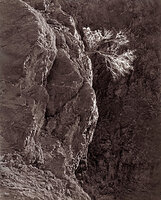
Bush on Canyon Wall

A
Bush on Canyon Wall

  • 0
  • 0
  • 0
double portrait

A
double portrait

  • 1
  • 0
  • 20

Forum statistics

Threads
203,257
Messages
2,852,002
Members
101,747
Latest member
Tallphotographer
Recent bookmarks
0

Christopher Walrath

Member
Allowing Ads
Joined
Dec 30, 2005
Messages
7,175
Location
Milton, DE USA
Format
Analog
I am going to try a monobath with HC110 Dil B and Kodafix for 4x5 sheets. Here's my thinking. See what you all think and give me some thoughts.

I'm thinking . . .

As a starting point, TMX and TMY are processed for 6 minutes in HC110 B as roll film, 7.5 as sheets for a 25% increase in time from roll films to sheets (generally I suppose).
MDC says 5 minutes for HP5+ roll film in Dil B so an increase would be to 6'15" for sheets, continous agitation at 20C, as I am processing 4x5 sheets.
1000mL Dil B is 35mL HC110 syrup and 965mL water. I have seen where you add 1/16th the volume in fixer at roughly 80% the developing time for a monobath developer. So I must add 70mL of straight Kodafix at the 5:00 mark, continuously agitating for a total of, 12 minutes dev and fix (5 in the HC110 and 7 after introduction of the fixer)? Sound right as a starting point?

What do you think? Thank you very much in advance. I'll check back in in a few hours.
 
Sounds like a good starting point for a two-stage Gainer-style monobath process (Haist also mentions this method). Report back and say how it goes!

You might be able to get away with less fix time with HP5+ than with T-Max, because too much fix time in a monobath can cause sludge to plate out onto the film, so it's good to trim this to a minimum. You might check it 2 minutes after adding the fix, and if it's cleared, just fix for two more minutes.

You might also try a weaker dilution of HC-110 so that it will be closer to exhaustion when adding the fix, but that may not be necessary.
 
I'm not trying to be a smart a**, what are you striving for with the monobath??..Thanks..Evan Clarke
 
Is the objective to get a monobath that works, or to get a monobath that works with specific materials, or to engage in some mad science?

There's an HC-110 monobath recipe around that originated with Donald Qualls---it uses a rapid fixer, not Kodafix, but it's a single-stage that doesn't depend on adding the fixer during processing. However, if you need to use a non-rapid fixer specifically, or if the point is to do the experimentation, a pre-existing recipe won't do you that much good, I guess.

-NT
 
Hey, Evan, since you ask . . . ;p I have VERY limited space with which to process and the mechanics of a daylight tank aren't conducive to the space. (long story, take my word for it) And rather than getting out all three trays like I do when I am printing in this confined space, I thought I might try and get by with one tray, two at the most for rinsing. That's all. SPACE.

I like the idea you mention, David. Having a more dilute developer so that I can better dial in on a final procedure when I get there. This way there will be less time for the fixer to take affect. Don't worry, I will document this process very well and let you all know how it goes as it goes.
 
I was also looking at monobaths mainly when I was short on space and setup time. For a while I tried keeping the solution in a Rubbermaid container, but it turned out that it the solution (FX6a mostly) didn't keep well, and was best used one shot or at least within about two days. I ended up dedicating a small one litre stainless steel tank with a floating cover to it that I could use with hangers.

Once you get it all dialed in, it works fairly well, and you can get edge effects that might be visually desirable (monobath processing is an important component of the Type 55 look), though with a two stage monobath, I doubt it will be that different from ordinary processing in HC-110.
 
OK. I am going to mix Dilution J (Jason's 1:49 that I have employed with Arista films with good success) and run that for 6'30" with continuous agitation. I will then add 100mL (less than the 1:3 and especially less so given the presence of alkalinity in solution) and then continue to 10'00". I will then check the film in low light. If cleared I will then proceed to 12'00" and then rinse and see how it looks and go from there.

Not tonight, but I will get to it in the next couple of days and begin my own blog. I will let everyone know here to go there for progress reports.
 
Hey, Evan, since you ask . . . ;p I have VERY limited space with which to process and the mechanics of a daylight tank aren't conducive to the space. (long story, take my word for it) And rather than getting out all three trays like I do when I am printing in this confined space, I thought I might try and get by with one tray, two at the most for rinsing. That's all. SPACE.

I like the idea you mention, David. Having a more dilute developer so that I can better dial in on a final procedure when I get there. This way there will be less time for the fixer to take affect. Don't worry, I will document this process very well and let you all know how it goes as it goes.

Good answer. I have a couple of books that refer to or are about monobaths but I wasn't curious enough to explore, I was hoping you had a magic bullet in the works...Evan
 
This kind of two-step monobath shouldn't be that tricky. Basically you're just developing until the developer is almost exhausted then killing the developer with a jolt of fixer, which continues to fix the film. Patrick Gainer has recommended this with a developer like PMK and TF-4, since PMK is likely to be nearly exhausted at the end of the development time.
 
Posted wirelessly..

As most of you have no doubt seen. I wrote an article that will become an APUG log with my starting point. And we can keep track of things there. I also receive some great back info from Bill Williams should I need to augment the process a bit.
 
Photrio.com contains affiliate links to products. We may receive a commission for purchases made through these links.
To read our full affiliate disclosure statement please click Here.

PHOTRIO PARTNERS EQUALLY FUNDING OUR COMMUNITY:


Ilford ADOX Freestyle Photographic Stearman Press Weldon Color Lab Blue Moon Camera & Machine
Top Bottom
