
• Welcome to Photrio!
    Registration is fast and free. Join today to unlock search, see fewer ads, and access all forum features.
    Click here to sign up

Harman positive paper and BW chrome

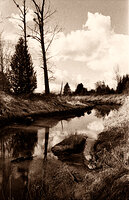
Bend in the river

H
Bend in the river

  • 1
  • 0
  • 28
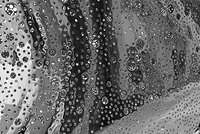
Wheels within Wheels

D
Wheels within Wheels

  • 1
  • 0
  • 32

Recent Classifieds

Forum statistics

Threads
203,227
Messages
2,851,755
Members
101,736
Latest member
MathieuR
Recent bookmarks
0

sandholm

Member
Allowing Ads
Joined
Nov 17, 2009
Messages
236
Location
Switzerland
Format
Multi Format
Hi,

I was just thinking of the "new" Harman direct positive paper and if it could be use in the darkroom as just a positive paper.

My "thought" work flow would be HP5+ then send it of to DR5 which gives B/W chrome back (with a huge dynamic range) and then enlarge it onto the positive Paper.

Could this be done? Have anyone tried it? What should I expect?

cheers
 
Am not sure about the Direct Positive Paper, try emailing David at DR5 for some advice?

I use dr5 reversed transparencies for all my landscape work, and have 2 main options for prints:

Cibachrome prints
http://www.photech.co.uk/printing/traditional-printing/
and
http://www.owenboyd.com/

or (a hybrid route outside the scope of APUG but worth mentioning briefly)

Lambda digital silver prints on the baryta/fibre Ilford Galerie FB Digital paper - these are are incredible, both in quality and price...!!
http://www.metroimaging.co.uk/technicalhelp/materials.asp#ILFORDFBpaper

Cheers,
Gavin
 
Last edited by a moderator:
"BW chromes"... I'm just trying to imagine what that could look like...
 
It's a grade 3,5 to 4 paper, so a straight print from it would require a medium with a short density range. I'd expect a BW positive to have far greater density range, so it's probably not a good idea.
 
Hi,

Yes, Dr 5 is just amazing (I love looking at them on the light table, the dynamic range is just mind blowing), best thing for me is that I get positives, which I then either scan or just use the darkroom to create a bigger negative which i use for platinum printing. I do actually do ilfochrome, but i have never thought of the idea to use any B/W chrome for it.... I just have to try that tonight, cool idea, thanks.

my question is more how the positive paper would handle an enlarger and B/W chrome...
 
It's a grade 3,5 to 4 paper, so a straight print from it would require a medium with a short density range. I'd expect a BW positive to have far greater density range, so it's probably not a good idea.

Yes, guess the only way to deal with that is to "play" with different developer.. but maybe its just stupid... but (at least according to me) a rather fun question..
 
Last edited by a moderator:
It's a grade 3,5 to 4 paper, so a straight print from it would require a medium with a short density range. I'd expect a BW positive to have far greater density range, so it's probably not a good idea.

It's not `density range´ what you mean, but brightness range (better: luminosity range) for the scene and exposure range for the paper
 
How is it possible for a b/w positive to have any more dynamic range holding ability than a b/w negative?

If, as I suspect, it is not possible, then why all the comments about the dynamic range of DR5-processed film? I am sure they are beautiful transparencies, but how could their dynamic range be one of their unique points?
 
It's a grade 3,5 to 4 paper, so a straight print from it would require a medium with a short density range. I'd expect a BW positive to have far greater density range, so it's probably not a good idea.
It's not `density range´ what you mean, but brightness range (better: luminosity range) for the scene and exposure range for the paper

When used in camera, "brightness range" would be correct. If someone wants to print from a BW positive with an enlarger, then you'd have a density range, no? Anyway, if the characteristic curve provided at the datasheet is an accurate representation of the product, then its ISO paper range is 60, give or take. That's equivalent to MG IV FB with a G4 filter.
 
How is it possible for a b/w positive to have any more dynamic range holding ability than a b/w negative?

If, as I suspect, it is not possible, then why all the comments about the dynamic range of DR5-processed film? I am sure they are beautiful transparencies, but how could their dynamic range be one of their unique points?

I am no tech person so I cant give you the details (and I think not that much is known about the DR5 process), but i have done some comparison myself ( i will try to dig them out and scan, just dont know where they are now) i used some HP5+ with my hasselblad (80 mm lens) and two film backs. Both films were exposed the same way, same iso setting, I just switched back. One of the role i send to DR5 the other one i developed (I think in D76 but again, have to check). I remember clearly that I had much much more coverage in the shadows and highlights on the chrome i got back from DR5. I guess its in the developing/process that DR5 use.

I hope someone can shed some light (positive or negative :wink: into this, I would just suggest you to shoot a role and send it to DR5, I think they even have like a three role test offer.

Check them out. http://www.dr5.com/

cheers
 
Last edited by a moderator:
I am no tech person so I cant give you the details (and I think not that much is known about the DR5 process), but i have done some comparison myself ( i will try to dig them out and scan, just dont know where they are now) i used some HP5+ with my hasselblad (80 mm lens) and two film backs. Both films were exposed the same way, same iso setting, I just switched back. One of the role i send to DR5 the other one i developed (I think in D76 but again, have to check). I remember clearly that I had much much more coverage in the shadows and highlights on the chrome i got back from DR5. I guess its in the developing/process that DR5 use.

I hope someone can shed some light (positive or negative :wink: into this, I would just suggest you to shoot a role and send it to DR5, I think they even have like a three role test offer.

Check them out. http://www.dr5.com/

cheers

Are you judging a print that was made from your negative against the transparency, or are you judging the negative itself against the positive? I'd be interested to see examples. Can you shoot the two side by side on a light box, using a digital camera?
 
Are you judging a print that was made from your negative against the transparency, or are you judging the negative itself against the positive? I'd be interested to see examples. Can you shoot the two side by side on a light box, using a digital camera?

Well, it is some time ago since i did this (now at the office so have to search for negatives tonight), but I sure that i first looked at them on the light box but then i scanned them, its just easier to compare on a computer screen were you can zoom into shadows. If i find the negatives (I should, but i cant promises) I can scan them again and just post the high-res images. Will try to do it asap.

cheers
 
No, density range refers to the maximum obtained or obtainable density (silver clusters/dye clouds).
 
No, density range refers to the maximum obtained or obtainable density (silver clusters/dye clouds).

Let's assume that we have a negative, or positive, whose thinest part has a density equal to X and the densest part is equal to Y. How would you call the "Y-X" value?
 
Density Range.
But one can also speak of contrast.
It depends what is of more interest of you: the absolute or relative figures.
 
hmm... I might have used the terminology wrong here, but I guess we have both dynamic range and density range...
 
How is it possible for a b/w positive to have any more dynamic range holding ability than a b/w negative?

If, as I suspect, it is not possible, then why all the comments about the dynamic range of DR5-processed film? I am sure they are beautiful transparencies, but how could their dynamic range be one of their unique points?

Here's a couple of tests that might help this discussion?

http://www.dr5.com/rltests.html

http://www.dr5.com/filmtests.html

and some other info:

http://www.dr5.com/tech.html

Cheers,
Gavin
 
  • Deleted member 2924
  • Deleted
sounds like fun :smile:

the worst that could happen is you don't like the results
but learn something in the process ...
and you can sell the paper to someone here on apug.
sounds like a win-win situation to me :smile:

good luck !
john
 
I didn't catch why a positive has more dynamic range than a negative on those pages. It is normal for a positive viewed directly to appear to have less grain and be sharper than a print from a negative.

it is one of those things you have to see to believe.
from what i have been told ( from people who have and have seen dr5 chromes )
they are something to behold ...
 
I think this is a problem of terms.

Negative film - as a negative - holds vast amount of information from dark to light. I'll call this "dynamic range" now.

However, to make a print, much of this is thrown away to get a nice middle contrast of about 1.5. And, now comes the important part; this is done because there are limits how dark and how light values a print can show. This is why contrast need to be increased AND something needs to be clipped out. Toe and shoulder of paper does not help this at all.

In practice, dodging, burning etc. methods are used to increase the "dynamic range" (scene range or log H for original film) in a print.

But! As I've read, dr5 processed positive BW film can have a very high DMAX, even better than best E6 films in some cases (correct me if I'm wrong). This high contrast-ratio means a huge difference between shadows and highlights when looked on a light table, or projected in a well-darkened room (preferably with dark walls).

High "output" range (contrast range, or density range or log D) lowers the need to "clip" any "input" range (exposure range or log H) to still achieve the same nice middle contrast. I think this is the point; dr5 processed BW film yields both higher log H "input" and log D "output" ranges than a PRINT made from a negative.

However, when you have to make a print of dr5 processed film, you come back to the realities of the printing paper, including its toe and shoulder, DMIN, DMAX, viewing conditions etc.
 
I think this is the point; dr5 processed BW film yields both higher log H "input" and log D "output" ranges than a PRINT made from a negative.

Exactly what I am getting at. B/w negatives have a certain dynamic range (and a very wide one at that). How could making them into positives (via reversal processing) increase this?

My idea is that with a reversed b/w film frame, you must be seeing the same dynamic range you'd see on a negative film frame, and that just looks "mind blowing" because it is being seen as a positive right on the film itself. If this is not the case, I am curious to know why.
 
Anyway, what is relevant in this case is the contrast, that is, curve SLOPE. "High Density range" with "normal H (exposure) range" would mean high contrast, whereas "high H range" with "normal Density range" means low contrast, but if we have both high dmax and high exposure range at the same time, we are back to "normal contrast".
 
it is one of those things you have to see to believe.
from what i have been told ( from people who have and have seen dr5 chromes )
they are something to behold ...

I do not doubt this at all. B/w transparencies, like color ones, are things of beauty. They do exhibit quite a lot of dynamic range.

However, so do negatives. I find it difficult to technically grasp why an emulsion processed as a negative and the same emulsion processed as a positive would be able to capture any more or less SBR than the other.

What I really think is that some people just don't know how to judge negatives very well, simply because they are negatives. Having a positive makes the extreme dynamic range of the emulsion easier for the brain to see, even though just as much dynamic range is there on a negative of the same emulsion.

Either one of these (pos. or neg.) would be reproduced in order to be displayed in your average situation (though my use for b/w positives when I did it - using the published Ilford method - was with direct backlit viewing of sheet film).

So, I would like to see if the final product (i.e. print) of a film processed as a negative, and the final product of a film processed as a positive really exhibit any differences in terms of detail and texture retention. This would show if there is any practical difference in dynamic range between the two basic methods of processing b/w film (i.e. as neg. or as pos.).

In other words, if the playing field were leveled, and each were printed with the same techniques (e.g. scanning a b/w neg. and a b/w pos., doing all the same digital preparation to each, and then outputting to b/w fiber via Lightjet), would there be any discernible differences in the detail or texture that is achievable in the prints?
 
Last edited by a moderator:
Photrio.com contains affiliate links to products. We may receive a commission for purchases made through these links.
To read our full affiliate disclosure statement please click Here.

PHOTRIO PARTNERS EQUALLY FUNDING OUR COMMUNITY:


Ilford ADOX Freestyle Photographic Stearman Press Weldon Color Lab Blue Moon Camera & Machine
Top Bottom
