• Welcome to Photrio!
    Registration is fast and free. Join today to unlock search, see fewer ads, and access all forum features.
    Click here to sign up

grain difference - condenser & dichro

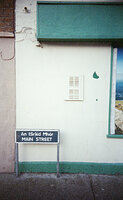
An tSráid Mhór

A
An tSráid Mhór

  • 1
  • 0
  • 36
IMG_1285.jpeg

D
IMG_1285.jpeg

  • 0
  • 0
  • 33

Forum statistics

Threads
203,125
Messages
2,850,204
Members
101,689
Latest member
Sagittarius
Recent bookmarks
0

temujin

Member
Allowing Ads
Joined
Dec 7, 2006
Messages
49
Format
Medium Format
hi all, i have recently developed a taste for grainy photos, using fast films and such to emphasize grain in the prints. i am using a dicho head. however, i have heard many say that condenser heads produce more pronounced grain. so my question is this- how much of a difference is there in the appearance of grain in prints produced with condenser and dichro heads? should i consider getting a condenser head? or is the difference only minor? thanks...
 
Minor, very. The overall contrast is slightly higher, maybe 1/4 of a grade, but I wouldn't bother hunting a condenser if you like grain. Work with the negative/developer variables instead, and you will see much more difference.

I'm sure you're using 35mm already, so use a fast film and develop in FX2 for extra grain, and your eyes will pop!
 
My experience, using Durst enlargers, was somewhat different. Negs processed for use with a dichro printed with markedly more contrast (especially in the shadow areas) and grain.
 
Having used both types of enlargers and fiddled with fast film a reasonable amount and at times wished for grain as that was what I was seeking, I've come to the conclusion that the light/shadow contrast of the original scene seems to be the real decider on grain or not much grain.

If you have fast film it is usually high contrast, then you push and the contrast is bumped a bit, this contrast can then be made more so by the high contrast lighting you usually are working with, with fast film.

By having a low contrast scene, like outside portraiture on a cloudy day, you can then develop for a maximum of grain quite easily. You will have to experiment, but MHV is, as far as I'm concerned, on the right track to get grain.

Glass negative holder, Opemus 5 condenser enlarger and an Apo enlarging lens and enlarging onto the wall for huge magnification, was the best way I knew to get terrific grain in focus right across the frame.

I think the kind of enlarger you have is a little bit of a deciding factor, but really not that great compared to all of the other factors.

Mick.

 
I can't advise on the enlarger heads but developing your negs in paper developer will produce more grain.

Peter
 
My experience, using Durst enlargers, was somewhat different. Negs processed for use with a dichro printed with markedly more contrast (especially in the shadow areas) and grain.

That makes sense, but I doubt that the condenser has very much effect. Films intended for enlargement using a diffused light source are typically developed to a higher contrast index. It's no surprise that these negatives will exhibit more apparent grain because of that.

I have both types of enlargers. The Omega D4 is equipped with a Super Chromega II head. The condenser enlarger is a little Bogen 22. Printing the same negative onto the same variable contrast paper using both enlargers (but the same enlarging lens) yielded very little difference. Most of that difference can easily attributed the different color temperatures of the light source. I suspect that the differences would be even less if I'd used graded paper for the test.
 
I concur with what Frank says - I have both types of enlarger and can spot very little difference. Other factors, like Mick says, are more important.

Regards,
Neil.
 
I agree as well. I have both a condenser and diffusion heads and as far as grain goes, I can't tell the difference in the prints I make. Theoretically there should be a difference due to the Callier effect. I suspect that if your negative is very grainy to start with you may see a difference.
 
Increased exposure also increases grain size with conventional films (with chromogenics it reduces grain size). With both conventional and chromogenics, increased exposure also gives less sharpness.
 
I agree as well. I have both a condenser and diffusion heads and as far as grain goes, I can't tell the difference in the prints I make. Theoretically there should be a difference due to the Callier effect. I suspect that if your negative is very grainy to start with you may see a difference.

Most modern condenser enlargers use a frosted white bulb, so I think of my D3 as semidiffusion. I converted an old Russian enlarger to a point source, small clear blub with a small filament. Using point source you can really see the difference in grain and contrast.
 
If grainy prints are what you then develop your negatives with that purpose in mind....experiment with push processing film. You will get an increase in grain and contrast that will be MUCH more effective then changing enlarger light sources.

Regards,
John
 
Photrio.com contains affiliate links to products. We may receive a commission for purchases made through these links.
To read our full affiliate disclosure statement please click Here.

PHOTRIO PARTNERS EQUALLY FUNDING OUR COMMUNITY:


Ilford ADOX Freestyle Photographic Stearman Press Weldon Color Lab Blue Moon Camera & Machine
Top Bottom