
• Welcome to Photrio!
    Registration is fast and free. Join today to unlock search, see fewer ads, and access all forum features.
    Click here to sign up

Glass carrier light piping

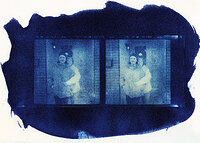
Cyanotype stereo card

A
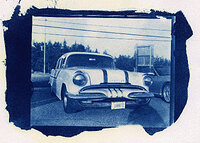
Cyanotype stereo card

  • 0
  • 0
  • 0
IMG_0025.jpeg

A
IMG_0025.jpeg

  • 0
  • 1
  • 0

Forum statistics

Threads
203,125
Messages
2,850,234
Members
101,690
Latest member
nisherii
Recent bookmarks
0

clayne

Member
Allowing Ads
Joined
Sep 4, 2008
Messages
2,764
Location
San Francisc
Format
Multi Format
Anyone ever have this issue? The 4x5 carrier on my devere shoots light out from the edges of the glass in all directions. I can't see it hitting the print directly but generally can't see it as a good thing either. I've considered marking the edges with a sharpie but was curious if others had thoughts.
 
They do do that, and on some neg carriers, Durst black edged the glass at the factory. Good sharpies work, nail polish works better at blocking the light, except it will chip off. :sad:

Best thing is sand the edges with wet/dry sandpaper then use the sharpie.
 
I just masked the rear and sides of my enlarger with pieces of black mat board that hang down from the cold light head directly above the negative carrier. It is not perfect and some light still comes out the front side, but it cut down on the light in the darkroom during exposure significantly.
 
I don't know if blacking the edges is a good idea, a piece of glass with a black backing is as a mirror. :surprised:

It may be better to control this with a flat black paint on the carrier that the glass sits in or with felt or something similar.

Just guessing, in an educated manner. :rolleyes:
 
markbarendt said:
I don't know if blacking the edges is a good idea, a piece of glass with a black backing is as a mirror. :surprised:

It may be better to control this with a flat black paint on the carrier that the glass sits in or with felt or something similar.

Just guessing, in an educated manner. :rolleyes:

Can you explain this mirror thing to me more? I was under the impression that black absorbed light and dissipated it to the atmosphere as heat. All mirrors I've known were reflective metallic backings. This devere carrier is a cream white so I can't really take advantage of it specifically.

The sides I can't mask off as I use it with roll film but I did experiment with the front and the like. Duvy helps of course but I figured I'd just nail it at the source. The thing about marking the sides is that the front and rear are already ground so that would be easy - it's the sides that are glassy. Even with the frosted front edge it still throws light out like a lighthouse unfortunately. I've thought of gagging the edges but then I'd have to razor blade trim it and it'd probably snag roll film etc.
 
I don't know the physics of it, I do know it's real.

Ever seen your reflection in a window?

Dark inside, bright outside, glass in the middle = great reflection outside.
 
markbarendt said:
I don't know the physics of it, I do know it's real.

Ever seen your reflection in a window?

Dark inside, bright outside, glass in the middle = great reflection outside.

Sure I know the effect you're referring to but Isn't that more about contrast than reflectivity? Glass being naturally reflective will always do this but we can't always see it if the contrast is too low. I don't think the efficiency of reflectance would go *up* if we painted the other side of the glass black though.
 
Presumably the only time the enlarger light is going to be on when paper is on the easel, which means you will be exposing the paper. With the amount of light hitting the paper compared to the erroneous light bouncing off the walls and what have you, it is, from a practical point of view, not really that great an issue, generally.

If you are doing exposures measured in minutes, then this can become an issue, even then I sometimes sat in a darkroom with a 20 minute exposure reading large type library books for old people, using the slit of light emanating from the vertical head to see with. This was with colour paper and sometimes B&W paper.

I have used many DeVere enlargers and I own a 5x4 free standing with a colour head, yep, with glass it does throw a bit more light out, but it has never been an issue in my darkroom with colour or B&W and I have white walls and ceiling.

Has it caused any issues, yet?

Mick.
 
Presumably the only time the enlarger light is going to be on when paper is on the easel, which means you will be exposing the paper. With the amount of light hitting the paper compared to the erroneous light bouncing off the walls and what have you, it is, from a practical point of view, not really that great an issue, generally.

I have never observed or tested for this problem, but I have read from sources that I consider authoritative (or at least smarter than me) that all non image forming light should be excluded from the paper during exposure to avoid the possibility of highlight veiling. Sort of the same idea as using a hood or shading the lens to avoid non image forming light hitting the lens of a camera.
 
If you are doing exposures measured in minutes, then this can become an issue

The exposure time shouldn't make any difference as the percentage of light spilled is a constant.


Steve.
 
Steve Smith, yes you are correct, however if you have a very dense negative, then the relative extra light exposure, will be more relevant.

Dan Henderson, yes, you too, are correct, yes it will make a difference, how hard it may be to see, or measure this difference, is more or less where I'm coming from. From my practical experience in darkrooms I have yet to see any real problems with normal exposures. Normal exposures to me, are in the 10 second to 2 minute area.

If you have blackened walls, you will virtually see no light bouncing around. In my own darkroom I have white walls and whilst I'm not that flash a printer compared to some I've seen, I cannot detect a noticeable to my eyes difference. Which of course doesn't mean there isn't a difference, I'm sure there is a difference.

Mick.
 
Anyone ever have this issue? The 4x5 carrier on my devere shoots light out from the edges of the glass in all directions. I can't see it hitting the print directly but generally can't see it as a good thing either. I've considered marking the edges with a sharpie but was curious if others had thoughts.

I have the same problem with glass carriers on both my D-6 and my B-22. I solved the problem by using an old black sock, which I wrapped around the edge of the glass carrier and held in place with a common wooden clothespin.

On the B-22 I have also wrapped one around the seam where the lamp house meets the condenser assembly, and used a short piece around the lamp house baffle (on the opposite side as the lamp) to stop light leaks there.

A photographer friend saw these rigs last winter, and asked why I had old socks wrapped around my enlargers; I told him that it was because the enlargers got cold in the winter.
 
Photrio.com contains affiliate links to products. We may receive a commission for purchases made through these links.
To read our full affiliate disclosure statement please click Here.

PHOTRIO PARTNERS EQUALLY FUNDING OUR COMMUNITY:


Ilford ADOX Freestyle Photographic Stearman Press Weldon Color Lab Blue Moon Camera & Machine
Top Bottom
