
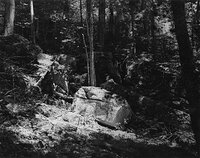
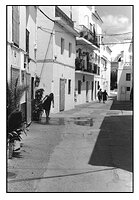

Right, here are a few questions concerning this excellent film:
1. Since Acros Neopan 400 is no longer available in 120 format, does it make sense to push Acros 100? Or, would one be better off using a 400 rated film instead? This is a problem for me, since I don't like the results or processing TMY nor Ilford. I do use and like Tri-X...that is my main experience base BTW.
2. What will the difference in results be when pushing? Blown highlights? Lost shadow detail? Grain? Contrast? What I specifially am after is in what respect does it change from box-speed exposure and processing?
3. I use Xtol exclusively as my developer. Got it pretty much dialled in for Tri-X, so not very keen on changing for something else. I see that most people tend to, when using Acros in Xtol, to soup it at 1+1. I quite like to use stock solution for Tri-X - but seasoned/replenished after 5 rolls - as I find it "mellows" and gives (for me) the most pleasing tonalities. What would be the main differences in results between stock (seasoned) and 1+1? Accutance? Grain? Please note: in my view, unseasoned new stock Xtol (like in one shot use) comes out too contrasty for my taste. Perfect after 5 rolls or so, thus why I replenish.
4. Finally, agitation...with Tri-X, the Kodak recommendations of 4 inversions every 30 seconds seem to work quite OK. From my tests with Acros, once every minute seems better. Some say once every 2 minutes. What holds? Again, in what way does it influence the end result? Probably lower contrast, better shadow detail?Grain? Can anyone confirm or rebuke?
All input and opinions most appreciated.
1. Since Acros Neopan 400 is no longer available in 120 format, does it make sense to push Acros 100? Or, would one be better off using a 400 rated film instead? This is a problem for me, since I don't like the results or processing TMY nor Ilford. I do use and like Tri-X...that is my main experience base BTW.
2. What will the difference in results be when pushing? Blown highlights? Lost shadow detail? Grain? Contrast? What I specifially am after is in what respect does it change from box-speed exposure and processing?
3. I use Xtol exclusively as my developer. Got it pretty much dialled in for Tri-X, so not very keen on changing for something else. I see that most people tend to, when using Acros in Xtol, to soup it at 1+1. I quite like to use stock solution for Tri-X - but seasoned/replenished after 5 rolls - as I find it "mellows" and gives (for me) the most pleasing tonalities. What would be the main differences in results between stock (seasoned) and 1+1? Accutance? Grain? Please note: in my view, unseasoned new stock Xtol (like in one shot use) comes out too contrasty for my taste. Perfect after 5 rolls or so, thus why I replenish.
4. Finally, agitation...with Tri-X, the Kodak recommendations of 4 inversions every 30 seconds seem to work quite OK. From my tests with Acros, once every minute seems better. Some say once every 2 minutes. What holds? Again, in what way does it influence the end result? Probably lower contrast, better shadow detail?Grain? Can anyone confirm or rebuke?
All input and opinions most appreciated.

 but mainly, other people also finding TMY-2 too contrasty box speed and Xtol - which it is really about. But Thomas' comments and sample of Acros pushed w. Xtol is not only relevant, but excellent as the results I would like to see.


