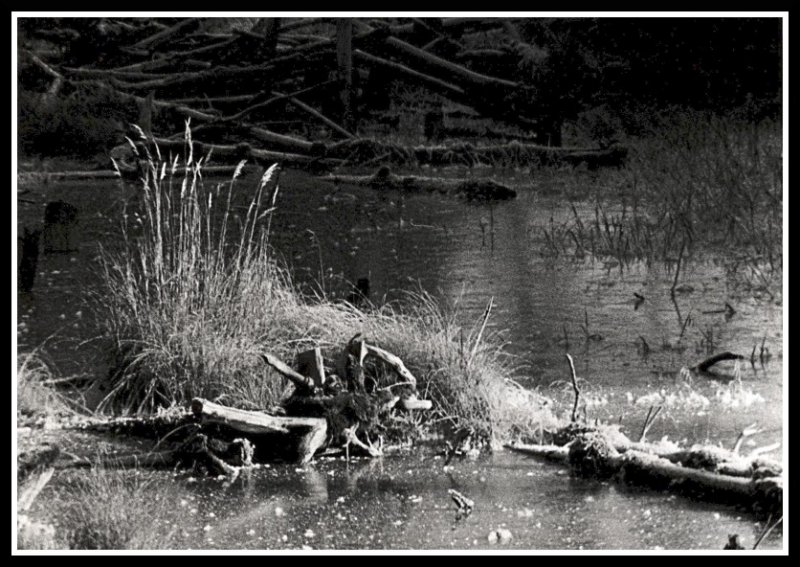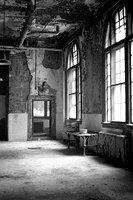
I've got two other threads DISCUSSING Foma 400, so I thought I'd amalgamate content and show you what I came up with. My overall comment is that this is a very, very fine film, and I wouldn't hesitate using it BUT . . . . I'm disappointed that I could not get MORE grain. Films these days, guys, are pretty good. I'm going to have to go to push processing and Dektol to get what I want, I think. Putting that aside for now, let's see what I came up with.
Here's the scenario:
1) I shot two rolls, one on an Olympus Pen FT, 70mm f2 Zuiko lens, and it this roll was developed in Rodinal at 1:50, 12.5 minutes, 20 degrees,
2) the other was shot on a Pentax MX, 50mm Pentax-M Macro, XTol Stock, as per manufacturer's directions at 7.5 minutes at 20 degrees
Both of these lenses are amongst the sharpest I have, and have both have produced outstanding results. The differences in the pictures to follow, to my mind, are in the develpers. Both films were developed at BOX speed, ASA 400, not overexposed as most people seem to do.
3) These are scanned 5x7 prints, and the post processing was done EXACTLY the same on each print. The 5x7 was scanned at 3400 dpi.
4) The scanned prints were subject only to minor curves adjustments, spotting, and then EXACTLY the same amount of unsharp mask (25 units), and no other individual compensation or "correcting." In other words, I did not try to optimize each print individually but treated them as close to the same as I could. Including framing and matting procedures. Not completely perfect and scientific, but as close as I could to the same so I could see what I was after visibly.
5) The 5x7 prints themselves were all made on Arista Glossy Grade 3, and processed identically in Dektol. I like this paper for scanning because it is bright, produces great detail in the highlight and mid-tone areas, but has a rather low Dmax so I can use curves to balance minor differences in balancing the blacks, to match the rest of the picture, without affecting overall balance and integrity.
Remember, the half-frame negatives are HALF the size, too. To my eye and taste, they are better, period. Developers make a HUGE difference.
First up, some industrial scenes. I love photographing industrial areas: they are the life blood of a community, well policed (I often get thrown off or out of the areas; adds some excitement), and they usually contain a lot of fine detail that shows off film characteristics well.
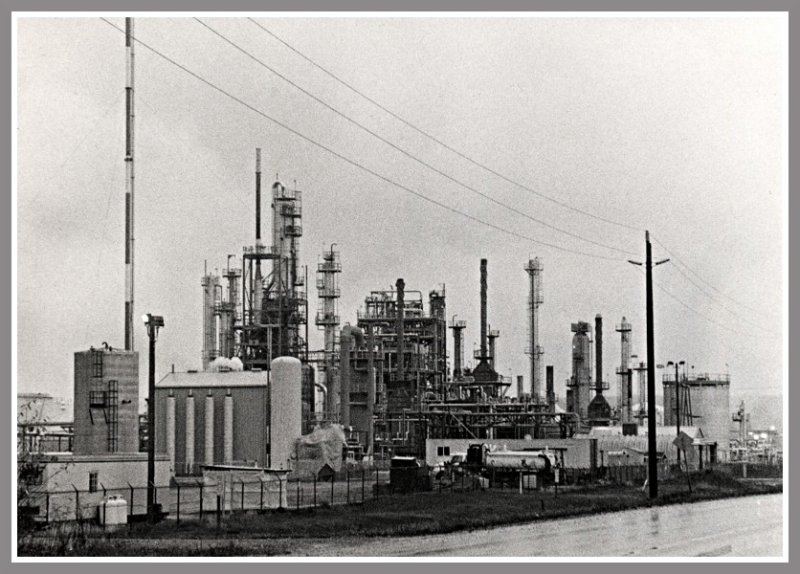
Shot #1: Refinery in Prince George, Olympus Pen FT, 70mm Zuiko f2 lens, 1/30th at f8 (overcast, raining, lousy lighting)
Shot #2: Mill site in Prince George, Pentax MX, 50mm f4 Pentax-M macro, (same day, same exposure exactly)
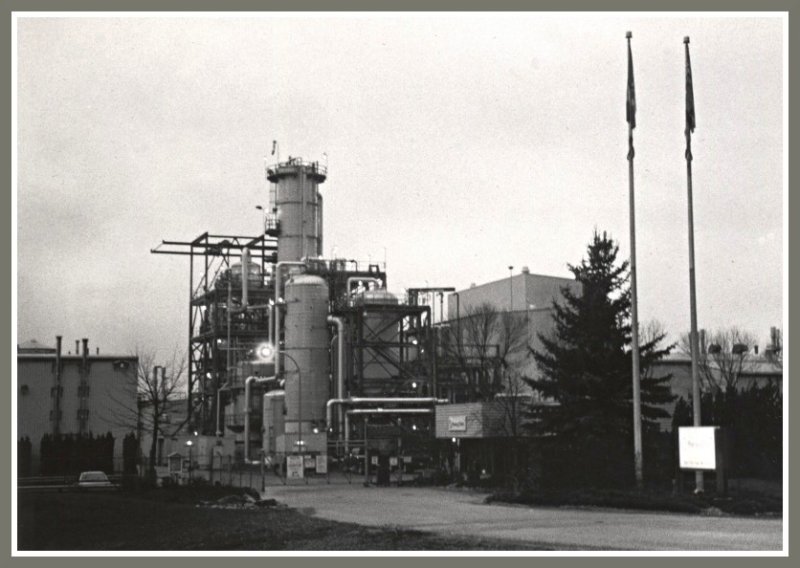
Even on the 5x7 print, the half-frame shot appears sharper and more defined, just clearer. I have enough shots, and took enough shots that day with each, to know that the results are from the developer, NOT from the lenses or exposures. The others I have (which I will post) were also shot under identical conditions, and the results were the same.
Foma 400 full-frame negatives developed in XTOL as per manufacturer's directions AND TO MY TASTE are, overall, inferior to half-frame negatives done in Rodinal 1:50. They are mushy. Nice tonal scale, luminous negs, but they have a lack of sharpness in low lighting conditions I don't really care for.
It is said that Foma doesn't recommend Rodinal; not precisely true. They recommend their own R09 which is the same thing.
In any case, from this point on, Xtol is out for this film for this guy.
Have at 'er, guys.
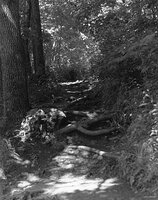
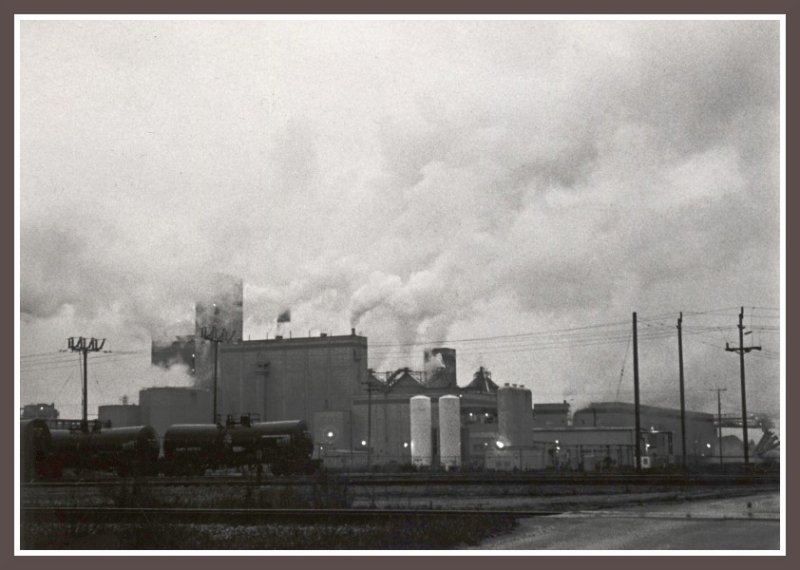
By the way, here is one more shot with the Xtol/MX combo. Posted it because I rather like it. Same mushy D76 stock quality, though . . . . D:76 needs to be diluted for most purposes IMHO
Thanks for looking in. I'll post some outdoor landscapes and arty-crafty bs with the same hardware/software within this post as I get them done.
Here's the scenario:
1) I shot two rolls, one on an Olympus Pen FT, 70mm f2 Zuiko lens, and it this roll was developed in Rodinal at 1:50, 12.5 minutes, 20 degrees,
2) the other was shot on a Pentax MX, 50mm Pentax-M Macro, XTol Stock, as per manufacturer's directions at 7.5 minutes at 20 degrees
Both of these lenses are amongst the sharpest I have, and have both have produced outstanding results. The differences in the pictures to follow, to my mind, are in the develpers. Both films were developed at BOX speed, ASA 400, not overexposed as most people seem to do.
3) These are scanned 5x7 prints, and the post processing was done EXACTLY the same on each print. The 5x7 was scanned at 3400 dpi.
4) The scanned prints were subject only to minor curves adjustments, spotting, and then EXACTLY the same amount of unsharp mask (25 units), and no other individual compensation or "correcting." In other words, I did not try to optimize each print individually but treated them as close to the same as I could. Including framing and matting procedures. Not completely perfect and scientific, but as close as I could to the same so I could see what I was after visibly.
5) The 5x7 prints themselves were all made on Arista Glossy Grade 3, and processed identically in Dektol. I like this paper for scanning because it is bright, produces great detail in the highlight and mid-tone areas, but has a rather low Dmax so I can use curves to balance minor differences in balancing the blacks, to match the rest of the picture, without affecting overall balance and integrity.
Remember, the half-frame negatives are HALF the size, too. To my eye and taste, they are better, period. Developers make a HUGE difference.
First up, some industrial scenes. I love photographing industrial areas: they are the life blood of a community, well policed (I often get thrown off or out of the areas; adds some excitement), and they usually contain a lot of fine detail that shows off film characteristics well.
Shot #1: Refinery in Prince George, Olympus Pen FT, 70mm Zuiko f2 lens, 1/30th at f8 (overcast, raining, lousy lighting)
Shot #2: Mill site in Prince George, Pentax MX, 50mm f4 Pentax-M macro, (same day, same exposure exactly)
Even on the 5x7 print, the half-frame shot appears sharper and more defined, just clearer. I have enough shots, and took enough shots that day with each, to know that the results are from the developer, NOT from the lenses or exposures. The others I have (which I will post) were also shot under identical conditions, and the results were the same.
Foma 400 full-frame negatives developed in XTOL as per manufacturer's directions AND TO MY TASTE are, overall, inferior to half-frame negatives done in Rodinal 1:50. They are mushy. Nice tonal scale, luminous negs, but they have a lack of sharpness in low lighting conditions I don't really care for.
It is said that Foma doesn't recommend Rodinal; not precisely true. They recommend their own R09 which is the same thing.
In any case, from this point on, Xtol is out for this film for this guy.
Have at 'er, guys.
By the way, here is one more shot with the Xtol/MX combo. Posted it because I rather like it. Same mushy D76 stock quality, though . . . . D:76 needs to be diluted for most purposes IMHO
Thanks for looking in. I'll post some outdoor landscapes and arty-crafty bs with the same hardware/software within this post as I get them done.
Last edited by a moderator:


 You've given me a lot of help on this forum!