

• Welcome to Photrio!
    Registration is fast and free. Join today to unlock search, see fewer ads, and access all forum features.
    Click here to sign up

Foma 100 and 200 as 35mm and 120 roll film

half stop lighter er.jpg

A
half stop lighter er.jpg

  • jhw
  • Jan 12, 2026
  • 8
  • 7
  • 110
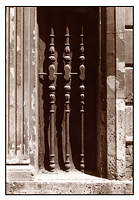
sentinels of the door

A
sentinels of the door

  • 4
  • 0
  • 91

Recent Classifieds

Forum statistics

Threads
201,719
Messages
2,829,044
Members
100,909
Latest member
SuninPisces
Recent bookmarks
1

cmo

Member
Allowing Ads
Joined
Aug 22, 2006
Messages
1,321
Format
35mm RF
Comparing the prices I was pretty impressed: here in Europe, Foma 100 costs about HALF of Kodak or Fuji films, even almost half of Efke films... now, that's a valid argument. Even chinese films are more expensive here, and that is a good chance to boycot chinese products once again :D

In the 100 ASA class I use Tmax 100 today and develop it in XTol 1:1, nice for landscapes though it requires precise metering and development. Even in very large prints it is hard to find grain at all, sharpness ist not bad but could be better. That is a good basis for my hybrid workflow - all my prints are scan-enhance-and-print results on a large inkjet printer.

For portraits (6x6) and street photography (35mm) I might use something else. How do the Foma 100 and 200 films compare to Tmax 100? How are the results in my beloved diluted XTol?
 

Aurelien

Advertiser
Member
Allowing Ads
Joined
Jun 25, 2006
Messages
652
Location
Limoges, Fra
Format
Med. Format RF
Foma films are very nice films, with beautiful quite fine grain. My favourites are 100 and 400. Not found the best developer with 200... But clearly I love the 100 and 400: 100 exposed @ ISO 50 developped in PMK and 400 @ ISO 400 in XTOL.

In 120 the base is bluish so it can be disturbing at the beginning, but does not affect the image quality at all.
 

Rolleiflexible

Member
Allowing Ads
Joined
Mar 22, 2005
Messages
2,194
Location
Mars Hill, NC
Format
Multi Format
I shoot Foma 200 in 35mm -- it's my
film of choice for 35mm work. Like
Aurelien, I overexpose it a stop (at
EI 80-100). I process in Rodinal.

The film in 35mm lies flat when dry,
and has pleasing tones and fine grain.
I am told that the 120 version is on a
different base, and curls when dry. As
I use Tri-X in 120, I've not had occasion
to see if this is true.

I appreciate that online JPGs are a poor
substitute for seeing the negatives but
I've just posted a scan of a Foma negative
(there was a url link here which no longer exists). Two others are already in my APUG
gallery, (there was a url link here which no longer exists) and (there was a url link here which no longer exists).
 

Mark Antony

Member
Allowing Ads
Joined
Mar 27, 2007
Messages
789
Location
East Anglia,
Format
Multi Format
The Foma films are very good, I like the 100 and 200 best.
here's some examples.
Fomapan Classic
Fomapan Creative

The Classic to me is a little like APX and I rate it at box speed and develop in Rodinal, The creative works well at box speed in slight speed increasing dev like Microphen but I've lately been rating it at 125 when I develop it in Rodinal.

Good films and well worth a try.
Mark
 

srs5694

Member
Allowing Ads
Joined
May 18, 2005
Messages
2,718
Location
Woonsocket,
Format
35mm
Although I can't disagree with most of what's already been posted, Foma films are very different from T-Max (or other T-grain) films. The Foma films are traditional-grain films, and so the grain has a very different look compared to T-Max films. By most objective measures, they're coarser-grained than other traditional films of the same speed, but subjectively I find this difference is minor or hard to detect. Compared to T-Max 100, though, Foma 100 is noticeably grainier. Subjectively, I'd say Foma's grain is sharper, even in developers (like XTOL or D-76) that tend to produce mushier grain. Overall, the films produce a somewhat old-fashioned look. All of these grain issues are more pronounced in the faster films than in the slower ones. The Foma films are often compared to the Agfa APX films of the same speed in overall look.

One other point: In 35mm, the Foma films have poor anti-halation characteristics. This isn't a big issue for most shots, but if you're shooting at night (with street lamps or the like in the picture) or even in the day if there's a bright light source (reflections from chrome, say), you'll get halation effects. This is usually objectionable, but on occasion it might enhance a photo. I've shot relatively little Foma film in MF, but I gather that the MF and larger formats have better anti-halation characteristics. These forms of the film also have an unusual blue base color, whereas the 35mm films have a more traditional light gray base color.
 

Rolleiflexible

Member
Allowing Ads
Joined
Mar 22, 2005
Messages
2,194
Location
Mars Hill, NC
Format
Multi Format
One other point: In 35mm, the Foma films have poor anti-halation characteristics. This isn't a big issue for most shots, but if you're shooting at night (with street lamps or the like in the picture) or even in the day if there's a bright light source (reflections from chrome, say), you'll get halation effects. This is usually objectionable, but on occasion it might enhance a photo.

Actually, this is a big reason why I shoot the film.
I prefer the slight glow it gives to highlights, and
compose with this in mind.

Sanders
 
Joined
Jan 21, 2003
Messages
15,715
Location
Switzerland
Format
Multi Format
I used up my last two rolls of Foma 400 in 120 the day before yesterday. I love its image characteristics, but there are two severe drawbacks with it as far as I'm concerned:
1. The emulsion is very fragile and prone to scratching.
2. The blue base it's coated on curls like MAD when it's dry. In combination with the fragile emulsion - if you lose control of the film strip while loading it into a neg carrier (scanner or enlarger) the film curls so much that you run the risk of actually damaging the film. It has happened to me on more than one occasion that a sharp corner of the film curls back up and a corner of the negative strip damages a different part of that negative strip. The curl is that bad. I've heard of people being able to tame the curl by curling the film up the other way for some time. I may try this...

It really is a shame that this occurs, because I love the prints I get from it. In 35mm this is not a problem, neither is it with sheet film. The grain is beautiful, and I get a wonderful tonality when I develop in either Xtol, Ilfotec DD-X, Pyrocat-MC, or Rodinal. The grain looks best in Pyrocat in my opinion, but the difference is not that large.
I read somewhere that the Foma 200 is much like Tri-X 400 in appearance. I'll be trying some of their sheet film soon.

To your question - They look nothing like TMax films. But they are beautiful in their own respect. You'll get more grain and TMax has much better reciprocity characteristics.

- Thomas
 

Paul Verizzo

Member
Joined
Jan 20, 2008
Messages
1,648
Location
Round Rock, TX
Format
35mm
(TMX) Sharpness ist not bad but could be better.

No way at all. One of the hallmarks of the T-Max films are their incredible sharpness. For some objective ratings,

Foma 100, 13.5 RMS granularity and 110 lpm

TMX, 8 and 200 respectively.

And since people have brought up APX, the numbers are 9 and 150, really good for conventional grain.

I realized that objective lab tests aren't the same as our own methods, but they do offer basic apples and apples comparisons w/o subjectivity. If your Foma 100 is coming out sharper than your TMX, something else is at play.
 

ntenny

Subscriber
Allowing Ads
Joined
Mar 5, 2008
Messages
2,513
Location
Portland, OR, USA
Format
Multi Format
Foma films are very nice films, with beautiful quite fine grain.

I would agree with "beautiful" but not with "quite fine". In my experience Fomapan 100 is quite grainy among 100 ASA films, though admittedly I tend to develop it in Caffenol. (I love the resulting tonality and don't have a problem with the grain.)

I'm not sure I can think of any similar-speed film that would be more different from TMX!

-NT
 
OP
OP
cmo

cmo

Member
Allowing Ads
Joined
Aug 22, 2006
Messages
1,321
Format
35mm RF
No way at all. One of the hallmarks of the T-Max films are their incredible sharpness. For some objective ratings,

Foma 100, 13.5 RMS granularity and 110 lpm

TMX, 8 and 200 respectively.

And since people have brought up APX, the numbers are 9 and 150, really good for conventional grain.

I realized that objective lab tests aren't the same as our own methods, but they do offer basic apples and apples comparisons w/o subjectivity. If your Foma 100 is coming out sharper than your TMX, something else is at play.

Interesting...I did not know these figures, and they tell a story. One chapter reads "use medium format film more often", I am afraid.

One of the reasons why I decided for Tmax films years ago was their sharpness, I like sharpness, the more the better... and for my scanner a sharp image is a must: if I have a sharp negative I don't need to sharpen the image in the end so strongly, that always emphasizes grain. Of course, it is a little bit like squaring the circle: sharp image, but no sharp grain, please. Sure, that's what I always want.

Xtol is my standard developer, 1:1, to get a little more sharpness and shadow detail. I think there are developers that create more sharpness, but I did not use them by now. I have no idea what the RMS and granularity values are based on and what will change in a different developer.

Does it make sense using a Foma 100 roll film in a low-speed developer to make grain less visible and let it look sharp? I remember very good results using Tri-X in Micodol-X, that was a nice combination for me in the 1980s, but I know that sharpness was not an issue in those days. What developers might be a good choice for Foma 100 to do to the impossible, e.g. 'make it a better film'? At least it might be a good choice for portraits in medium format.
 
Last edited by a moderator:

Philippe-Georges

Subscriber
Allowing Ads
Joined
Apr 11, 2005
Messages
2,683
Location
Flanders Fields
Format
Medium Format
I have been working on FOMA 400/120 for about half a year now.
I came to FOMA after wandering around when AGFA demised. I tried Tri-X, Plus-X, Fujipan, Across, HP-5, FP-4 and Rollei Classic 400 & 100 ( APX on a to thick and awkward base!), mostly roll film.
I could not find what I was looking for : the Agfapan look I was so used to. I also tried these films in several developers, Rodinal, X-tol, T-Max, ID11, Microphen, Refinal and home brewed formula's like P. Gainer's Vit-c's, Beutler two bath and Pyrocat-HD. I still was not happy.
Rather accidentally I read a post on this site about FOMA and I ordered a few at Fotoinpex (an APUG sponsor BTW).
After messing around, I settled on FOMA 400/120 and 100/120 (I stopped shooting 35 mm) in Pyrocat-HD (thanks to Sandy king!) and I can not be more happy now.
The 400 ASA has a very 'present' grain, but it is a real-good-genuine-film grain, the one that supposed to be there and duos not lie, and good for hand held shooting.
The 100 ASA, to my personal opinion, is a rather 'technical' film, good for slow and duly work on a tripod, and I do not mind the Schwartschild effect.
To me these 'things' are all part of the analogue discours, a very personal opinion of course.

But, be aware, the FOMA emulsions are prone to physical damage if one is not careful!

Good luck,

Philippe
 

Aurelien

Advertiser
Member
Allowing Ads
Joined
Jun 25, 2006
Messages
652
Location
Limoges, Fra
Format
Med. Format RF
Maybe I have to try Tanol. Never used it yet. I will when my new darkroom will be operational.
Maybe Philippe you could tell us your development parameters for the Foma 200 (exposition rate, tanol dilution, temperature, and time) ? As I said, I haven't found the best combination film/dev with this film.
I have found a solution to avoid curling of Foma PET based films: I use an hardener (Tetenal Harter) and then I let it dry in a jobo mistral on position 2 (45°C) with a heavy weight. Almost flat by this way. The issue is that the use of an hardener is followed by a very long wash and water is precious... so ... I use TF4 fixer without hardener and my films curl a bit. But I prefer a little curling and save water :smile:
 

loman

Member
Allowing Ads
Joined
Apr 1, 2006
Messages
590
Location
Denmark
Format
35mm
Here's another example of fompan 100:

(there was a url link here which no longer exists)

I use it a lot for 13x18cm and 8x10. I love it. As others have noted, the closest replacement for apx 100.
But again very different from tmax.

I really like the 400 speed film as well, I feel it's very fifties tri-x like if that makes any sence.

Cheers
 

loman

Member
Allowing Ads
Joined
Apr 1, 2006
Messages
590
Location
Denmark
Format
35mm
By the way, I usually expose fomapan 100 at iso 80-50 depending on light conditions. and develop in rodinal 1+50 for 9-10 minutes.
foma 400 gets 10 minutes at 200 iso in rodinal 1+50 (very grainy but I like the look)

Cheers
 

Philippe-Georges

Subscriber
Allowing Ads
Joined
Apr 11, 2005
Messages
2,683
Location
Flanders Fields
Format
Medium Format
Here a non professional scan of a 24 x 24 cm print (on FOMABROM VARIANT 111) from a FOMAPAN 400 6x6 cm negative, processed in Pyrocat-HD 1:1:100, 15 min @ 20°C, BTW this is an asperges picker in the very north of France.
Just to illustrate my point of view, certainly not an attempt to convince anybody nor to prove anything, technically or aesthetically...

Philippe
 
Last edited by a moderator:

3Dfan

Member
Allowing Ads
Joined
Aug 20, 2006
Messages
221
Format
35mm RF
Foma 200 developed as a chrome by DR5 is my favorite B/W film thus far.
 
Photrio.com contains affiliate links to products. We may receive a commission for purchases made through these links.
To read our full affiliate disclosure statement please click Here.

PHOTRIO PARTNERS EQUALLY FUNDING OUR COMMUNITY:


Ilford ADOX Freestyle Photographic Stearman Press Weldon Color Lab Blue Moon Camera & Machine
Top Bottom
