So...
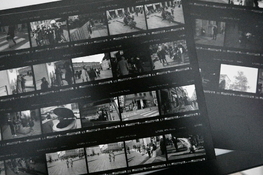
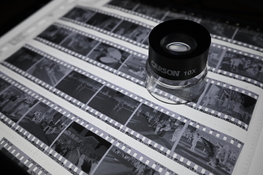
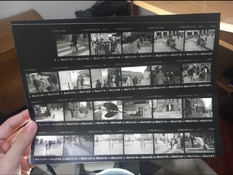
What do you want from a contact proof sheet? If you want to see how the photos might look, only small, then adjust contrast and exposure to make your best proof sheet. That means finding the average right exposure and contrast to render the most pictures well-printed. This is good for choosing which frames to print and seeing which might not be worth the effort.
If, like me, you also use contact sheets as a control on the processes of exposure and development, then learn how to make a "proper proof." This entails printing the rebate (clear area) of the film just slightly lighter than the maximum paper black. Then, you can easily see if you are exposing your film properly (not enough shadow detail = underexposed / too much = overexposed) and developing it properly (blown highlights with the right shadow detail = overdeveloped / muddy highlights with the right shadow detail = underdeveloped).
If you consistently find you are exposing or developing wrong, then you adjust your process.
Also, in my experience, defects in the negative often show up in the contact sheet that aren't readily apparent by looking at the negative, especially small differences in density caused by a little flare. So contact sheets are helpful here in keeping me from printing larger to find this out.
FWIW, I proof everything and keep the proof sheets together with the negatives in my files.
Best,
Doremus