
• Welcome to Photrio!
    Registration is fast and free. Join today to unlock search, see fewer ads, and access all forum features.
    Click here to sign up

First attempt at developing

Forum statistics

Threads
203,282
Messages
2,852,293
Members
101,758
Latest member
f1shcake_onegai
Recent bookmarks
1

mesh

Member
Allowing Ads
Joined
Oct 11, 2009
Messages
313
Location
Adelois
Format
8x10 Format
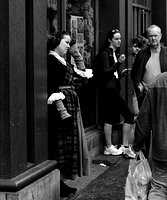
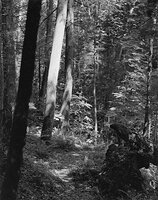
Firstly a huge thanks to the people who helped me on a thread a while ago. Finally got around to my first development and the results were OK - actually I was pretty pleased overall - exposure seems OK.

I had two 120 rolls (HP5 and TMAX 400) and developed for the TMAX (according to digital truth times). I know I shouldn't mix film types but they were just test shots and I just wondered how they would compare.

D-76 1:1... 10.5 minutes (invert for 1 minute, then 3 times each minute)
ILFOSTOP 1:19... 1 minute (4 inverts)
RAPID FIXER 1:4... 5 minutes
WATER WASH... 10 minutes (changes at 5 minutes, invert for 1 minute)
PhotoFlo 1:200... 30 seconds (few dunks)

Surprised that the HP5 seemed spot on for exposure and the TMAX seemed a little overexposed (not much though). I thought it would be the other way around.

I spent a good hour trying to get the film into the Paterson reel, and thought I must have absolutely wrecked it! To my surprise there were no scratches so pre-developing the film must be pretty resilient.

Although I had no real drying mark issues, I still think my PhotoFlo method could be improved - I had premixed it 1:200 and it was REALLY frothy - is that normal?

Thanks everyone.

Dead Link Removed
Dead Link Removed
 
I use Agepon (Agfa's equivalent to PhotoFlo) and mix to their recommendations - it's frothy all right!
As long as the bubbles run down the film as it dries, you'll be ok. If you find it kind of "sits" you need to mix a new batch.

Note the development times you read are guides - you may find that your particular exposure/development gives you different results (as per your observation of the HP5).

Best way is to test the film/developer/time and note the results; everybody will have a different result depending upon their camera/exposure/development technique. Start with the suggested times for the film you are using and then compensate (if needed) from there.

I remember doing a camera/film/development test to ascertain the correct development time for my camera/lens/film combination. Was an interesting exercise and once I had the info I needed, each and every roll was spot on.

http://www.amazon.com/Black-White-Darkroom-Techniques-Workshop/dp/0879852747

And don't forget to *enjoy* yourself!!
 
Thanks Nanette - I certainly did enjoy myself except the bit getting the film onto the reel... I think I even said to my wife that I was "going digital!" Only a brief moment of insanity ;-)
 
Tip for loading Patterson reels - sometimes snipping the corners makes it a bit easier to load (and make sure no sprocket holes are cut through - will snag every time!!) Plus make sure the reels are bone dry - damp ones will cause your film to stick too.

Build up of chemicals can sometimes make loading difficult as well; I usually clean mine every 3 months or so with an old toothbrush and some toothpaste, making sure to rinse thoroughly afterwards.
 
Sometimes Photo-flo is frothy even at 1:200, you can increase the dilution a little to avoid that.

Congratulations!
 
Good Morning, Mesh,

"I still think my PhotoFlo method could be improved - I had premixed it 1:200 and it was REALLY frothy - is that normal?"

I've found that Kodak's recommended dilution gives a solution concentration that is far too great, at least with the water here. For two rolls of 120, I'd try an amount of Photo-flo which just about covers the bottom of the bottle cap in enough water to cover the two reels. You might also mix a batch at around a 1:1000 dilution and see if that does the trick.

Konical
 
Well done. You probably read you can skip the stop and use plain water as a stop bath although when I first started I was very diligent precisely following instructions from books (pre-internet) and used stop for a while until I realised it was 'safe' to drop it.
Photoflo is just a mild form of detergent which is why it froths. Objective is for water to slide off the film like what happens when you wash up and the water slides off your plates and bowls and doesn't leave drying marks. I just use an eyedropper and squirt 3 or 4 drops into distilled water. High precision not required here either.

With Paterson reels an effective tip is to keep your thumbs straddling the little guides lugs so that the edges of the film are also sliding under the skin of your thumbs as it goes onto the the start of the reel. This stops the film popping out one or both sides if it strikes a bit of resistance. This is the main cause of problems with these reels in my experience. Also if you strike resistance gently pull out the sides of the reels as you twist which will often help free the movement. Or you can just chuck them in the bin and get some Jobos!
 
Photrio.com contains affiliate links to products. We may receive a commission for purchases made through these links.
To read our full affiliate disclosure statement please click Here.

PHOTRIO PARTNERS EQUALLY FUNDING OUR COMMUNITY:


Ilford ADOX Freestyle Photographic Stearman Press Weldon Color Lab Blue Moon Camera & Machine
Top Bottom
