
• Welcome to Photrio!
    Registration is fast and free. Join today to unlock search, see fewer ads, and access all forum features.
    Click here to sign up

finding it hard to get deionised water!

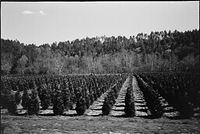
Tree Farm

H
Tree Farm

  • 0
  • 0
  • 13
A long time ago...

A
A long time ago...

  • 0
  • 0
  • 63

Forum statistics

Threads
201,208
Messages
2,820,454
Members
100,587
Latest member
Maddog1776
Recent bookmarks
0

salan

Member
Allowing Ads
Joined
Jul 13, 2004
Messages
89
Location
Cheshire Eng
Format
Multi Format
All,
I have just got back into developing films. Now I have my chemicals sorted , but when it comes to deionised (which working at a school I thought would be the least of my problems!), I am hitting a brick wall. The school I am at does not have any!!! They do not use any in the chem lessons (H&S has stopped a lot of experiments!!).
So I thought ok I will buy some bottles of it. NOOOO! at £2.40 per litre bottle!!!
So I am stuck for a cheap source of deionised water. Our tap water whilst not very hard does tend to leave calcium deposits on things.
So ideas please?
I don't really want to have to spend a lot for a filter system etc (no where to put it perm).
I live in Cheshire UK so obviously there is no point in saying 'I get mine from walmart for 20cents a gal' lol
Alan
 

nworth

Member
Allowing Ads
Joined
Aug 27, 2005
Messages
2,228
Location
Los Alamos,
Format
Multi Format
Distilled water is often available in stores. Deionized water is also sometimes sold as water for steam irons. You can also buy low volume water purifiers that produce deionized water. In many countries the Brita brand is popular and widely available. In any case, look for purifiers that have the purple deionizing resin filters rather than the simple black (carbon) or white filters.
 

Ian Grant

Subscriber
Allowing Ads
Joined
Aug 2, 2004
Messages
23,370
Location
West Midland
Format
Multi Format
Use a Brittax or similar water filter, that's enough for developers and cheap as well. We iuse them for drinking water atr home as well.

Deionised or distilled water is better for mixing developers from scratch particularly in hard water areas.

Ian
 

Brook Hill

Subscriber
Allowing Ads
Joined
Feb 14, 2005
Messages
136
Location
Bookham Surr
Format
35mm
I would have a look round the car assessory shops and small independent garages. I,found a local garage the cheapest at about £2.50 for five litres. The big flashy petrol stations and super stores all seemed much more expensive.

Tony
 

cliveh

Subscriber
Allowing Ads
Joined
Oct 9, 2010
Messages
7,705
Format
35mm RF
As a matter of curiosity, why would one use deionised water for mixing film developers?

I don't think the OP said what he was using this for, but if it is to be used in the mix I would ask the same question. However, dunking the film into deionised water for about 30 seconds after the wash will give you a film free of drying marks. I always do it. You can get this from any branch of Tesco/Morrison/Halfords.
 

pbromaghin

Subscriber
Allowing Ads
Joined
Sep 30, 2010
Messages
3,852
Location
Castle Rock, CO
Format
Multi Format
Wow. In the US, lots of grocery stores have a refill station where you can bring your own jugs and fill them up with filtered drinking water. The ones at Whole Foods also have a de-ionized spout and it sells for the same price as the filtered water, $.40/gal.

I mix all my chemicals with de-ionized because I can get it so easily and cheaply, and I figure the consistency eliminates one more variable from a process that I can all too easily screw up.
 
Last edited by a moderator:

Leigh B

Member
Allowing Ads
Joined
Jan 17, 2011
Messages
2,059
Location
Maryland, USA
Format
Multi Format
dunking the film into deionised water for about 30 seconds after the wash will give you a film free of drying marks.
Dunking in Photo Flo (diluted per instructions) for 30 seconds does the same, and it costs almost nothing.

- Leigh
 

jk0592

Member
Allowing Ads
Joined
Jul 7, 2011
Messages
107
Location
Canada
Format
Medium Format
In Montreal, Canada, we get deionised water in pharmacy stores (at the chemists?).
 
OP
OP
salan

salan

Member
Allowing Ads
Joined
Jul 13, 2004
Messages
89
Location
Cheshire Eng
Format
Multi Format
As a matter of curiosity, why would one use deionised water for mixing film developers?
For the mixing of the chemicals, it probably does not make a lot of differance. But for rinsing etc it does (white spots left on the film).
alan
 
OP
OP
salan

salan

Member
Allowing Ads
Joined
Jul 13, 2004
Messages
89
Location
Cheshire Eng
Format
Multi Format
The local Tescos/etc do not stock any.
Just to clarify, Yes if I had a cheap source (as I used to do when I worked in the analytical industry), I would use deionised (or actually I used to use double distilled,double deionised water but that was because I used gallons of the stuff every day!).
Distilled only removes the organic compounds and not the inorganic contaminants. Deionised removes (reduces unless a VERY good setup) the INorganic bits (calcium/sodium, etc.).
With our water,it is common even with a photoflo in the final rinse to get white marks left on the film.
Also as I have already said, before I had it to hand, so it was just 'better practice' to use so I did.
Alan
 

Leigh B

Member
Allowing Ads
Joined
Jan 17, 2011
Messages
2,059
Location
Maryland, USA
Format
Multi Format
As I said in my post, our local water leaves a calcium deposit.
You won't get calcium (or other) deposits with distilled water.

Probably much less expensive than DI.

- Leigh
 

Photo Engineer

Subscriber
Allowing Ads
Joined
Apr 19, 2005
Messages
29,018
Location
Rochester, NY
Format
Multi Format
As I said in my post, our local water leaves a calcium deposit. Hence wanting deionised

As I said, use distilled!!!!! It is less expensive and is perfectly fine.

Using DI water instead of DW is like using a cannon to shoot gnats.

The only thing worse (more expensive and uselessly so) would be to use DI DW. That is way overkill.

Use Distilled Water. Here it is less than $1 / gallon. You can even buy small stills to make it yourself.

PE
 

pentaxuser

Member
Joined
May 9, 2005
Messages
20,253
Location
Daventry, No
Format
35mm
Alan I too was shocked by the local Halford's price which was exactly as you have quoted. However there is something strange here as others who have recommended de-ionised water on another site where users are predominantly U.K. based have said that it is available in big volumes at quite cheap prices. Unfortunately I cannot recall the stockists mentioned. I had thought it was Halfords but if so I couldn't find any! Maybe a google search will turn up something although ideally it should be available fairly locally. Liquid is expensive when mail ordered.

However if this stuff cannot be obtained cheaply then it might be worth checking your process. I say this as I too live in a very hard water area(the kettle calcifies very quickly) and yet I have never experienced
calcium deposits. I use the Ilford wash sequence and then 1 min in Ilford wetting agent and into an air dryer.

What I think is important is to risk drawing the film between your middle fingers after the wetting agent and then hanging your film up vertically. I have never experienced scratches in so doing. I have a fan dryer which may help. A hairdryer on the cool setting may help if you don't have a drying cabinet.

The other trick is isopropyl alcohol with the wetting agent and giving the film a quick shake. I have never needed this but Les McLean swears by it.

I had always assumed that the NorthWest of England including Cheshire had relatively soft water and is mainly fed from Welsh water which is quite soft. Maybe not but I'd be surpised if the water is harder than in S Northants

Best of luck in your search


pentaxuser
 

Diapositivo

Subscriber
Allowing Ads
Joined
Nov 1, 2009
Messages
3,257
Location
Rome, Italy
Format
35mm
You need to use distilled or deionized water only for the last bath, the "final rinse". If your tap water is of normal quality it should be perfectly fine for all other baths. You can reuse your final rinse several times (you are supposed to wash the film very well to remove any residue of fixer, and if you do it you will also avoid contaminating your final rinse so that you can reuse it).

Rome water is quite problematic as far as calcium deposits are concerned, but I never have had any water mark problem as I prepare the last bath with cheap water for steam irons.

So the cost really is no object here. Pick the most convenient provision. Don't buy deionized / distilled water in large cans thinking you are going to save money by buying in quantity (unless you need it for ironing, that is). The opened flask of distilled water can develop a mould. The ideal would be to prepare you final bath with a new flask. You will reuse it for some time. Before using it visually check for solid deposits, mould etc.

Do install some filters on your tap so that you avoid putting some sand / solid particles in your baths.
 

steven_e007

Member
Allowing Ads
Joined
Mar 13, 2007
Messages
826
Location
Shropshire,
Format
Multi Format
Hi,

î live just down the road from you in Shropshire and we also have chalky hard water.

You will get some strange advice from overseas APUGgers about distilled water. It seems much easier to obtain in other countries. At one time a still (since it can be used to distil alcohol) had to be licenced . I think that is still the law today in the UK - it maybe makes distilation an inconvenient and more expensive process, but I think there may be other reasons. Distilled water should be water that is distilled - can,t be anything else, yet I,m not so sure that is the case everywhere. There is also de.ionised water and de.mineralised water, but I suspect the terms are sometimes used interchangeably in countries with less pedantic labelling laws.

The big curse in the UK is that supermarkets decided they could charge more money for the water for steam irons if they stuck perfume and colouring in the stuff :-(

About the only place you'll find it now, at prices lower than Halfords, is if you find a proper old car repair garage out in the sticks somewhere. I found one the other week in South Wales. £1 a litre bottle for demin. I bought as much as I could carry.

But yes... I only use for the very final rinse with photoflo and when mixing my own developers. A few litres will last me a long time.
 

Leigh B

Member
Allowing Ads
Joined
Jan 17, 2011
Messages
2,059
Location
Maryland, USA
Format
Multi Format
(you are supposed to wash the film very well to remove any residue of fixer,
Use a hypo clearing agent like PermaWash and the total wash time from fixer to hanging the film to dry is less than 10 minutes.

- Leigh
 
OP
OP
salan

salan

Member
Allowing Ads
Joined
Jul 13, 2004
Messages
89
Location
Cheshire Eng
Format
Multi Format
As I said, use distilled!!!!! It is less expensive and is perfectly fine.

Using DI water instead of DW is like using a cannon to shoot gnats.

The only thing worse (more expensive and uselessly so) would be to use DI DW. That is way overkill.

Use Distilled Water. Here it is less than $1 / gallon. You can even buy small stills to make it yourself.

PE[/QUOTE
I am sorry I am missing something as distilled does not remove inorganics like calcium so how does this help?
Distilled is just as hard to find locally and getting a still yourself is (in the UK) met with GREAT suspicion.
Alan
 
OP
OP
salan

salan

Member
Allowing Ads
Joined
Jul 13, 2004
Messages
89
Location
Cheshire Eng
Format
Multi Format
Alan I too was shocked by the local Halford's price which was exactly as you have quoted. However there is something strange here as others who have recommended de-ionised water on another site where users are predominantly U.K. based have said that it is available in big volumes at quite cheap prices. Unfortunately I cannot recall the stockists mentioned. I had thought it was Halfords but if so I couldn't find any! Maybe a google search will turn up something although ideally it should be available fairly locally. Liquid is expensive when mail ordered.

However if this stuff cannot be obtained cheaply then it might be worth checking your process. I say this as I too live in a very hard water area(the kettle calcifies very quickly) and yet I have never experienced
calcium deposits. I use the Ilford wash sequence and then 1 min in Ilford wetting agent and into an air dryer.

What I think is important is to risk drawing the film between your middle fingers after the wetting agent and then hanging your film up vertically. I have never experienced scratches in so doing. I have a fan dryer which may help. A hairdryer on the cool setting may help if you don't have a drying cabinet.

The other trick is isopropyl alcohol with the wetting agent and giving the film a quick shake. I have never needed this but Les McLean swears by it.

I had always assumed that the NorthWest of England including Cheshire had relatively soft water and is mainly fed from Welsh water which is quite soft. Maybe not but I'd be surpised if the water is harder than in S Northants

Best of luck in your search


pentaxuser
Hi Thanks for that. I will try it. My method to date was to do final wash (with a wetting agent in it) and then hang up in the bathroom (not used now as we shower and use the en-suite).
I had forgotten about using IPA, so I will try that.
Cheshire used to be like Manchester, but it changed about ten years ago and the water is much harder and now beginning to cause problems in appliances
Alan
 

Photo Engineer

Subscriber
Allowing Ads
Joined
Apr 19, 2005
Messages
29,018
Location
Rochester, NY
Format
Multi Format
Distillation removes all inorganics and destroys or removes many organics. Particulate matter is left behind. From a volume distiller DW is easy to make and can be quite inexpensive.

Deionized water is made by running water through a mixed bed ion exchange resin which can be quite slow and quite expensive when compared to distillation.

The resin, once used, must be either discarded or regenerated, but a still can be kept operational for weeks or months at a time. They do need cleaning every once in a while to remove mineral scale.

For high end use, DI DW is used for ultimate purity. We at EK only used this for emulsion making in the most critical instances. DW was used to mix some solutions and tap water was used for things that were not sensitive to calcium or heavy metals.

PE
 
Photrio.com contains affiliate links to products. We may receive a commission for purchases made through these links.
To read our full affiliate disclosure statement please click Here.

PHOTRIO PARTNERS EQUALLY FUNDING OUR COMMUNITY:


Ilford ADOX Freestyle Photographic Stearman Press Weldon Color Lab Blue Moon Camera & Machine
Top Bottom
