
• Welcome to Photrio!
    Registration is fast and free. Join today to unlock search, see fewer ads, and access all forum features.
    Click here to sign up

Filters for Pinhole...?

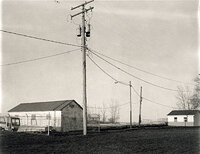
Fusion Energy

A
Fusion Energy

  • 2
  • 0
  • 44
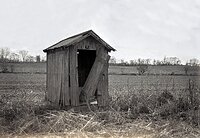
The Outhouse

A
The Outhouse

  • 2
  • 2
  • 54

Recent Classifieds

Forum statistics

Threads
203,472
Messages
2,855,305
Members
101,858
Latest member
FreeRanger
Recent bookmarks
0

NickG

Member
Allowing Ads
Joined
Oct 13, 2008
Messages
8
Location
St Leonards
Format
Medium Format
Hi, wanting to move into pinhole photography and wondering about filters and how best to attach them to my Zero 6x9 MF box...? Any advice would be much appreciated. I can't find any info about this so I hope that someone out there can help.

I want to tone down skies a little and so if they are needed I'd opt for a middling filter like a Y/G or yellow.

Cheers,

Nick.
 
I'd just use a spot of gaff tape (not duct tape) to hold the filter on. Strong enough to hold the filter securely, but won't leave any gooey residue.
 
Due to the extreme DOF of pinhole, many people consider it best to hold the filter very close in front of the pinhole and move it around during the exposure, to cancel any affects from dust spots or scratches that may otherwise show up on the image.

~Joe
 
Great, thanks for your help. Perhaps you can help with something else? I shoot with HP5 but have little experience with using it for v. long exposures. I know the reciprocity law but not sure about how much to reduce development by with v long exposures... Do you know? Cheers.
 
Thanks Joe,

Can you help with reciprocity and development contraction for HP5? Cheers.
 
I am not sure that you do need to reduce development, at least Ilford's technical data sheet doesn't indicate anything other than increased exposure. Here is the data sheet: http://www.ilfordphoto.com/Webfiles/20106281054152313.pdf

I have never personally changed development due to reciprocity failure alone. I have changed development and exposure times to compensate for night conditions which are very contrasty by nature, but it does not sound like you are talking about that kind of situation, rather you are encountering long exposures due only to the small aperture of your pinhole camera.
 
I think it is traditional at this point to mention the really good reciprocity characteristics of Fuji Acros 100. According to the data sheet ( http://www.fuji.fi/documents/13/neopan_100_acros_af3083e.pdf ) it requires no adjustment up to 120 seconds and only +1/2 a stop up to 1000 seconds, making it faster in practice than other nominally faster films. Also it is really nice film.
 
Thanks for your advice. I've had a look at Howard Bond's article which is comprehensive so the rest can be determined through making images. Acros sounds great. I'll get a couple of rolls and try them. Many thanks for replying so quickly. Cheers.
 
I got some clear PVC sheets in assorted colors at the art supply store and cut out little circles to sandwich behind the actual pinhole, thereby avoiding dust issues. Works like a champ, here is an example using a red filter:
 
I would never have thought to put it behind the pinhole. Thanks for the tip.
 
In theory, narrowing the spectral bandwidth for B&W could improve the sharpness, can't say I've ever tried it. The light wavelength enters into the equation for pinhole optimization.

A couple of years back I crudely taped an 80B filter over my SQ-A pinhole adapter to try an outdoor shot and finish off a roll of tungsten transparency film; it worked!
 
In theory, narrowing the spectral bandwidth for B&W could improve the sharpness, can't say I've ever tried it. The light wavelength enters into the equation for pinhole optimization. . . .

Long ago I did some experimenting with films and filters from blue sensitive to IR, and found that it does make a slight difference. Fine-tuning pinholes and spectral response for optimum results makes insignificant improvement in almost all pinhole photography.
 
I do exactly as tokengirl does. I have little chips of R25 gel behind the hole. I got nine pieces of filter from one gel, which is fairly economical.

Acros has already been mentioned, but also worth a try is Tmax 100, as far as avoiding great compensation for reciprocity failure.
 
Found this thread again. I've thought up another option:

I have a full set of 77mm filters I would like to utilize for my pinhole camera. In order to do this, I ordered a threaded step up ring which will be glued to the camera to mount these to. Now, the real question is, of course, behind or in front of the lens? Much easier to change on front, but the concern about extreme DOF is legit. Maybe behind and reaching in, who knows...
 
Yeah, I'm not sure how much it would matter. Since it's a sort of ray tracing exercise to begin with, I might think front or back would potentially have the same problems. Maybe the inside mount would have less opportunity to gather additional dust in field use. I have a pinhole body cap adapter I made for my Bronica which has the flap shutter behind a circular plate and a sunshade (made from a black spray paint can lid!) that would allow me to easily put a filter adapter on the front. I considered it, but have never gotten around to it.

My later cameras have a pivoting flap shutter on the front and would more or less have to put the filter inside. Being that they are LF, with standard filmholders, that wouldn't be all that inconvenient. (No problem at all reaching inside the 8x10 version! :blink:)

Dang, now the wheels in my brain are spinning for rev. 2 for the next WPPD!
 
Photrio.com contains affiliate links to products. We may receive a commission for purchases made through these links.
To read our full affiliate disclosure statement please click Here.

PHOTRIO PARTNERS EQUALLY FUNDING OUR COMMUNITY:


Ilford ADOX Freestyle Photographic Stearman Press Weldon Color Lab Blue Moon Camera & Machine
Top Bottom
