• Welcome to Photrio!
    Registration is fast and free. Join today to unlock search, see fewer ads, and access all forum features.
    Click here to sign up

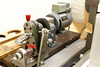
Film coating machine (homemade) on Flickr

Watch Your Step

H
Watch Your Step

  • 4
  • 1
  • 68
The Royal Mile.

A
The Royal Mile.

  • 4
  • 4
  • 126

Recent Classifieds

Forum statistics

Threads
201,637
Messages
2,827,621
Members
100,864
Latest member
boredindiego
Recent bookmarks
4

Emulsion

Member
Allowing Ads
Joined
Jan 25, 2007
Messages
138
Location
Australia
Format
Med. Format RF

AgX

Member
Allowing Ads
Joined
Apr 5, 2007
Messages
29,972
Location
Germany
Format
Multi Format
Thanks!

That really looks sound. I'd like to have such a maschine...

I wonder how the four-layer coating is done. By four seperate runs or by using another type of coating head than that through?

Sorry, I have to correct myself. I was misled by that `coating´ photo. It is not a through technique applied, but rather that `stream-over-blade´ technique.
 
Last edited by a moderator:

Steve Smith

Member
Allowing Ads
Joined
May 3, 2006
Messages
9,110
Location
Ryde, Isle o
Format
Medium Format
Excellent. And I love the use of wood in engineering products!

I wonder how the four-layer coating is done. By four seperate runs or by using another type of coating head than that through?

If my memory of the Ilford factory tour is correct, that is a cascade coater. It is possible to inject several emulsions at the same time which flow over each other before coating the film with multi-layers. The one in the link looks like it is set up for a single emulsion at the moment though.

The text does say that this is a prototype head so perhaps there are plans to make a multi-layer coating head.

This looks similar in size to the pilot machine Ilford use to test batches of emulsion before running it on their full size machine - which is huge!


Steve.
 

rmazzullo

Subscriber
Joined
Mar 24, 2007
Messages
326
Location
Northeast US
Format
Multi Format
someone get in touch with the builder !!

Well, since it is now clear that someone has created a coating machine (2 years ago!!), that miniaturized automated emulsion making can't be too far behind. Combine both of these ideas in your basement (automated emulsion making and film coating), and multiply that by however many you care to imagine, and you might start a new "mini-micro custom film maker" phenomenon.

I would love to see some examples of the results. Especially considering the number of layers that were coated (see the 4th photo in the series).

Better yet, I would love to see technical details of the machine, particualrly the multi-layer coater. And many close up photos, of course.

After seeing this technological flight of fancy take to the air, why on earth should I stop at manual methods of emulsion making?

Very, very nice indeed.

Bob M.

(edit) Actually, seeing the photos of the coating machine is giving me plenty of construction ideas. Too bad I threw away my erector set :smile: I guess I can always use Legos.
 
Last edited by a moderator:

AgX

Member
Allowing Ads
Joined
Apr 5, 2007
Messages
29,972
Location
Germany
Format
Multi Format
If my memory of the Ilford factory tour is correct, that is a cascade coater. It is possible to inject several emulsions at the same time which flow over each other before coating the film with multi-layers. The one in the link looks like it is set up for a single emulsion at the moment though.

That's why I did not call it cascade. It would make no sense with only one emulsion. However, if that DIY-coater would stack several throughs onto that blade...
 

rmazzullo

Subscriber
Joined
Mar 24, 2007
Messages
326
Location
Northeast US
Format
Multi Format
What I would like to know is how do the separate emulsion layers stay separate during the coating phase?

Are there additives in each particular emulsion layer that prevent mixing (different specific gravity)?

Or is it that you can just layer one emulsion on top of another, providing you chill the emulsion stack very soon afterwards that the layers remain separate before mixing has a chance to occur?

Did we cover this already in this forum in another thread perhaps?

Thanks,

Bob M.
 

Steve Smith

Member
Allowing Ads
Joined
May 3, 2006
Messages
9,110
Location
Ryde, Isle o
Format
Medium Format
Or is it that you can just layer one emulsion on top of another, providing you chill the emulsion stack very soon afterwards that the layers remain separate before mixing has a chance to occur?

There are a few patents for this. This one: http://www.google.com/patents?id=i0MwAAAAEBAJ&dq=cascade+coater
shows the coating head in cross section and shows the individual coatings staying in layers.

The text on page four explains that the layers do not mixduring coating.

Steve.
 

David A. Goldfarb

Moderator
Moderator
Allowing Ads
Joined
Sep 7, 2002
Messages
20,017
Location
Honolulu, HI
Format
Large Format
That's very impressive.
 

Captain_joe6

Member
Joined
Mar 3, 2007
Messages
195
Location
Portland, OR
Format
8x10 Format
I think PhotoEngineer needs one of these. Let's all pitch in $1 and get him one for christmas, so that he build his own film manufacturing empire and supply us all. :D
 

tim_walls

Member
Allowing Ads
Joined
Sep 6, 2006
Messages
1,122
Location
Bucuresti, R
Format
35mm
What I would like to know is how do the separate emulsion layers stay separate during the coating phase?

Are there additives in each particular emulsion layer that prevent mixing (different specific gravity)?

Or is it that you can just layer one emulsion on top of another, providing you chill the emulsion stack very soon afterwards that the layers remain separate before mixing has a chance to occur?

My guess is it's all about getting the head design and flow rate right so that you achieve laminar flow (i.e. no turbulence.)
 

Photo Engineer

Subscriber
Allowing Ads
Joined
Apr 19, 2005
Messages
29,018
Location
Rochester, NY
Format
Multi Format
It is a very impressive machine, but is not a cascade (slide) coater. The hopper shown in the photo is indeed an extrusion hopper capable of only one layer at a time, unless two or 3 layers are fed to the hopper at one time. This cannot be determined from the photo, but it surely is not a classic slide hopper.

The coating speed in this design would be limited to about 10 f/m - 100 f/m on average. Did you notice that he is coating on Titanox, and so is making the equivalent of paper negatives but on film support.

PE
 

Photo Engineer

Subscriber
Allowing Ads
Joined
Apr 19, 2005
Messages
29,018
Location
Rochester, NY
Format
Multi Format
I should add that from the patent shown above and the original Kodak patents, a slide or cascade coater has the emulsion exposed for quite a distance before it meets the film surface, but an X or extrusion hopper has the emulsion meet the film upon extrusion from the hopper itself. This is seen in the photo.

Note also that it is about 4" wide. This is on the scale of a research machine capable of 4x5" sheets. It in no way is meant as a criticism but does point out the limitation to 4" wide coatings. The design of a 10" machine would be just the thing for LF, as is this can supply 35mm (if you can perf it), 120 if you can coat on 5 mil stock and 4x5 on 7 mil stock.

PE
 

AgX

Member
Allowing Ads
Joined
Apr 5, 2007
Messages
29,972
Location
Germany
Format
Multi Format
PE,

Before reading your post I was looking at the coating head again. It seems it consists out of two acrylic plates screwd onto each other, with one having been milled out, so that a small volume is made which at the same time forms the slit at one end. Thus the coating, except for base velocity, is mainly controlled by the pressure in that coating head chamber.
 

Steve Smith

Member
Allowing Ads
Joined
May 3, 2006
Messages
9,110
Location
Ryde, Isle o
Format
Medium Format
I think I see the difference now. A cascade coater has the exit slot on the top surface and the emulsion flows down to meet the film whereas with this one, the exit slot is at the point of (not quite) contact with the film. Presumably at the junction of the two perspex plates.


Steve.
 

Photo Engineer

Subscriber
Allowing Ads
Joined
Apr 19, 2005
Messages
29,018
Location
Rochester, NY
Format
Multi Format
PE,

Before reading your post I was looking at the coating head again. It seems it consists out of two acrylic plates screwd onto each other, with one having been milled out, so that a small volume is made which at the same time forms the slit at one end. Thus the coating, except for base velocity, is mainly controlled by the pressure in that coating head chamber.

You are pretty much correct as is Steve. The cascade coater is the only one that can do multiple layers at the same time. It is called a 'slide hopper' at Kodak. The other hopper is called a 'curtain coater' and is entirely different from either a slide hopper or an extrusion hopper.

What you see in the picture is commonly called an X-hopper or an extrusion hopper at Kodak and functions as you describe.

PE
 

Dark Orange

Member
Allowing Ads
Joined
Dec 21, 2007
Messages
21
Format
35mm
Hello peoples. I am the guy who uploaded the photos to Flickr, and was contacted (I think) the original poster of this thread as a courtesy. While I am not the builder, I am close to him and can act as a go-between for any any questions you have.

Let me fill in some details on the project...

The builder is a retired chemist from Kodak here in Australia and was high up enough up the food chain so that when the plant finally shut down, he was able to acquire a few useful bits to assist the build.

He is a tinkerer and this project essentially is a means to an end, the end being something I am not entirely not sure of, but no doubt involves researching exotic emulsions. The end result is definately not the sale of large format custom/exotic filmstock, but if there is a demand for the left-overs, I am sure it is an income stream he would consider to offset the cost of building it.

I have been very busy going around the countryside for work over the last couple of months and have been unable to get new photos, but will be spending a lot of time over there the next couple of days so feel free to ask questions, and I will endeavour to get them answered and take more photos of any specific bits if required.

As mentioned, this project has no commercial considerations. The film size chosen was based on price and availability.

The film base is threaded and spliced into a single loop, so each coating run gives a standard length of product.

With regards to multi-coating, the engineering involved for the gains made is not worth it in this case so the machine is set up to do a single layer at a time. Extra layers can be applied straight away, or the coated film can be stored until required.

I have mentioned a TiO2 base, and this is currently just a bit of playing around. When the machine is up and going properly, the end product will be 'normal' negative film.


A cascade coater has the exit slot on the top surface and the emulsion flows down to meet the film whereas with this one, the exit slot is at the point of (not quite) contact with the film. Presumably at the junction of the two perspex plates.

From what I understand (IE: the original builder explained to me a long time ago) the cascade coaters are used for multi-layer coatings, to allow an even surface for the multiple layers to be laid on before application to the base. (I could be wrong on this) The method used for this machine is as described above.

The last year or so has been mainly taken up with trying to remove the problem of uneven layering of the emulsion that shows up as regular 'banding' pattern on the finished product. The problem had been isolated to the drive roller, and was assumed to be gearbox chatter. A *lot* of time and expense was used to track this down, and eventually a high-res stepper motor and drive all but removed the problem. The banding that is left is due to the coating roller by the looks, being a high-speed unit running on low speed the bearings will need to be either replaced or maybe we could get away with repacking them with a light oil rather than grease.

Thank you for the interest, I thought it was far too interesting to be left in the dark in a garage. While the builder uses the net for research rather than "social" uses, I will endeavour to get him into the forum, it looks like it will be one he will enjoy.

 

Photo Engineer

Subscriber
Allowing Ads
Joined
Apr 19, 2005
Messages
29,018
Location
Rochester, NY
Format
Multi Format
I thought those undercut rollers looked familiar! :D

All kidding aside, banding can also come from air pump pulsations in the drying cabinets, and pulsations in the emulsion feed pump. These all can cause banding in the final coating.

I have coated Titanox in gelatin on film many times. It is what we at Kodak called a "White Rug". It is very hard to coat uniformly at the level needed to get a good reflection backing for film or paper. I have 2 or 3 1 foot snips from a roll of one of my coatings sitting here in an old box. They sure have streaks in them. Making the TiO2 in gelatin is also not easy. It is tough to do and can require a ball mill.

This technology was used in Kodak Instant materials and in the Kodak Blood Test equipment now made by Johnson and Johnson at Kodak Park on their new updated equipment. They still have some old Kodak equipment running to make stuff for them too. So, the "White Rug" is still a coating staple at Kodak Park but made by J&J.

PE
 

Dark Orange

Member
Allowing Ads
Joined
Dec 21, 2007
Messages
21
Format
35mm
OK, some more photos for you all. First off, let me apologise for the pretty ordinary photos. The Filminator has now been built into its own room, and there isn't much space to swing a camera.

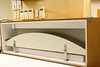
We'll start with a photo of the finished splicing cabinet. Note that when I said it used a 4" base, I should have said 5". For the record, each loop of finished product is 14m long.


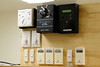
And this is the mission control centre.


And now another view of the chiller unit. The builder is particularly impressed with his effort in designing this. Utilising a built-in container of ice-water, it pumps the water through a condensor from an automotive aircon unit (Ford, I believe) to chill the air.


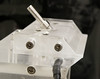
Now the intereting bit - the "Extrusion slide coating head". Sorry for the crap image, there wasn't much light or contrast.


The Zenith emulsion pump.


Some examples of the finished product.


The builder, not satisfied with merely developing his own Kodachrome, is wanting to develop his OWN Kodchrome. :wink:

BTW, Merry Christmas everybody. I hope Santa was generous.
 
Last edited by a moderator:
OP
OP
Emulsion

Emulsion

Member
Allowing Ads
Joined
Jan 25, 2007
Messages
138
Location
Australia
Format
Med. Format RF
Thanks Dark Orange,

Excellent photos and information!

Is it possible to obtain from the maker any suggested emulsion formulas?

Merry Christmas from,
Emulsion.
 

rmazzullo

Subscriber
Joined
Mar 24, 2007
Messages
326
Location
Northeast US
Format
Multi Format
fantastic photos!

Dark Orange,

This is absolutely fantastic information. Do you know if the builder has considered joining the forum? I can imagine some folks will have "a few" questions for him :D.

Would you be able to supply more information about the Filminator as we explore the possibilities?

Merry Christmas, and thanks for the photos and notes!

Bob M.
 
Last edited by a moderator:

Photo Engineer

Subscriber
Allowing Ads
Joined
Apr 19, 2005
Messages
29,018
Location
Rochester, NY
Format
Multi Format
Excellent work.

I might mention that this is a small scale version of a 12" coater at Kodak that was called P3. It resembles it even to the arched chill cabinet.

Does the machine have a tensioner? I remembered after my last post here that lack of a tensioner or an improperly set tensioner can cause chatter as well as the other items I mentioned.

PE
 

ben-s

Member
Allowing Ads
Joined
Jul 12, 2006
Messages
444
Location
Nottingham,
Format
Multi Format
Great Stuff, Dark Orange!
Thanks for sharing your friend's work with us.
Do you have a picture pf the whole machine loaded up? I can't quite work out where the web goes after the tensioner.
 

Photo Engineer

Subscriber
Allowing Ads
Joined
Apr 19, 2005
Messages
29,018
Location
Rochester, NY
Format
Multi Format
I saw the tensioner in the picture, but IIRC we had one at each end. I don't know how well only one would work. Also, I see no apparent provision for a vacuum. This can help eliminate defects due to chatter, but if improperly controlled can introduce more chatter.

PE
 

AgX

Member
Allowing Ads
Joined
Apr 5, 2007
Messages
29,972
Location
Germany
Format
Multi Format
You mean a vacuum/suction from beneath the slit between the coating head and the base?
 
Photrio.com contains affiliate links to products. We may receive a commission for purchases made through these links.
To read our full affiliate disclosure statement please click Here.

PHOTRIO PARTNERS EQUALLY FUNDING OUR COMMUNITY:


Ilford ADOX Freestyle Photographic Stearman Press Weldon Color Lab Blue Moon Camera & Machine
Top Bottom