

• Welcome to Photrio!
    Registration is fast and free. Join today to unlock search, see fewer ads, and access all forum features.
    Click here to sign up

Film and water

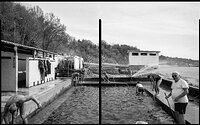
Tompkins Square Park

A
Tompkins Square Park

  • 2
  • 0
  • 23
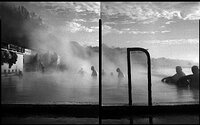
Siesta Time

A
Siesta Time

  • 1
  • 0
  • 24

Recent Classifieds

Forum statistics

Threads
202,857
Messages
2,846,651
Members
101,572
Latest member
apltd
Recent bookmarks
0

BetterSense

Member
Allowing Ads
Joined
Aug 16, 2008
Messages
3,151
Location
North Caroli
Format
35mm
This didn't fit in either B&W or color.

What happens if you get film wet before exposure? After exposure?

What about B&W/C41/E6; what difference does that make?

Say I drop my camera in a lake, are the pictures toast?

I always hear about people freezing film. Here in TX, when you get something out of the freezer, it instantly starts dripping water. Do people not worry about this?
 
I never tried dropping my film in a lake, before or after exposure.

But i do keep it in the freezer.
The rather simple solution to the condensation problem that presents itself when you take something out of the freezer is to keep the packing closed until the thing has warmed up.
That way, the condensation still forms. But the thing that the condensation is dripping off is the outside of the packing. What's inside will remain as dry as it was when it went into the freezer.
 
Getting film wet does not change the latent image. Remember that film spends the most interesting part of its life in water (dilute developer, then fixer, then wash). The swelling of the gelatin could be useful for some strange process, if done properly, but I wouldn't expect much damage at all if film is submerged either before or after exposure. Of course, I'm not that picky.
 
Wouldn't it matter what the water was, too? Like its pH and stuff? Whether it was saltwater? I've heard stories about how you develop film in orange juice and coffee, but I'm not sure if they are true anyway.
 
I had some Velvia 100 on 120 spools which got soaked by rain (in a leaking bag) after exposure. There are no signs of any adverse effects.


Steve.
 
coffee and washing soda (sodium carbonate pH ~11, not sodium bicarbonate which is baking soda) does develop film. Not tried the orange juice thing.
You might have problems with the film sticking to itself with 35mm, or the paper in the case of 120 film. not really played with it, though. I've read of someone who ran a film through the washing machine, tried to get it processed, wouldn't let them, so they put some rice and the film in a sealed bag and left it (since rice absorbs moisture, like in salt shakers) and forgot about it and it grew all sorts of mould and it caused weird crazing on the film and strange colours.
 
The rather simple solution to the condensation problem that presents itself when you take something out of the freezer is to keep the packing closed until the thing has warmed up.
That way, the condensation still forms. But the thing that the condensation is dripping off is the outside of the packing. What's inside will remain as dry as it was when it went into the freezer.


You are correct. A lot of people worry about condensation thinking that because something has come out of the freezer, there must be ice involved, therefore there will be moisture when it warms up.

Condensation is from water vapour in the air which is at a higher temperature than the film and its packaging.

Of course, if you put a wet film into the freezer, that's another story!


Steve.
 
coffee and washing soda (sodium carbonate pH ~11, not sodium bicarbonate which is baking soda) does develop film. Not tried the orange juice thing.

I have used coffee and caustic soda but not orange juice.

They claimed orange juice would work on an episode of Mythbusters but I think it would need some caustic soda too to get it more alkaline.


Steve.
 
I would not expect a film to come out perfect after it was dropped in the lake; simply because that water is not clean. Otherwise film getting contact with clean water before or after developing is normal, it should not change the pictures on it. About film in the freezer, as mentioned it should be stored there in a ziplock bag so condensation when taken out is formed on the ouside of the bag.
 
(there was a url link here which no longer exists) for the oj developer thing :smile:
there was someone here a while back who was doing all sorts of kitchen experiments with developing film.
i think the best one was using rosemary ...
(there was a url link here which no longer exists)
so if you are making a nice dinner, and you accidently drop your film into your cooking chicken
you'll develop it by accident ...
 
If you drop film in water before exposure it can damage it by leaving spots or sticking together. If it happens after exposure, the best route is to totally wet it, keep it wet and then process with a good prewet before the process starts.

If you drop your camera in water and know the guts got wet, place it in distilled water and soak well, then dry well. Check to see if it works. If so, you are clear. Remove the film beforehand and wash well then run the process cycle when the film is still wet.

PE
 
Put the camera in your car on a hot summer day and the water will all disappear. Dont know where it goes...

LOOK!!! A Camry!!! Quick, take a pitcher!!!

more later, if you can stand it...

paulie
 
I dropped my camera in the lake once. It was a cheap one, though, and continued to work despite being drowned. The film was fully exposed. When I wound it back in the film got scratched and it stuck together. The film still processed fine and beyond the physical damage I didn't notice any problems.
 
I once got one of my 35mm cameras so wet with rain that it stopped working - the film would only reluctantly advance, the internal exposure meter stopped and finally the mirror locked up.

Then the film would then not re-wind - it has managed to "glue" itself to the pressure plate with all the rain water that was now inside the camera

Left the whole thing undisturbed on a radiator to dry out - it took many days for the internal misting to clear.

However, when it fully dried out, neither the film nor the camera had taken any long term harm.

However it was “only” rain water - which is about as pure as you can get.

Having experienced getting a camera and film that wet - I wouldn't recommend it for others to try

Martin
 
I had a Minolta SRT of some vintage get wet in Cave of the Winds at Niagara Falls. The film would not advance, the meter did not work, the shutter did not work. By the next day everything was back to normal. No problems with the film.

Steve
 
Mythbusters tried orange juice in trying to resurrect "results" from an old episode of McGuyver. They failed for a variety of reasons to make it work. They were trying it on color film as well, so they were jinxed from the start.

Exposed film dropped into water should be salvageable if kept wet, in the dark, and processed promptly. Trying to dry it out would make it stick to itself. Unexposed film dunked in water would lose its anti-halation dyes and maybe some sensitizing dyes. It might make for an interesting experiment to unspool it, soak it in water, dry it, put it back in a cassette and run it through a camera, but the results would be unpredictable.

Peter Gomena
 
A guy I used to work with in a barely heated darkroom with no running hot water would routinely add hot coffee to the D76 to bring his developer up to temperature.

The trouble with wet film comes when it dries out.

If its rolled like in a 35mm canister with nothing in between the rolls of film it would stick together. If I dropped exposed 35mm or 120 film in the lake or (more likely) it got dunked in the water in my ice chest - where I store it in zip locks while traveling in the summer. I would try to keep it wet until I could get it on a reel and into the developer.

Thinking about it, that would be the best way to dry it out - put it on a developing reel and the let it hang out in a dry developing tank until dry. Then you would have to move it to another light tight storage.
 
Photrio.com contains affiliate links to products. We may receive a commission for purchases made through these links.
To read our full affiliate disclosure statement please click Here.

PHOTRIO PARTNERS EQUALLY FUNDING OUR COMMUNITY:


Ilford ADOX Freestyle Photographic Stearman Press Weldon Color Lab Blue Moon Camera & Machine
Top Bottom
