

• Welcome to Photrio!
    Registration is fast and free. Join today to unlock search, see fewer ads, and access all forum features.
    Click here to sign up

fast films capture more DR?

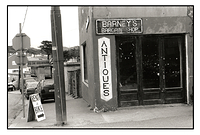
Barney's Bargain Shop

A
Barney's Bargain Shop

  • 0
  • 0
  • 0
Coburg Street

A
Coburg Street

  • 1
  • 1
  • 62

Recent Classifieds

Forum statistics

Threads
201,738
Messages
2,829,391
Members
100,923
Latest member
GB-A2
Recent bookmarks
0

pierods

Member
Allowing Ads
Joined
Dec 18, 2007
Messages
380
Format
35mm
Hi,

I just got back a roll of Ilford panf I got developed at a professional lab.

Super smooth, silky, fantastic, white whites, creamy greys, the works.

I also noticed that wen I mis-exposed, panf didn't forgive as hp5 does...

I noticed that it's very contrasted though.

As a rule, do slow films capture less dynamic range than fast films, meaning, slow films behave more like a digital sensor?

[by dynamic range I think I mean the difference between the brightest light and the darkest dark in an image]
 

arigram

Member
Allowing Ads
Joined
Sep 21, 2004
Messages
5,465
Location
Crete, Greec
Format
Medium Format
All films have a lot more dynamic range than any digital sensor.
Slower films and very fast (above 800 iso) films tend to be somewhat contrasty, but
it all depends on the developer and technique. They still capture a lot more than digital.
 

Pinholemaster

Member
Allowing Ads
Joined
Oct 17, 2005
Messages
1,566
Location
Westminster,
Format
8x10 Format
You should test your own questions to learn.

There are too many variable to make sweeping statements about dynamic range and film ISOs. You should set up a test with various developers, dilutions, agitation styles, various exposure zones, and temperatures to test your question.

Do you know what developer and processing system used by the lab you employed to do your process? Knowing that information is a start.
 
OP
OP
pierods

pierods

Member
Allowing Ads
Joined
Dec 18, 2007
Messages
380
Format
35mm
Allrighty, I will try.

But if I were to develop my films in the same developer, at the same concentration, slow film would have less dynamic range?
 

fschifano

Member
Allowing Ads
Joined
May 12, 2003
Messages
3,196
Location
Valley Strea
Format
Multi Format
To an extent, I think you are correct. I need to be far more careful with my exposure with medium to slow speed films to insure that I've recorded the shadow detail I want. I also need to be more careful with development to insure that the highlights are not blown all to hell, making them unprintable. Tri-X and HP5+ are far more forgiving in this regard. Very fast films, like Delta 3200 and TMZ (TMax3200) are very low contrast emulsions, and not as fast as their names imply. Because of their low contrast characteristics they can be push processed and deliver a reasonably normal characteristic curve. They are often pushed too hard, and that drives up the contrast.

You can check the characteristic curves of films from all the major manufacturers by simply consulting the tech sheets.
 

gainer

Subscriber
Allowing Ads
Joined
Sep 20, 2002
Messages
3,699
Allrighty, I will try.

But if I were to develop my films in the same developer, at the same concentration, slow film would have less dynamic range?

Not necessarilly so. The density range is obtained by development, not exposure. What you need to know is the SBR, or scene brightness range, as well as the CI, or contrast index, in order to make this judgement. When you send your roll of film to a lab, they do not know what SBR's you may have recorded, and so cannot adjust film development to compensate. What I'm trying to say is that you cannot judge the maximum DR by looking at negatives or prints. The DR you see there is the combination of SBR and CI.

When you do your own lab work, you will find that film should be developed to keep the DR within the exposure range of the available printing material. I think you will find that the maximum density obtainable by any film, fast or slow, will be more than any printing paper can handle. The only time you may want Dmax is when you are doing line work which has only black and white. Then you don't mess with Mr. Inbetween.
 

Tim Gray

Member
Allowing Ads
Joined
Sep 2, 2006
Messages
1,882
Location
OH
Format
35mm
I believe I've read here that fast films have more dynamic range. And when I say dynamic range, I mean the ability to capture a broad range of values in the scene.

I think PE has spoken on this.
 

JBrunner

Moderator
Moderator
Allowing Ads
Joined
Dec 14, 2005
Messages
7,429
Location
PNdub
Format
Medium Format
Allrighty, I will try.

But if I were to develop my films in the same developer, at the same concentration, slow film would have less dynamic range?

You can develop your film to different DR's with the same developer. Differing exposures and development times create different results. What you think is true of a stock can completely reverse simply by modifying exposure and development. Film isn't hardware that just gives one certain result and that's it. It's more like an animal that you learn to work with and train to suit your needs. Different stocks build contrast in different ways. I don't think you can really even quantify into fast and slow, for a certainty. Efke 25 can be uber contrasty if you just look at it wrong, but if you get it right, it has a great scale.

Film has far more tolerance for overexposure than under.The Pan F probably acted the way it did because the missed exposures were underexposures, or if over exposed, were overdeveloped for the exposure, but who really knows? Film can do you six ways to Sunday, and every result has to be taken in full context. Generalizations can be made, but it's important to realize it's not a fixed input/output thing like the hardware you're trying to compare it to. It ain't digital, it won't ever act like digital, and comparing it that way won't get you anywhere but in a magic bullet rut. Better to compare stocks against one another with the same variables, or explore the capabilities of a single stock with different variables. That will build a useful body of experiences.
 
Last edited by a moderator:
Photrio.com contains affiliate links to products. We may receive a commission for purchases made through these links.
To read our full affiliate disclosure statement please click Here.

PHOTRIO PARTNERS EQUALLY FUNDING OUR COMMUNITY:


Ilford ADOX Freestyle Photographic Stearman Press Weldon Color Lab Blue Moon Camera & Machine
Top Bottom
