
- Joined
- Dec 21, 2002
- Messages
- 6,230
- Format
- Large Format
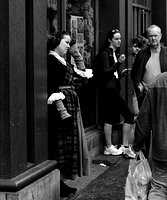
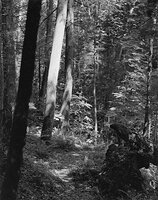
I have been reprinting a lot of old and new negatives during the past week. This is the first time that I have had the opportunity to evaluate Tri X developed in HC 110, Efke PL 100 developed in Pyrocat, and Bergger BPF 200 developed in Pyrocat with my point light source enlarger. The Pyrocat developed negatives were developed in both semi stand and continual agitation with tubes. The Tri X negatives were tray developed.
I recently designed, built and installed a point light system for my Durst 138S condenser enlarger and this seems to level the playing field a lot more between the different films and developers. I have to say that for my work that Efke PL 100 in Pyrocat is a clear winner in terms of local contrast and sharpness. The Tri X developed in HC 110 has a smoother tonal response. Because of the greater local contrast in the Efke negative, the Efke print has the appearance of being much sharper.
Surprising to me is that I could tell no difference between a continuous agitated Efke PL 100 print from a semi stand (minimal agitation) print when enlarged 3X. Both prints are very sharp. The camera lens (Symmar S 210mm) was the same in both cases of the Efke prints.
I recently designed, built and installed a point light system for my Durst 138S condenser enlarger and this seems to level the playing field a lot more between the different films and developers. I have to say that for my work that Efke PL 100 in Pyrocat is a clear winner in terms of local contrast and sharpness. The Tri X developed in HC 110 has a smoother tonal response. Because of the greater local contrast in the Efke negative, the Efke print has the appearance of being much sharper.
Surprising to me is that I could tell no difference between a continuous agitated Efke PL 100 print from a semi stand (minimal agitation) print when enlarged 3X. Both prints are very sharp. The camera lens (Symmar S 210mm) was the same in both cases of the Efke prints.

