
• Welcome to Photrio!
    Registration is fast and free. Join today to unlock search, see fewer ads, and access all forum features.
    Click here to sign up

Enlarging thin negatives

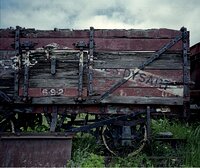
A coal wagon

A
A coal wagon

  • 0
  • 0
  • 12
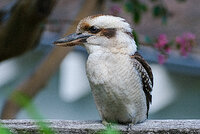
Morning Birdie

D
Morning Birdie

  • 0
  • 0
  • 15

Forum statistics

Threads
203,142
Messages
2,850,463
Members
101,692
Latest member
eviosl
Recent bookmarks
1

Boris Mirkov

Member
Allowing Ads
Joined
Nov 12, 2009
Messages
84
Location
Serbia, Belgrade
Format
Multi Format
I've processed some 35mm Delta 3200@6400 with Microphen stock solution (for 12 minutes - reference was Ilford chart) and the negatives came out incredibly thin.To be honest, temperature was 21 deg instead of 20. I'm about to start enlarging them but I can see from here that it will be pretty serious business. Any starter points I should have in mind before experimenting? Just so I could save some time, papers and nerves...
 
I have always been surprised at how much detail I can get from a thin negative. Try it, you might be pleasantly surprised too.


Steve.
 
Ilford MGFB is my go to paper for the highest contrast to be able to print anorexic negatives. Like Steve said above, give it a go. You might be surprised what you will get.
 
As long as you have good shadow detail the battle is half-won. I'm sure you'll have to print with a higher grade paper or filter. Good luck!
 
I would suggest the real solution to this problem is to stick to one film/developer/dilution you are happy with. Treat dev charts only as a guide and after a few years you will be producing consistently good negs again and again.
 
If you find you need more contrast beyond a #5 grade, use colder developer. I found I could push another 1/2 grade out of it for a 15 degree drop down to 55 degrees. I work in a basement, so my chemicals are that temp naturally in the winter/spring down there. Also, as Katie suggested, learn how to bleach to increase local contrast. At this point, don't worry about shadow detail as with thin negs, you can't be focusing on them. Just focus on the mids and highlights. FYI, developing at 21 should have given you more detail, not less so you might want to explore how you exposed your images as you likely didn't give them enough exposure.
 
I have always been surprised at how much detail I can get from a thin negative. Try it, you might be pleasantly surprised too.


Steve.

Agreed, entirely.


But here's something else. You should try to print them, in order to decide for yourself. PRACTICE makes perfect – even, or especially, if imperfect to begin with.

Your stated (probably) insignificant increase of development temperature at recommended time and developer should have resulted in a denser negative. Your impression of their thinness may:

1) be incorrect – that's why you should print them yourself.
2) indicate incorrect timing, thermometer readings, expired chemicals – in short anything in the process not operating incorrectly.
3) be the result of underexposure of the film itself, either by you or the taking device or light meter.
 
You can get maximum contrast out of VC papers by printing thru a hard blue filter like a 47 or 47B.
 
I have exactly the same experience with Delta 3200. In my case, I exposed it at 3200 and processed it using figure between 3200 and 6400. It came out very thin.

That said.... the negative printed incredibly well. No special treatment was necessary. I used normal contrast filter and did my normal stuff. The exposure time was short, of course, but nothing special. Why don't you just try printing the way you normally do? If that doesn't work for some reason, then go to plan-B.... You might be pleasantly surprised.... I was!
 
You can use selenium to intensify thin negs too.
 
There are other intensifiers that give more intensification but selenium toner is quick and easy and should be tried first.
 
Selenium or sepia tone the negatives. After that try split grade printing starting with the G5 "hard" exposure first. Some additional G00 "soft" exposure is used as need after. This also allows easier control over increasing local contrast, as you can dodge areas during the soft exposure to increase local contrast.
 
With really thin negatives I go straight for the grade 5 filter.
 
i spent years printing thin negatives ..
hard grade paper ( 5 or 4 or ?? )
or hard grade filter, ... works like a charm

have fu n!

john
 
Thanks to all, as it turns out - details are there but effort to get them is inevitable. Thank you all, again!
 
Photrio.com contains affiliate links to products. We may receive a commission for purchases made through these links.
To read our full affiliate disclosure statement please click Here.

PHOTRIO PARTNERS EQUALLY FUNDING OUR COMMUNITY:


Ilford ADOX Freestyle Photographic Stearman Press Weldon Color Lab Blue Moon Camera & Machine
Top Bottom
