
• Welcome to Photrio!
    Registration is fast and free. Join today to unlock search, see fewer ads, and access all forum features.
    Click here to sign up

Enlarging meters and pyro negatives

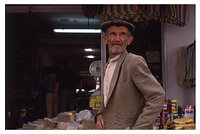
Man in market place

A
Man in market place

  • 0
  • 0
  • 23
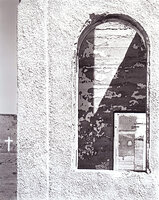
Abandoned Church

A
Abandoned Church

  • 2
  • 0
  • 35

Forum statistics

Threads
203,120
Messages
2,850,118
Members
101,682
Latest member
TylerKGeorge
Recent bookmarks
3

Mahler_one

Member
Allowing Ads
Joined
Oct 26, 2002
Messages
1,155
I wonder if anyone has used "enlarging meters" with negatives that have been developed in Pyrocat HD, or other Pyro stained negatives. Evidently, the stain of the negative when taken with the response of the paper to various colors AND the affect of filters on the light coming through Pyro stained negatives can present some issues when it comes to the metering of such negatives.
 
Last edited by a moderator:
I use the metering probe which comes with the RH Designs Analyser Pro 500, which is designed for only the Ilford Multigrade head and does not employ a filter drawer, and find no remarkable difference between Pyrocat HD developed negs and those developed in D76 and Xtol.

Perhaps if I were to apply strict and rigorous scientific readings there may be some variation, but in practical terms with this setup this method works.

Other enlarging meters and heads may give different results, I can't help.

Regards - Ross
 
I develop my film in DiXactol, which gives a pyro-like stain, although of a different color. I think this stain affects the readings that I get with my densitometer.

But to your question, I use an Ilford EM10 meter to get the exposure for work prints. Since the meter dial setting was determined to give proper exposure for the shadow area of a negative with the stain, it gives me proper exposure for other negatives with the same stain. The stain probably affects the EM10, but it is accounted for and doesn't throw the reading off.
 
I have been using RH Designs for some time with PMK developed negatives. The densitometer does not seem to work properly; otherwise I usually get quite acceptable prints. I would call them 'work prints' as they almost always require further work, particularly as the probe is larger than the black spot I can find, or there is no really black to be found; however it is a great time saver and seeing Nicholas Lindan's (sp) new meter I would buy in a second if I could do any printing.
 
We've been doing a bit of work with PMK ourselves recently owing to the increased interest in staining developers.
Preliminary conclusions suggest that, at least as far as our meters are concerned, the stain does not affect the contrast calibration, and there is only a minor effect on exposure which can easily be calibrated out, so it's not really an issue. I'll post again when we have done more tests.
 
The best enlarging meter is your eyes. You can judger the time needed, with experience, quite accurately. What I do is turn on the enlarger with paper in the easel and set the timer for 10 seconds. Then I observe the negative projected on the paper and decide if more exposure is needed. I am usually pretty accurate and rarely have to make a second print. I do better than I did years ago when I used a meter.
 
I do better than I did years ago when I used a meter.

It depends on which meter you used. The old analog meters were not adequate to the job & the historically horrid reputation of enlarging meters is justly deserved.

Ask a user of a Darkroom Automation or RH meter and you will hear a different story. The difference between the old meters and the current units is much like the difference between a 78 rpm record and a CD.
 
Photrio.com contains affiliate links to products. We may receive a commission for purchases made through these links.
To read our full affiliate disclosure statement please click Here.

PHOTRIO PARTNERS EQUALLY FUNDING OUR COMMUNITY:


Ilford ADOX Freestyle Photographic Stearman Press Weldon Color Lab Blue Moon Camera & Machine
Top Bottom
