• Welcome to Photrio!
    Registration is fast and free. Join today to unlock search, see fewer ads, and access all forum features.
    Click here to sign up

Enlarging color negatives on b&w paper?

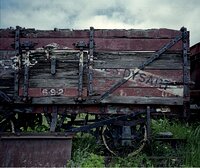
A coal wagon

A
A coal wagon

  • 0
  • 0
  • 12
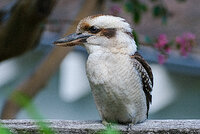
Morning Birdie

D
Morning Birdie

  • 0
  • 0
  • 15

Forum statistics

Threads
203,142
Messages
2,850,463
Members
101,692
Latest member
eviosl
Recent bookmarks
1

jesterthejedi

Member
Allowing Ads
Joined
Mar 7, 2012
Messages
61
Location
Gilbert, AZ
Format
Medium Format
Was wondering if there are some good tips to print my color negatives on black & white paper? I have tons of negatives that would be awesome in black & white. They seem to come out somewhat gray by default.

Thanks
 
The color negative base messes with variable contrast paper. The tone will never really be correct.

You can try playing with the color filters, use graded paper, or try and dupe them into positives and then onto b&w neg stock.

Though I have never used it, in the past there was special papers for use just for this application to turn color negs into correct toned b&w images. It is not sold or made anymore.
 
I've actually had a fair bit of luck doing this but don't really have a system.

VC paper responds to changes in the filter pack just as it does with a B&W negative; add magenta for more contrast, add yellow for less. I'd suggest making big changes like +100 from normal at first to se if your going the right way.
 
As has been said to get a correct tonal response you need to print on a panchromatic type of paper, which is a bit of a pain (no safelight). However, by using a high magenta value on multigrade paper you will get some reasonable results.
 
The color negative base messes with variable contrast paper. The tone will never really be correct.

You can try playing with the color filters, use graded paper, or try and dupe them into positives and then onto b&w neg stock.

Though I have never used it, in the past there was special papers for use just for this application to turn color negs into correct toned b&w images. It is not sold or made anymore.

The paper was Kodak's Panalure. The original wasn't that great, and even the H contrast (Hard) was a bit soft. The later version, Panalure Select RC, was actually quite good and the S, M, H grades seemed accurate. I liked it and have a few prints on it that I still like. I wish someone would make such a paper again. It's just a black and white paper that's panchromatic. It has to be handled in either complete darkness or under a dim safelight made for color paper. I used it with my Duka 50 sodium safelight set for RA4 paper and never had a problem with that.

Not just the base but the fact there are different colors in the image messes with VC paper, meaning different parts of the image can print with different contrasts. It also tends to come out looking oddly grainy, probably because of the lack of red sensitivity - any dye clouds too red just don't register at all leaving large "holes" that look like grain. Graded paper is even worse since its sensitivity is even more limited.

Hey Simon - could Ilford make a good panchromatic paper for this, please? :wink:

Probably the best way to do this and get good tonality might be to print onto film and reversal process for a negative, then print that. You could reversal process black and white or, heck, just use E6 if some filter experimentation could eliminate any color cast. A slight cast wouldn't hurt much, as long as it wasn't too red.
 
My students do this all the time, and it takes a bit of experience and practice but nice images can be made. You need to increase the time and filter grade

Think grade 4 filter and test for times.
 
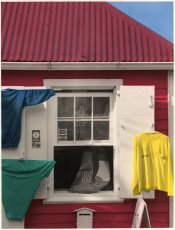
I've had some success using Ilford MGIV. As has been mentioned, pump up the contrast a bit. This one was done with a #4 filter. In this case, since I was printing for hand painting, exact tonal response wasn't too important.

tshirtshop-red.jpg
 
The paper was Kodak's Panalure. The original wasn't that great, and even the H contrast (Hard) was a bit soft. The later version, Panalure Select RC, was actually quite good and the S, M, H grades seemed accurate.

Oooh.... I have an unopened pack of the Panalure II RC M. Absolutely no idea how old it is or how well it has been stored. Wonder how well it keeps and if it is still any good...
 
The paper was Kodak's Panalure. The original wasn't that great, and even the H contrast (Hard) was a bit soft. The later version, Panalure Select RC, was actually quite good and the S, M, H grades seemed accurate. I liked it and have a few prints on it that I still like. I wish someone would make such a paper again. It's just a black and white paper that's panchromatic. It has to be handled in either complete darkness or under a dim safelight made for color paper. I used it with my Duka 50 sodium safelight set for RA4 paper and never had a problem with that.

Not just the base but the fact there are different colors in the image messes with VC paper, meaning different parts of the image can print with different contrasts. It also tends to come out looking oddly grainy, probably because of the lack of red sensitivity - any dye clouds too red just don't register at all leaving large "holes" that look like grain. Graded paper is even worse since its sensitivity is even more limited.

Hey Simon - could Ilford make a good panchromatic paper for this, please? :wink:

Probably the best way to do this and get good tonality might be to print onto film and reversal process for a negative, then print that. You could reversal process black and white or, heck, just use E6 if some filter experimentation could eliminate any color cast. A slight cast wouldn't hurt much, as long as it wasn't too red.

If you're shooting sheet film you could contact to Ilford Direct Positive, and in turn contact it to regular silver gelatin of your choice.
 
The Ilford direct positive paper is orthochromatic. Seems like you would not gain much from that technique.
 
The Ilford direct positive paper is orthochromatic. Seems like you would not gain much from that technique.

You're right. Anything red in the neg would not register on the paper, meaning green in the original scene would print as black or very dark.
Panchromatic materials are required.
 
Last edited by a moderator:
Dear jesterthejedi,

I've never tried it, but I read somewhere that lith printing works well with color negatives. Based on Ralph's response it could be because it is fairly easy to get a high contrast that way.

Neal Wydra
 
Another vote for making the Ilford panchromatic material available in cut sheets. I had no idea such a product existed any longer, but I have many color negatives I'd like to print in black and white, and I would give it a try (but buying a 20"x100' roll is out of the question). In the last two photo classes I've taken, there were a number of other students also trying to do print color negs on VC papers.
 
I sure never saw "very fine" grain when I tried printing C-41 negs on VC paper. The lack of red sensitivity resulted in big gaps that gave the effect of very coarse grain. It's a false effect as C41 is generally very fine grained stuff.

Granted this was back in the 90s. Printed on Panalure those negs looked great, on VC they looked like crap. Maybe it was just my negatives.
 
I think the Harman Digital fiber paper has a different sensitivity, designed to be exposed with very strong light sources. I hope I'm wrong.
 
The Harmon paper is basically a grade 3 gallerie emulsion with an red sensitivity to be sensitive to RGB lasers.
Agfa Classic or the Adox version was initially the only paper we found that would work with the lasers, then Harmon repurposed the Gallerie paper and its the version we use since Agfa went out of business and Mirko has not been able to offer a roll version in footage worth purchasing..
The RC version I believe is an adaptation of the Ilford mg4 with red sensitivity added.

I think its a matter of changing the emulsions to accept laser light , not really an issue of needing very strong light sources.
I think the Harman Digital fiber paper has a different sensitivity, designed to be exposed with very strong light sources. I hope I'm wrong.
 
Thanks for clarifying. I thought it had something to do with laser light.

Does the added red sensitivity make the paper panchromatic? And, in your opinion, would it be suitable for using C-41 color material to make prints using standard transmission light in a standard enlarger?

The Harmon paper is basically a grade 3 gallerie emulsion with an red sensitivity to be sensitive to RGB lasers.
Agfa Classic or the Adox version was initially the only paper we found that would work with the lasers, then Harmon repurposed the Gallerie paper and its the version we use since Agfa went out of business and Mirko has not been able to offer a roll version in footage worth purchasing..
The RC version I believe is an adaptation of the Ilford mg4 with red sensitivity added.

I think its a matter of changing the emulsions to accept laser light , not really an issue of needing very strong light sources.
 
Thomas
I have never tested the paper under an enlarger to see its response to colour neg or bw neg for that matter.. I suspect it would be very much like a grade 4 paper, remember the calibration step is done to lay down tone before any files are printed so the computer adjusts itself to the emulsion it is trying to activate. Meaning contrast/density control is done before the paper is given any images to print.
 
Photrio.com contains affiliate links to products. We may receive a commission for purchases made through these links.
To read our full affiliate disclosure statement please click Here.

PHOTRIO PARTNERS EQUALLY FUNDING OUR COMMUNITY:



Ilford ADOX Freestyle Photographic Stearman Press Weldon Color Lab Blue Moon Camera & Machine
Top Bottom