
• Welcome to Photrio!
    Registration is fast and free. Join today to unlock search, see fewer ads, and access all forum features.
    Click here to sign up

Enlarger Question regarding condenser enlarger (in)consistency: Beseler 23c

.

A
.

  • 0
  • 0
  • 7

Recent Classifieds

Forum statistics

Threads
203,557
Messages
2,856,503
Members
101,903
Latest member
VIERTL
Recent bookmarks
0

Premier

Subscriber
Allowing Ads
Joined
Oct 23, 2025
Messages
35
Location
Ohio
Format
Multi Format
Hi all,

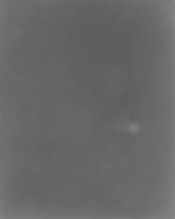
I was experimenting trying to print a zone V gray on my Beseler 23c enlarger (condenser version), and notice this apparent "cool spot" in addition to some modest falloff. The spot hits close close to the operator side of the board as projected/printed. Does anyone know what might be causing this? It seems like something that will affect prints. I am just learning to print with an enlarger. Any suggestions/ideas would be welcome.

Thanks
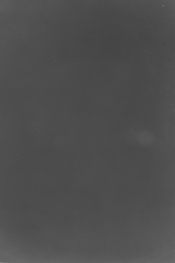
 

Attachments

  • gray print test f:16 3 sec.jpeg
    gray print test f:16 3 sec.jpeg
    13.6 KB · Views: 63
  • gray print test f:22 8x10 6 sec 12 inch bes23c.jpeg
    gray print test f:22 8x10 6 sec 12 inch bes23c.jpeg
    15.9 KB · Views: 60
So obvious question, do you have the condenser adjusted to the correct size negative carrier. Correct lens? Is the enlarger in focus?

You need a carrier, correct lens, condenser set, in focus.
 
Not sure what era, some (all?) have a tilting lens stage, make sure it's zeroed. There's a sliding filter drawer right above the lens, make sure it's pulled out.
 
Hi all,

I was experimenting trying to print a zone V gray on my Beseler 23c enlarger (condenser version), and notice this apparent "cool spot" in addition to some modest falloff. The spot hits close close to the operator side of the board as projected/printed. Does anyone know what might be causing this? It seems like something that will affect prints. I am just learning to print with an enlarger. Any suggestions/ideas would be welcome.

Thanks
Make sure someone didn't install a regular lightbulb with lettering on the crown of the glass. Enlarger lightbulbs are specifically made to avoid anything on the bulb that could project onto the image surface.

Also check that various condenser elements to make sure they are clean and do not have cracks or imperfections and that you've cranked the condenser into the position appropriate for your film size.
 
I've had spots like that when making grey values on photographic paper with no negative in my Omega D2V condenser enlarger.
Because there was no negative present the raw enlarger light was very bright and required the enlarging lens to be stopped right down even to f45.
At f45 the depth of focus of the lens becomes great enough to reach up into the condenser system and form blurry images of dust spots on the glass surfaces.
When I cleaned the condensers the spots went away ... thank goodness!
 
Hi all,

I was experimenting trying to print a zone V gray on my Beseler 23c enlarger (condenser version), and notice this apparent "cool spot" in addition to some modest falloff. The spot hits close close to the operator side of the board as projected/printed. Does anyone know what might be causing this? It seems like something that will affect prints. I am just learning to print with an enlarger. Any suggestions/ideas would be welcome.

Thanks

The 23C has a screw that locks down the enlarging lamp. I found on mine, I could place the head on the 2 1/4 x 3 1/4 setting with a 75mm Nikkor enlarging lens and NO negative carrier, loosened the screw and the lamp would slide around a bit.

I noticed it could effect the uniformity of the transmitted light (lens wide open), so I experimented with moving it around until I got the best coverage tightened-down. Takes a bit of playing around (the tightening of the screw does shift it a bit) and it's not perfect, but I have not noticed any printing problems with obvious fall off on any side of the easel.

The negative carrier obviously restricts the edges of the light beam, so as long as you get it as uniform as possible, you should be fine.
 
Last edited:
Great suggestions so far. Could be lots of things. Here's two more: What contrast paper was used? Do you have the user manual so that you check to make sure everything is set to the factory standard correctly?
 
At f45 the depth of focus of the lens becomes great enough to reach up into the condenser system and form blurry images of dust spots on the glass surfaces.
When I cleaned the condensers the spots went away ... thank goodness!

That's it; it's dust.
Condenser enlargers are sensitive to dust like this.
 
Yep and it does look similar to dust spots that you see on digital cameras as well. Those can be super annoying on cameras without interchangeable lenses.
 
Thanks to all of your comments. I cleaned out a lot of dust from the condenser assembly. I haven't run a test print yet to see if the spots are still there. I will soon.

I have another related question: Do these condenser enlargers (eg. Beseler 23c) print hotter or colder depending on the heat/temperature of the light-bulb? Do those of you who use them tend to give them time to "warm-up" before printing? Or is there another way to manage this if can present a problem?

Thanks in advance!
 
I have another related question: Do these condenser enlargers (eg. Beseler 23c) print hotter or colder depending on the heat/temperature of the light-bulb?

I'm not sure what you mean when you reference an enlarger printing "hotter or colder".
The 23C enlargers with a condenser lighthouse usually used a tungsten light bulb. Are you referring to negative popping and other concerns when heat from bulbs like that reaches the negative?
 
I am wondering if the exposure time and light intensity vary together linearly, or if the longer the bulb is on the brighter it gets. I think the question comes from it seeming that one long exposure creates a darker image than several short exposures which presumably add up to the same duration. I have the experience with test strips that what they indicate as the correct time produces a darker print when I finally make one continuous exposure.
 
I am wondering if the exposure time and light intensity vary together linearly, or if the longer the bulb is on the brighter it gets. I think the question comes from it seeming that one long exposure creates a darker image than several short exposures which presumably add up to the same duration. I have the experience with test strips that what they indicate as the correct time produces a darker print when I finally make one continuous exposure.

Bulbs like that have a ramp-up and ramp-down time.
When you turn them on, they quickly reach their stable, maximum intensity, but quickly doesn't mean instantaneously.
When you turn them off, they quickly go from their stable, maximum intensity to there being no light emitted, but quickly doesn't mean instantaneously.
The light emitted during those shoulder periods does contribute to the overall exposure, but not to the same extent as when the light is at full intensity.
So if your time includes a lot of short exposures which include lots of ramp up and ramp down time, the total exposure will be less than a single exposure of all the times added together, because that single exposure will involve just one ramp up and one ramp ddown.
The amount of difference depends on how short the exposures are. If all the exposures are each at least a few or several seconds, the difference won't be meaningful, because the ramp up and ramp down times are relatively quite short. But if you have a whole bunch of 1, 2, 3 or second exposures, or something similar, the difference can be substantial.
Some timers can also influence the result.
 
Thanks to all of your comments. I cleaned out a lot of dust from the condenser assembly. I haven't run a test print yet to see if the spots are still there. I will soon.

I have another related question: Do these condenser enlargers (eg. Beseler 23c) print hotter or colder depending on the heat/temperature of the light-bulb? Do those of you who use them tend to give them time to "warm-up" before printing? Or is there another way to manage this if can present a problem?

Thanks in advance!

I am wondering if the exposure time and light intensity vary together linearly, or if the longer the bulb is on the brighter it gets. I think the question comes from it seeming that one long exposure creates a darker image than several short exposures which presumably add up to the same duration. I have the experience with test strips that what they indicate as the correct time produces a darker print when I finally make one continuous exposure.
There's "cold light" lamps, not really used with condenser heads. These vary depending on the warmth of the lamp. Similar to a florescent lamp.
 
I am wondering if the exposure time and light intensity vary together linearly, or if the longer the bulb is on the brighter it gets. I think the question comes from it seeming that one long exposure creates a darker image than several short exposures which presumably add up to the same duration. I have the experience with test strips that what they indicate as the correct time produces a darker print when I finally make one continuous exposure.
See also @MattKing's reply above. Warm-up time of a halogen bulb is something like 10ms or so, but it's evidently non-linear. Hence, a test strip involving several 1-second exposures may produce problems esp. if the final (single) print exposure is also only a few seconds.
 
Photrio.com contains affiliate links to products. We may receive a commission for purchases made through these links.
To read our full affiliate disclosure statement please click Here.

PHOTRIO PARTNERS EQUALLY FUNDING OUR COMMUNITY:


Ilford ADOX Freestyle Photographic Stearman Press Weldon Color Lab Blue Moon Camera & Machine
Top Bottom
