
• Welcome to Photrio!
    Registration is fast and free. Join today to unlock search, see fewer ads, and access all forum features.
    Click here to sign up

Enlarger advice

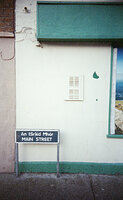
An tSráid Mhór

A
An tSráid Mhór

  • 1
  • 0
  • 36
IMG_1285.jpeg

D
IMG_1285.jpeg

  • 0
  • 0
  • 33

Forum statistics

Threads
203,125
Messages
2,850,212
Members
101,690
Latest member
nisherii
Recent bookmarks
0

PVia

Member
Allowing Ads
Joined
Oct 3, 2006
Messages
1,057
Location
Pasadena, CA
Format
Multi Format
I've been using hybrid technology up until now, and have a chance to pick up a nice Omega D5 enlarger with dichroic head for very little.

Larry Bartlett's book doesn't recommend them for B&W work with VC papers and suggests an enlarger with filters or a VC head, yet others seem to recommend the color heads.

What's the consensus for a beginner like me, who wants to print silver gelatin as well as use it for lith printing?

All advice is much appreciated...thanks!
 
I don't know why someone would recommend not using a color head for VC printing...many accomplished photogs--Bruce Barnbaum for one--have used one very successfully for years. I, personally, have always used either Ilford filters in my Aristo V-45 head (for 4x5) or a VC head on my Leitz Focomat V35. Do a search on the 'net...I'm sure you could find a list of recommended filter settings to obtain the different "grades."

Good luck.
 
I have an ancient Omega D2 condenser enlarger that I used in that mode for a long time, then converted to cold light, which I am using now. I'm sure you'll get lots of opinions from actual dichroic head users, but it seems like many people use them to print black and white very successfully.
 
Larry Bartlett's book doesn't recommend them for B&W work with VC papers and suggests an enlarger with filters or a VC head, yet others seem to recommend the color heads.


A VC head is a colour head with different set of labels. Or is it really any different? No cyan filter?
 
The reason Larry did not recommend colour heads is because he preferred to have a direct readout of paper grades from a Variable Contrast head, simply I imagine because they are quicker to switch grades accurately. Rather than bother with filter dials he advocated the use of below lens filters whilst setting the colour head to it's white light setting. I think if fair to say he was a perfectionist with an intolerance to equipment that didn't meet his high expectations. It's possibly why he favoured the Leica V35 range of enlargers as AlanH above does.
 
Dear PVia,

If it's a good deal, purchase the enlarger. After that, I suggest you consider ignoring the concept of paper grades. If you need more (or less) contrast, dial it in. Of course, if you prefer to think in terms of paper grades, calibrate your enlarger to your paper/developer and enjoy your printing.

Neal Wydra
 
I use a dichroic color head on a Beseler for black and white printing and find it totally acceptable.

John, Mount Vernon, Virginia USA
 
Thanks everyone...great advice, very helpful.

One other thing, I know that many folks use an 80mm rather than a 105mm lens for enlarging 6x7 negatives. What would you say is the largest you can print with the 80mm until you start to see light falloff?

Thanks!
 
Good Evening, PVia,

For years, I used an old 80mm Componon to print 6 x 7 negatives; as long as I was careful to center the negative properly, I could print any size--at least up to 16 x 20. There wasn't much coverage to spare though. Lack of coverage, should it exist, would probably show up at smaller sizes as well.

I suspect that coverage may vary a bit from one 80mm lens or lens brand to another. You may not have to go to 105mm. My current lens for 6 x 7 is a 90mm; it covers easily.

Konical
 
"Larry Bartlett's book doesn't recommend them for B&W work with VC papers and suggests an enlarger with filters or a VC head, yet others seem to recommend the color heads."

Just be glad you don't live with this guy. Believe me, someone like that will drive you nuts.

But seriously, there is absolutely no reason not to use the Chromega II for B&W work. It may not be as handy as a VC head, but once you figure out the settings and exposure compensation, it's a heck of a lot easier than switching filters out.
 
As mentioned above, only a multigrade head reads out directly in paper grades, but it is easy to get used to dialing in yellow or magenta. The only major drawback of a dichroic head for b+w is that you will probably find its grade range is something like 0.75 to 4.25 compared with a multigrade, it's your decision whether this is important (you might want to have a true grade 5 if you're a fan of split-grading.

Regards,

David
 
Thanks everyone...great advice, very helpful.

One other thing, I know that many folks use an 80mm rather than a 105mm lens for enlarging 6x7 negatives. What would you say is the largest you can print with the 80mm until you start to see light falloff?

Thanks!

I'm not sure that I completly understand your question.
The focal length of the lens is not a factor in light fall of, I think that would be more to do with lens quality. If you are thinking of its ability to provide coverage of a 6x7 negative then I confirm this size is ok.
 
Thanks everyone...great advice, very helpful.

One other thing, I know that many folks use an 80mm rather than a 105mm lens for enlarging 6x7 negatives. What would you say is the largest you can print with the 80mm until you start to see light falloff?

Thanks!

I initially used a Rodagon 80 that worked surprisingly well on 6X7 when I first started the format. I used it at ƒ8-ƒ11 usually, so that may have helped in coverage? Like Konical, I settled on a 90 that has become my favorite and is used for 645 successfully, too. The only time the 80 is on the machine is when I need extreme head height for extreme cropping. With good, solid optics going for fire sale prices, you might want to get a few things and cull what you decide you don't need. A decent Componon S, Rodagon or Nikkor in this focal length range would satisfy most people as far as general performance and sharpness are concerned and are available used at about 10% of new prices currently.
 
I've used my 80mm Schneider Componon S with 6x7 negatives without any problems. I stop down to either f/8 or f/11 as well and coverage is fine. The manufacturer rates the lens to cover only 6x6, but they're being very conservative. The 80mm EL-Nikkor is rated to cover up to 6x7 by the manufacturer, and I'd be surprised if the designs are substantially different.
 
I've used my 80mm Schneider Componon S with 6x7 negatives without any problems. I stop down to either f/8 or f/11 as well and coverage is fine. The manufacturer rates the lens to cover only 6x6, but I think they're being very conservative. The 80mm EL-Nikkor is rated to cover up to 6x7 by the manufacturer, and I'd be surprised if the designs are substantially different.
 
I am one who prefers to use color heads for B&W printing, but everybody has an opinion, and most of them are right. Allot of it has to do with what you are used to. If you can get a good deal than do it. You can still set it to "white" light and use contrast filters, or you can learn to dial the contrast, or you can do split grade printing, where you print the contrast in two parts, using yellow and magenta exposures separately, which how I prefer to print. All three methods attempt to arrive at the same end, they just take different approaches. Try them all, and see what blows your skirt up.
 
I don't like dichro heads because when I split print I have bumped the head when swiching grades and the second exposure was out of alignment. I like my vcce head or just using filters but many others swear by dichro heads. If you have a dichro you can still kick the filters out and use below the lens filters.
 
I've used several different 80mm enlarging lenses for 6x7 for years, no problems. I've used a dichroic color head for printing B/W VC and for graded paper, as well as RA-4; I don't recall ever using grades 0 or 5, and only use 1 or 4 for burning, so I can't really speak to that aspect.

I never saw the sense in buying a several hundred dollar enlarging lens, then putting cheap acetate filters in the light path between the lens and the paper, but I guess it works.
 
Photrio.com contains affiliate links to products. We may receive a commission for purchases made through these links.
To read our full affiliate disclosure statement please click Here.

PHOTRIO PARTNERS EQUALLY FUNDING OUR COMMUNITY:


Ilford ADOX Freestyle Photographic Stearman Press Weldon Color Lab Blue Moon Camera & Machine
Top Bottom
