• Welcome to Photrio!
    Registration is fast and free. Join today to unlock search, see fewer ads, and access all forum features.
    Click here to sign up
Resource icon

Edwal 111

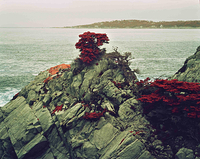
ptloboscarmelEIR3.jpg

A
ptloboscarmelEIR3.jpg

  • jhw
  • Dec 15, 2025
  • 0
  • 0
  • 12
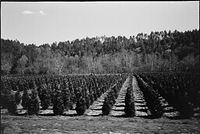
Tree Farm

H
Tree Farm

  • 1
  • 0
  • 39

Forum statistics

Threads
201,212
Messages
2,820,523
Members
100,589
Latest member
rando
Recent bookmarks
0

Rlibersky

Subscriber
Allowing Ads
Joined
Apr 6, 2005
Messages
931
Location
St Paul MN
Format
8x10 Format
Rlibersky submitted a new resource:

(there was a url link here which no longer exists) - Edwal 111

Distilled water (50°C) ................. 750 ml
Metol .................................. 5.0 g
Sodium sulfite (anhy) .................. 80.0 g
Glycin ................................. 6.0 g
Chlorohydroquinone ..................... 15.0 g
Potassium carbonate .................... 120 g
Potassium bromide ...................... 3.0 g
Distilled water to make ................ 1.0 l

Is said to have a nicer brown black then other developers. I'll report back next week.

(there was a url link here which no longer exists)
 
Last edited by a moderator:

Sean

Admin
Admin
Allowing Ads
Joined
Aug 29, 2002
Messages
13,482
Location
New Zealand
Format
Multi Format
Comments from the previous article system:

By Rlibersky - 08:00 PM, 12-13-2005 Rating: None
I found getting Chlorohydroquinone proofed more difficult then I thought. The link above has it on back order. I found some a Fsher Scientific, but they won't sell to the public. I am now talking to some of my freinds that own companies to see if I can order thru them.

By Dwane - 02:53 PM, 12-15-2005 Rating: None
Older editions of The Photo Lab Index (from the 1930's and 40's) suggested that a suitable substitute for chlorhydroquinone was an equivalent amount of hydroquinone and 5% metol. For example, if your receipe calls for 10 grams of chlorhydroquine, you could substitute 0.5 grams of metal and 9.5 grams of hydroquinone instead. So 15 grams of chlorhydroquinone would be equivalent to 0.75 grams of metol and 14.25 grams of hydroquinone. Modifying the Edwal 111 formula would give 5.75 grams of metol, and 14.25 grams of hydroquinone. If you can't measure to the nearest 0.01 grams, you could get by with 5.8 grams and 14.2 grams, or even 6 grams and 14 grams. You might want to give this a try before going through the expense and trouble of finding a source of chlorohydroquinone.

By Rlibersky - 03:06 PM, 12-16-2005 Rating: None
Should be able to this weekend. If I get to I'll report back. Thanks for the information.

By jim appleyard - 11:26 PM, 01-05-2006 Rating: None
According to Steve Anchell in "The Darkroom Cookbook", chlorohydroquinone (I'm going to call it CHQ) is dangerous to make and that any source of it today is suspect. Does anyone know why?

By craigclu - 04:01 PM, 01-15-2006 Rating: None
Did anyone try the HQ/Metol substitution on this yet?

By Zathras - 11:44 PM, 01-15-2006 Rating: None
This looks like an interesting developer. Does anybody know what the dilution would be for a working solution? It looks way too hot to use undiluted.

By Dwane - 10:24 PM, 01-17-2006 Rating: None
According to my copy of Modern Developing Methods for Prints and Fine Grain Negatives, 3rd edition, published by Edwal in 1947, you dilute it with 7 parts water for bromide papers, 5 parts water for fast chlorobromide papers, and 4 parts water for slow chlorobromide and contact papers. Also, Edwal says this developer produces TRUE BLACK TONES, with excellent contrast and detail, and describes this developer as being FOR GENERAL PRINT MAKING.

By Zathras - 06:27 AM, 01-18-2006 Rating: None
Thanks for the info Dwayne. I'm going to give this one a try as soon as I have time to play mad scientist. Mike

By Gerald Koch - 09:01 PM, 02-03-2006 Rating: None
The only remaining commercial developer that I am aware of that contains CHQ is Edwal's FG-7. However, you won't see it listed in the MSDS. This is because it is created in situ during manufacture by reacting p-benzoquinone with hydrochloric acid. I assume this is done because it difficult to obtain CHQ and when one can it is rather expensive.

By Rlibersky - 10:58 PM, 02-13-2006 Rating: None
My brother called today to let me know the CHQ is in the mail. I will finally be able to test this. When time permits I will try both the CHQ and the HQ/Metol substitution to compare. I will get back to you in the forum.

By Rlibersky - 11:51 PM, 02-21-2006 Rating: None
The DOD has FG-7 listed with CHQ on thier MSDS. I have also seen the MSDS that does not list it.

with it listed - http://hazard.com/msds/f2/bdw/bdwrt.html
with out it listed - http://hazard.com/msds/f2/bdw/bdwrv.html

Any way I have not found an MSDS for Edwal 111. but I doubt it was required when they stop making it. I now have the CHQ on my shelf. My plan is to play with it this weekend(keeping my fingers crossed)

 
OP
OP
Rlibersky

Rlibersky

Subscriber
Allowing Ads
Joined
Apr 6, 2005
Messages
931
Location
St Paul MN
Format
8x10 Format
I have finally acquired some of this chemical, and then have had time to use it. It cost a few dollars but i think it will be worth it.

It is supposed to give a nice brown tone. Which it does. Also everything I have been able to find say it is naturally an antifogging developer. Thought I would try it on some old Ektalure 1965,I was going to throw out because there was nothing I could do to not have it fog. With this developing agent not a bit of fog. I was shocked, the brown tone was nice. Not quite as nice as poly-sulfide toning, but better then any other warm tone developer that I have used. I then used it on some 1931 AZO that I couldn't get to work either. This developer did not fog at all. although it had to sit in the soup for 4 minutes.

I had to buy the chemicals from ACROS through a local chemical company. Ended up being $75 for 100grams. I bought all 300 grams they had.

I do a lot of printing on paper more then 50years old, some as old as 100years. Most is usable, I am hoping to not have to use so much Kbr or Benzo which decreases the contrast. When used on some 1945 Velox it seemed to not have lost any contrast. It will take more experimenting to find out.


Randy
 
OP
OP
Rlibersky

Rlibersky

Subscriber
Allowing Ads
Joined
Apr 6, 2005
Messages
931
Location
St Paul MN
Format
8x10 Format
I found a different version of this formula in "The Amateur Photographers Handbook" 1973 Publisher: Thomas Cromwell Co. ISBN: 0-690-05782-2 Page 403

The only difference is the lack of Metol. All the other information above is correct. When I tried this formula on Bergger and Ilford paper it had a greenish tone I didn't like. This was removed by Selenium toning but didn't have a warm tone I liked. Maybe without the Metol I will get the tone I want. I tried the 5% more Metol with Hydroquinone route, the was slightly colder.

If anyone has tried this formula I would enjoy a conversation with you.

Distilled water (50°C) ................. 750 ml
Sodium sulfite (anhy) .................. 80.0 g
Glycine ................................. 6.0 g
Chlorohydroquinone ..................... 15.0 g
Potassium carbonate .................... 120 g
Potassium bromide ...................... 3.0 g
Distilled water to make ................ 1.0 l
 
OP
OP
Rlibersky

Rlibersky

Subscriber
Allowing Ads
Joined
Apr 6, 2005
Messages
931
Location
St Paul MN
Format
8x10 Format
Mixed up some 111 with the new revised formula and found I got the warm tones I wanted. No greenish tint at all. I used this formula on a variety of papers and found the effect was different for each.

Bergger CB was slightly warmer then expected when using say Selectol-Soft.

Ilford warmtone RC had a much better tone then I've been able to get before.

Some Velox I have from the 50's had the Brownest-Blacks.

When I tried this formula with the Metol I could not print on paper that tended to fog. That didn't seem to be an issue without it.

I will keep using this when a warm tone is needed.
 
OP
OP
Rlibersky

Rlibersky

Subscriber
Allowing Ads
Joined
Apr 6, 2005
Messages
931
Location
St Paul MN
Format
8x10 Format
Bought "Modern Developing Methods" by Edmund Lowe of Edwald Laboratories. His Edwal 111 formula is the same as the one origanally written here. So I went back to look in the "The Amateur Photographers Handbook" 1973 and was shock to see I missed the Metol in that formula completely. Not sure how that happened :smile:. Either way the formula emitting the Metol works better on old paper then with it.

I think I will call the new formula "Edwal 111 Lite"
 

sun of sand

Member
Allowing Ads
Joined
Feb 8, 2007
Messages
601
Format
4x5 Format
just found a tube of edwal 111 from perhaps the 50's? Opened it up, mixed and developed Gaf Lustrex contact paper with it 1:4. Nice lookin stuff. Did not know it contained chlorohydroquinon. SWEET. How long does it last? I have 1/2 gallon.
 

pavelt2tk0

Member
Allowing Ads
Joined
Jul 10, 2008
Messages
26
Location
Voronezh, Ru
Format
35mm
Hi all,

So, have anybody tried chlorohydroquinone developer on modern papers?
Does it give warm tones?

I have a chance to aquire this chemical in any quantity.
 
OP
OP
Rlibersky

Rlibersky

Subscriber
Allowing Ads
Joined
Apr 6, 2005
Messages
931
Location
St Paul MN
Format
8x10 Format
I have and it is a nice warm tone. I would like to know your results.

Berrger NB - Brown Black
Ilford MG - slightly warmer
Ilford MG RC warmtone - warmer then with selectol

Randy
 

eclarke

Member
Allowing Ads
Joined
Jun 11, 2004
Messages
1,950
Location
New Berlin,
Format
ULarge Format
After allmthis time, I was able to acquire some Chlorohydroquinone and made the 111. It is a very active developer and gives a nice tone to Ilford MGIV. I used it at 1+3, 1+7 will ne fine..More info later, the prints are toned, washed and on screens...Evan Clarke
 
Photrio.com contains affiliate links to products. We may receive a commission for purchases made through these links.
To read our full affiliate disclosure statement please click Here.

PHOTRIO PARTNERS EQUALLY FUNDING OUR COMMUNITY:


Ilford ADOX Freestyle Photographic Stearman Press Weldon Color Lab Blue Moon Camera & Machine
Top Bottom