- Joined
- Jun 28, 2015
- Messages
- 6
- Format
- 4x5 Format
Hello Everyone,
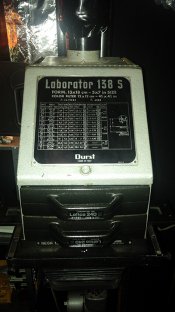
Thanks for taking the time to read this post. I'm hoping to find some recommendations for good sources of information regarding point source enlarger set ups, either generally speaking or specifically with the Durst 138 S Laborator in mind. A website, book, or even better someone with experience using their own system would be greatly appreciated.
In researching the interweb for awhile now, comprehensive information seems largely absent. I have read the forums here and other places which largely seem to be composed of comments disapproving of the technique or the statements that the same results are obtainable by other light sources (which I find wholly untrue by experience), but otherwise very little applicable information.
A few questions that come to mind are:
The 138 manual states that Latico type T condensers and negative carriers are required for point source. What is their role? Is there an alternative? Also, a guy on eBay is selling two Latico 240 type P condensers right now (for a fortune). He claims the P is for point source but I can find nothing in the Durst literature that mentions a type P condenser. Anyone familiar with the P designation?
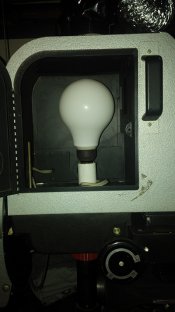
What about substitutes for the long extinct Durst PULAM/VARIPUT and ZIRLAM/ZIRTRA lamps? Recommendations online range from tungsten to halogen to halogen-tungsten, 12v auto headlight, LED, 130 volt variable does anyone know of a good source detailing the specifications of the original lamps for comparison? What about the most crucial aspects for selection, i.e. actual size of point (filament, etc.), orientation, field of illumination, etc.
Regarding the lamp, I have a voltage controller I've been told is good for adjusting luminance value so time can be controlled while exposing wide open. Have you used this technique? Approve/disapprove?
Some people mention building a reflector for the lamp. Is this more about increasing directional output of lamp or shaping a wider field for coverage? Any examples around?
I have more questions then can be listed here, and again would welcome the opportunity to communicate with someone with direct experience maybe we could discuss compensation of some kind?
$1,362.50 for the Durst retrofit kit is just too dear at the moment looking for a quality alternative.
Thanks,
-Kirk
Thanks for taking the time to read this post. I'm hoping to find some recommendations for good sources of information regarding point source enlarger set ups, either generally speaking or specifically with the Durst 138 S Laborator in mind. A website, book, or even better someone with experience using their own system would be greatly appreciated.
In researching the interweb for awhile now, comprehensive information seems largely absent. I have read the forums here and other places which largely seem to be composed of comments disapproving of the technique or the statements that the same results are obtainable by other light sources (which I find wholly untrue by experience), but otherwise very little applicable information.
A few questions that come to mind are:
The 138 manual states that Latico type T condensers and negative carriers are required for point source. What is their role? Is there an alternative? Also, a guy on eBay is selling two Latico 240 type P condensers right now (for a fortune). He claims the P is for point source but I can find nothing in the Durst literature that mentions a type P condenser. Anyone familiar with the P designation?
What about substitutes for the long extinct Durst PULAM/VARIPUT and ZIRLAM/ZIRTRA lamps? Recommendations online range from tungsten to halogen to halogen-tungsten, 12v auto headlight, LED, 130 volt variable does anyone know of a good source detailing the specifications of the original lamps for comparison? What about the most crucial aspects for selection, i.e. actual size of point (filament, etc.), orientation, field of illumination, etc.
Regarding the lamp, I have a voltage controller I've been told is good for adjusting luminance value so time can be controlled while exposing wide open. Have you used this technique? Approve/disapprove?
Some people mention building a reflector for the lamp. Is this more about increasing directional output of lamp or shaping a wider field for coverage? Any examples around?
I have more questions then can be listed here, and again would welcome the opportunity to communicate with someone with direct experience maybe we could discuss compensation of some kind?
$1,362.50 for the Durst retrofit kit is just too dear at the moment looking for a quality alternative.
Thanks,
-Kirk