• Welcome to Photrio!
    Registration is fast and free. Join today to unlock search, see fewer ads, and access all forum features.
    Click here to sign up

Dual or split contrast filter application use

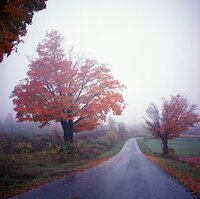
Rainy Day Trees

A
Rainy Day Trees

  • 4
  • 0
  • 55
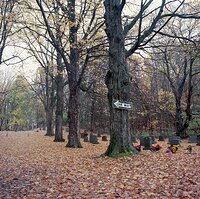
One Way

A
One Way

  • 1
  • 1
  • 52

Forum statistics

Threads
203,151
Messages
2,850,599
Members
101,700
Latest member
Cpeason301
Recent bookmarks
1

Riverviewer

Member
Allowing Ads
Joined
Sep 10, 2009
Messages
63
Location
Western foot
Format
Multi Format
Can anyone provide me with information, experiences,discussions, resources... with utilizing split filtering on black and white print enlargements?
 
And:

http://www.lesmcleanphotography.com/articles.php?page=full&article=21

There are those that will argue that there is nothing you can do with split grade that can't be done with a single exposure at a single grade filtration. And, for the most part, that's true. However, it is a valuable technique that many fine printers (such as McLean) have made use of. I use it when a negative is just a puzzle to me. Fortunately, most of my negatives aren't puzzling. Still, I appreciate having been taught this method by Les some years ago.

It just so happens that I returned only an hour ago from a local theater supply house where I bought a blue and a green Lee gel to use for this very purpose. I've always used the yellow and magenta filters, but many use blue and green filters. I'll do this with a condenser head and see how it goes.
 
Check out this tutorial posted on the Online Darkroom about split-grade printing. Very well thought-out and easy to understand.
http://www.theonlinedarkroom.com/2014/01/split-grade-printing-guest-post.html

I've also seen another tutorial that works a bit differently to this one, in that once the first grade time is found, the second test strip is printed *on top* of the first one, rather than two separate strips from scratch.
edit:
http://www.lesmcleanphotography.com/articles.php?page=full&article=21
that's the one.
Anyone have any opinions as to which method is better?


Also, I've read enough about it to understand the whole what and the how (and the why). My biggest question is the when? Does it work best on landscapes, still-life, people? When I've got a low-contrast neg or a high contrast, a dense neg or a thin one? Or just all the time?
 
I've also seen another tutorial that works a bit differently to this one, in that once the first grade time is found, the second test strip is printed *on top* of the first one, rather than two separate strips from scratch.

Anyone have any opinions as to which method is better?

I do the hard on top of the soft approach. That's the one I was taught.


Also, I've read enough about it to understand the whole what and the how (and the why). My biggest question is the when? Does it work best on landscapes, still-life, people? When I've got a low-contrast neg or a high contrast, a dense neg or a thin one? Or just all the time?

Some printers use it all the time - it's just their way of working. Like I said, I use it when a negative does not give up its needed contrast easily. :wink:
 
The other variation is to use different filtration for just dodging and burning, after a base exposure at grade X.
 
Thank you!

Thanks for all the replies- opinions, resources, field discussions...we shall begin tomorrow.
 
Thank you!

Thanks for all the replies- opinions, resources, field discussions...we shall begin tomorrow.
 
I am using Kodak and Ilford contrast filters- '-1 to 5'.
Really enjoyed your Iceland portfolio. What type of scanner are you using? Are you scanning prints or negatives?
 
Photrio.com contains affiliate links to products. We may receive a commission for purchases made through these links.
To read our full affiliate disclosure statement please click Here.

PHOTRIO PARTNERS EQUALLY FUNDING OUR COMMUNITY:



Ilford ADOX Freestyle Photographic Stearman Press Weldon Color Lab Blue Moon Camera & Machine
Top Bottom