• Welcome to Photrio!
    Registration is fast and free. Join today to unlock search, see fewer ads, and access all forum features.
    Click here to sign up

Drying marks, what to do?

Forum statistics

Threads
201,659
Messages
2,828,098
Members
100,875
Latest member
Actionuy
Recent bookmarks
8

MattKing

Moderator
Moderator
Allowing Ads
Joined
Apr 24, 2005
Messages
55,047
Location
Delta, BC Canada
Format
Medium Format
Try a test, on a scrap of negatives, that aren't particularly important.
Try using a single drop of hand dishwashing soap instead of the adoflo - no other changes.
If you get better results, you will know that your problem is with the adoflo. So you can replace it with another bottle of same (assuming a contaminated or otherwise faulty batch), or an alternate photographic drying aid.
Don't use the dishwashing soap as the replacement - while its surfactant may be fine, the other stuff in it may be problematic.
 

Sirius Glass

Subscriber
Joined
Jan 18, 2007
Messages
50,805
Location
Southern California
Format
Multi Format
I know this has been extensively discussed on here, with some varying opinions. Just wanted to check if my idea is correct.

I developed some film yesterday, part of a important project for me. After the film dried a bit i saw some horrible drying spots, one film had a sort of stream running down it. I figured i used way too much photoflo so i rewashed and used photoflo with 1-2 drops in ~400ml water, when the film started drying again it now has regular water spots (the whitish dry drop type), just very much of them.

My water shouldn't be very hard, it's 6,3dH, 1,12mmol/L, 6,6 gpg or 112mg/l (why are there so many units for this?!?!)

I have read i could use some alcohol to wipe the marks off, but because it's all over 3 rolls that seems a bit tedious and tricky.

My plan now would be to make a working strength stop bath with distilled water to disolve the calcium, then wash in distilled water and then a final rinse in photoflo in distilled water.

Would this process work and is it safe?
What times should i use?
Should i renew the baths after each roll?

If one wants or needs to use PhotoFlo to avoid streaks on the film, then follow the instructs as closely as one can and use a paper towel to draw off the fluids from the bottom corners.
 

Bill Burk

Subscriber
Allowing Ads
Joined
Feb 9, 2010
Messages
9,461
Format
4x5 Format
Is it possible that you’re using plastic reels and the marks are fixer maybe that didn’t get out of the grooves in the wash?
 

gealto2

Member
Joined
Dec 7, 2025
Messages
91
Location
Peoria, IL, USA
Format
Multi Format
I am using plastic (jobo) reels, washed for 20 minutes in normal water using a paterson force film washer.
I think you should have mentioned that in your original posting. Best way to get spot free is to remove the film from the reels, holding an end in each hand and the film in a U shape, move the film through a distilled water/surfactant solution one time starting with one hand and ending with the other in one continuous motion, so the water will sheen down the film in the same direction as it is when hanging. This keeps the surfactant on the surface of the film rather than soaking it into the film, which does no good. The film should be moved fast enough that it remains in the surfactant for about a second.

The surfactant choice is less important than the method. Never pour surfactant into water that already has the film in it. Make a working, very dilute surfactant solution first, before immersing the film. If there are any bubbles, you used too much. Commercial surfactants for film drying should be okay, Tween 20, and clear additive free hand dish detergent are all okay provided you do not soak you film in them. I've never had anything but trouble from trying to squeegee or wipe 35mm film, which is also the only film I've ever had drying marks with. Sheet film and 120 roll film pretty much spot free with a distilled water washing. The length and the water absorbing perforations are likely the culprits. Shorter rolls of 36mm are also less prone.
 
OP
OP
DutchDarkroom

DutchDarkroom

Member
Allowing Ads
Joined
Nov 5, 2025
Messages
51
Location
Netherlands
Format
Medium Format
Try a test, on a scrap of negatives, that aren't particularly important.
Try using a single drop of hand dishwashing soap instead of the adoflo - no other changes.
If you get better results, you will know that your problem is with the adoflo. So you can replace it with another bottle of same (assuming a contaminated or otherwise faulty batch), or an alternate photographic drying aid.
Don't use the dishwashing soap as the replacement - while its surfactant may be fine, the other stuff in it may be problematic.

Thanks for the reply,

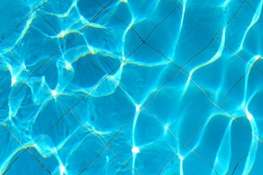
I just tried this on a leader from the film i developed that had marks on it. I put it into distilled water with a drop of dreft dishwashing soap for a couple minutes. The leader has very bad marks now, can't get it on camera but it kind of looks like the image i attached if that makes sense. Maybe the soap is not very suit for this or something else very weird is going on.

The marks directly after adoflo, after rewashing and after the dish soap all look different.
 

Attachments

  • swimming-pool-blue-water-sunlight-reflection-effect_295534-1232.jpg
    swimming-pool-blue-water-sunlight-reflection-effect_295534-1232.jpg
    71 KB · Views: 9
OP
OP
DutchDarkroom

DutchDarkroom

Member
Allowing Ads
Joined
Nov 5, 2025
Messages
51
Location
Netherlands
Format
Medium Format
I think you should have mentioned that in your original posting. Best way to get spot free is to remove the film from the reels, holding an end in each hand and the film in a U shape, move the film through a distilled water/surfactant solution one time starting with one hand and ending with the other in one continuous motion, so the water will sheen down the film in the same direction as it is when hanging. This keeps the surfactant on the surface of the film rather than soaking it into the film, which does no good. The film should be moved fast enough that it remains in the surfactant for about a second.

The surfactant choice is less important than the method. Never pour surfactant into water that already has the film in it. Make a working, very dilute surfactant solution first, before immersing the film. If there are any bubbles, you used too much. Commercial surfactants for film drying should be okay, Tween 20, and clear additive free hand dish detergent are all okay provided you do not soak you film in them. I've never had anything but trouble from trying to squeegee or wipe 35mm film, which is also the only film I've ever had drying marks with. Sheet film and 120 roll film pretty much spot free with a distilled water washing. The length and the water absorbing perforations are likely the culprits. Shorter rolls of 36mm are also less prone.

Thanks for your reply,
I took the film out of the reels before putting them in a adoflo solution i made first, 1-2 drops, no bubbles. I put it in there for about 30 seconds, as per the manufacturers instructions.
 
Joined
Sep 10, 2002
Messages
3,665
Location
Eugene, Oregon
Format
4x5 Format
Sounds to me like your Adoflo is either defective/contaminated or you are not mixing it properly. I really would check the latter first. Are you sure you are not using concentrate if the amount specified for making a stock solution? Really, go back over the mixing directions carefully and see if you are making a mistake.

To much Adoflo/PhotoFlo will cause marks. The idea is to use just enough to break the surface tension of the water so that no droplets form on the film. Mixing directions are based on that.

If you have hard water, mix your wetting agent with distilled/demineralized water and soak the film for five minutes to leach out the minerals. Use your wetting agent one-shot or one-session. Don't run lots of film through a batch if you have hard water.

Hope this helps,

Doremus
 

logan2z

Subscriber
Allowing Ads
Joined
Jan 11, 2019
Messages
3,979
Location
SF Bay Area, USA
Format
Multi Format
If you have hard water, mix your wetting agent with distilled/demineralized water and soak the film for five minutes to leach out the minerals. Use your wetting agent one-shot or one-session. Don't run lots of film through a batch if you have hard water.

That's almost what I do, based on an old post of yours. But I soak the film on the reel in the distilled water for 5 minutes before I add the wetting agent. Then I remove the reel from the water, mix the wetting agent into the distilled water, remove the film roll from the reel and soak the roll/agitate it for one minute* in the wetting agent/distilled water mixture. Seems to do the trick.

* According to the instructions for LFN. This might vary based on the wetting agent.
 

Augustus Caesar

Member
Allowing Ads
Joined
Oct 30, 2023
Messages
488
Location
Cleveland
Format
35mm
So the rinse in distilled water didn't remove all marks, rinsing again didn't help much further. I decided this was about as good as it will get and sleeved the negatives to prevent further dust and scratches.

I developed another roll and used the following finishing procedure:
20 mins wash
take out of reels
put into distilled water with 1-2 drops of adoflo in 500ml for ~45 seconds
wipe film with fingers
dry

After 1 hour drying i saw white marks like in the pictures before, i don't think it's calcium deposits. What the hell am i doing wrong???

(I know everyone has a different process on this so a lot of you will disagree with my method but i can't think of a good reason why these marks formed with the method i used.)

The only reasons i can think of are:

1. Bad batch (seems unlikely to me)

2. Improper drying conditions, i'm hanging on a line in a decently clean basement. Maybe not perfect for dust but that is besides the point for now.

3. Something with earlier steps, fix might be a bit exhausted but it should be within margins.

20 minute wash? that's excessive. Get some Perma Wash. It takes only about 5 minutes, and you let it sit in the solution.
 

snusmumriken

Subscriber
Allowing Ads
Joined
Jul 22, 2021
Messages
2,760
Location
Salisbury, UK
Format
35mm
As @Nicholas Lindan said earlier, those are strange-looking drying marks. To me, they look more as though the film got splashed with fixer or something when it shouldn't have.

If they are drying marks from mineral deposits, they will be on the backing (shiny side) only, and they will loosen easily using distilled or de-ionised water and a soft cloth, rubbing very gently as @cliveh described. Obviously you need to suck up the re-suspended calcium with a dry bit of the cloth, but very gently! I favour a scrap of some old well-washed pure cotton clothing because it's softer than microfibre. I lay the strip of film emulsion-down on clean paper. Hold it down firmly, because if you move it while wiping you may add scratches to the emulsion. You also need to be careful not to flood the emulsion side through the sprocket holes.

If you do have a lot of calcium in your water supply (I do), there will always be occasions when you have to do this, no matter how carefully you follow the recommendations for avoiding drying marks!
 
Photrio.com contains affiliate links to products. We may receive a commission for purchases made through these links.
To read our full affiliate disclosure statement please click Here.

PHOTRIO PARTNERS EQUALLY FUNDING OUR COMMUNITY:


Ilford ADOX Freestyle Photographic Stearman Press Weldon Color Lab Blue Moon Camera & Machine
Top Bottom