• Welcome to Photrio!
    Registration is fast and free. Join today to unlock search, see fewer ads, and access all forum features.
    Click here to sign up

Dry Mounting & Archival Permanence

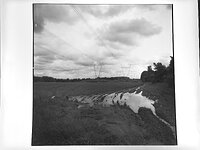
Puddle

Puddle

  • 0
  • 2
  • 0

Recent Classifieds

Forum statistics

Threads
202,712
Messages
2,844,579
Members
101,484
Latest member
Wesco
Recent bookmarks
0
Thanks John. With floated or overmatted prints?

michael

i usually corner/tip it on a large board, and cut a window out that goes
over the image. i have never floated anything ( i don't think ) ...


http://www.archives.gov/

they are very good at calling back + happy to answer questions you may have.

john
 
Last edited by a moderator:
I'm not sure I'm following you. Sounds like you're using 16x20 paper for 8x10 prints but I must be reading you wrong.

Well - I've generally done 4x5 contacts on 8x10 paper with a lith mask to get a clean presentation - then overmat - leaving a half inch rebate all around. Perhaps the 50% is a bit excessive in retrospect. I'd do 16x20 paper for an 11x14 up to 12x16 let's say... though I don't do a lot of that. My idea was to have all the edge effect issues with curling, etc... normalized well before the image area starts (does that make sense? I'm thinking of what goes on for the first couple inches with print curling (sorry if I'm not making so much sense - I"ve been up all night!). Probably 2-3 inches all around is a good rule of thumb though.
 
Well - I've generally done 4x5 contacts on 8x10 paper with a lith mask to get a clean presentation - then overmat - leaving a half inch rebate all around. Perhaps the 50% is a bit excessive in retrospect. I'd do 16x20 paper for an 11x14 up to 12x16 let's say... though I don't do a lot of that. My idea was to have all the edge effect issues with curling, etc... normalized well before the image area starts (does that make sense? I'm thinking of what goes on for the first couple inches with print curling (sorry if I'm not making so much sense - I"ve been up all night!). Probably 2-3 inches all around is a good rule of thumb though.

Ok, I understand you now. Are you concerned with the flatness of the paper in the easel or the post-processing curling of the finished print?
 
Ok, I understand you now. Are you concerned with the flatness of the paper in the easel or the post-processing curling of the finished print?

PURELY an issue of keeping the image area free from any hint of paper curl (even though it may be minimal)
 
If a photograph cannot “survive” min, say, 150 years without visible change photography has no any sense, and what a sense would be to make it. And if a photograph is made just to stay behind the UV glass with a label do not touch, the label also should read “smells bad”.
And how about all that photographs made 100 years ago, still fine, that are handled all the time, already got soft and rounded edges, and never saw any “archival” mat? And how about all that photographs made in "other" parts of the world where photog works for $10/months... (or even less)?

There is something out of sense in this discusions.

And to leave 1/2 inch margin is enough. It is not for curling but for decaying of a photograph which always starts at the corners (sometimes at the edges).

www.Leica-R.com
 
Last edited by a moderator:
We could stipulate that only percepts criteria merits use of the term "archival," pick another word to describe best practices as reflects the reality most of us face...say "bagel," and continue on discussing bagel processing, display and storage.

Would that make everyone more comfortable?
 
It depends on the drymount tissue that you choose. I didn't read the other responses here but I am willing to bet that drymounting got a bad rap by some respondents. Personally, I think that is unfortunate because, when done right, drymounting is a very good way to go. Sure, the prints will end up in the fine print collection of a museum, you will not want to drymount. However, let's be honest and ask ourselves what our prints will really be used for. I like to drymount all my prints. They lay flatter and simply look better. It also offers a measure of physical protection. Remember that Ansel Adams was fully aware of both the pros and cons of drymounting and yet he preferred to drymount all his prints.

As far as the adhesive goes, most if not all drymount tissues will not harm your prints. I have prints that I drymounted decades ago that look like they did the day I mounted them. Check out Wilhelm Research if you must have the most comprehensive answers to your question. You can even download Wilhelm's entire book on the subject in PDF format! Now that's what I call generous and he is to be commended sharing it with everyone for free. I downloaded it and put it on CD in case it isn't available for download in the future.

 
Photrio.com contains affiliate links to products. We may receive a commission for purchases made through these links.
To read our full affiliate disclosure statement please click Here.

PHOTRIO PARTNERS EQUALLY FUNDING OUR COMMUNITY:


Ilford ADOX Freestyle Photographic Stearman Press Weldon Color Lab Blue Moon Camera & Machine
Top Bottom