• Welcome to Photrio!
    Registration is fast and free. Join today to unlock search, see fewer ads, and access all forum features.
    Click here to sign up

Do you use filters...?

Recent Classifieds

Forum statistics

Threads
202,037
Messages
2,834,198
Members
101,085
Latest member
Goodsort
Recent bookmarks
0

Helinophoto

Member
Joined
Aug 19, 2011
Messages
1,091
Location
Norway
Format
Multi Format
When I am out shooting landscape with black and white film, I often bring my #25 red filter and sometimes also use a polariser with it as well, aiming for those black skies.

However, I rarely do get black skies (only with IR-film), maybe a bit darker skies, but never black. :sad:
- How do you obtain those pitch-black skies? Do you use a particular film?

Also, I don't own any other color-filters (they are expensive in 77mm size), but do you guys use/recommend other filter types when one is out shooting?
Do you use color-filters with studio lights and black and white film for example?

With people, I prefer darker reds (lips) on the subjects.

What is your filter-secret....? =)
 
Last edited by a moderator:

Blighty

Member
Allowing Ads
Joined
Oct 11, 2004
Messages
914
Location
Lancaster, N
Format
Multi Format
I will sometimes use a grey grad filter to tame a particularly bright sky. My personal choice for skyscapes is a yellow and pola.
 

Kevin Kehler

Member
Allowing Ads
Joined
May 14, 2008
Messages
602
Location
Regina Canad
Format
Medium Format
Filters will adjust the contrast - I carry a yellow, orange, red, yellow-green and polarizer. When shooting a landscape, the yellow provide approximately the same amount of contrast as your eyes do, the orange more contrast and the red the most. However, each makes changes that you need to be aware of (a setting sun appears a lot more orange/red than a noon sun so a orange/red filter will lighten those skies somewhat as opposed to darkening a noon sun which is more blue). It is best to study colour theory and books on filters as it really does help - the question is, what you want the photo to look like and then determine the filter to use from there.

You have also have to realize, for a lot of photographs with truly black skies, either infrared film is used or there is significant burning in the darkroom occurring. Even with a dark red filter, most films will not register a dark black sky on a straight print.
 

coigach

Member
Allowing Ads
Joined
May 23, 2006
Messages
1,593
Location
Scotland
Format
Multi Format
I shoot b+w reverse processed transparencies, and use ND grads all the time to balance skies and foreground, just as a colour Transparency shooter would use ND grads. See examples here:
(there was a url link here which no longer exists)

3 stop ND Grads (hard + soft edge) are my most-used photographic tools...
 

DWThomas

Subscriber
Joined
Jun 13, 2006
Messages
4,623
Location
SE Pennsylvania
Format
Multi Format
I generally carry yellow, orange, green and red, the yellow probably being my most used. I have polarizers but don't use them much except for specific reflection problems (low use being embarrassing considering what they cost!) Dark sky also has a lot to do with time of day, weather and direction. I've had shots looking directly away from the sun in late afternoon on a crystal clear, low humidity day where unfiltered color shots look as though there was a polarizer used. With B&W I like yellow or occasionally orange just to bring out clouds a bit, bringing down the sky a little in the process.
 

tessar

Member
Allowing Ads
Joined
Oct 11, 2008
Messages
355
Location
Calgary, AB,
Format
Multi Format
I've used a #25 filter + a linear polarizer to get the "day for night" effect used in classic b&w cinematography. It works best on a clear sunny day. The result looks as if it were shot on a clear night with a bright full moon.
 

dnjl

Member
Allowing Ads
Joined
Sep 19, 2010
Messages
373
Location
Switzerland
Format
35mm
I used to think that white skies in landscapes were an unforgivable sin, but then I saw Cartier-Bresson's landscapes. Now I only use filters in medium format, and only very sparingly. A red #25A or #29 filter does much more than just darken the skies, it changes the entire tonal structure of the scene. More often than not I find the effect unpleasant and go for something lighter, even if that means washed out skies.
 

Vincent Brady

Member
Allowing Ads
Joined
Mar 4, 2008
Messages
2,079
Location
Co. Kildare
Format
35mm
In Ireland I'm inclined to use an orange filter but when I was in Spain (brighter and stronger sunlight) I found that the orange filter made my skies too dark so I switched to yellow. So I guess it depends on where you are located in the world. I should say that I don't like dark skies except in IR photography.
 

pentaxuser

Member
Joined
May 9, 2005
Messages
20,376
Location
Daventry, No
Format
35mm
I think the "where you are"( latitude) and the season make a big difference. The OP is in Norway but even here in the U.K. which is a little further south I have never managed black skies or even got remotely close to this effect with a polariser and a 25 red with non IR film

OP I don't know if 7Dayshop exports to Norway but it has some very cheap filters even at the size you mention.

pentaxuser
 

kevs

Member
Allowing Ads
Joined
Aug 21, 2006
Messages
711
Location
North of Pangolin
Format
Multi Format
I use a red 25a filter for almost all my black and white landscapes, but I've never had really dark skies unless under cloud or at night. I like the detail the red brings out in skies etc but I don't really like the 'black sky' look - it's too artificial for my liking. YMMV.

Cheers,
kevs
 

Poisson Du Jour

Member
Allowing Ads
Joined
Jul 1, 2008
Messages
5,462
Location
.
Format
Digital
A polariser with a red filter? Oh my... I would be concerned about heavily compromising the imaging integrity of the lens with that set up.
You're in Norway, but didn't mention whether you favour the summer or winter months; I imagine winter is way too dark (and abysmally long...) and summer provides richly hued blue skies and prrrrrrrretty sunsets. Well I hope so! I'm going there in a couple of years!!
I have traditionally used just a red filter and concentrated on that part of the sky that is darkest blue. A polariser is used when I don't have a large area of sky so as to avoid any partial polarisation. You could also hand-meter the sky and give it -2 stops or darken the sky as you see fit in the darkroom.
 

Dave Krueger

Member
Allowing Ads
Joined
Jul 30, 2006
Messages
714
Location
Huntsville, Alabama
Format
Multi Format
I use a red R60 filter with a polarizer on occasion to darken the sky. It admittedly looks unnatural, but looking natural is generally not that high on my list of pictorial imperatives. There is also the problem of uneven effect due to the angle of the sun, although that can sometimes be remedied by burning in the lighter part of the sky when you print he picture. I find it easier to get the black sky effect by having the main subject matter evenly lit with direct bright sunlight. It never occurred to me that it would be more difficult in the higher latitudes, but that seems to make sense.
105090-14.jpg
 
OP
OP
Helinophoto

Helinophoto

Member
Joined
Aug 19, 2011
Messages
1,091
Location
Norway
Format
Multi Format
I think the "where you are"( latitude) and the season make a big difference. The OP is in Norway but even here in the U.K. which is a little further south I have never managed black skies or even got remotely close to this effect with a polariser and a 25 red with non IR film

OP I don't know if 7Dayshop exports to Norway but it has some very cheap filters even at the size you mention.

pentaxuser

Thanks for the tip. =)
Unfortunately they only ship to the uk (I was droolling over some neopan 400 film they had, but the drooling turned into tears when I knew they didn't ship here :smile: )
 
OP
OP
Helinophoto

Helinophoto

Member
Joined
Aug 19, 2011
Messages
1,091
Location
Norway
Format
Multi Format
A polariser with a red filter? Oh my... I would be concerned about heavily compromising the imaging integrity of the lens with that set up.
You're in Norway, but didn't mention whether you favour the summer or winter months; I imagine winter is way too dark (and abysmally long...) and summer provides richly hued blue skies and prrrrrrrretty sunsets. Well I hope so! I'm going there in a couple of years!!

I've used pola + gradfilters (the square ones) on my digital camera earlier, without any ill effects, so I'm not too concerned. (the filters I have now are indeed very nice). The biggest problem is keeping the filter-stack clean and free of internal glare.
You're right about the season, the winter is long and pretty dark (You have a few hours of "normal'ish" light in December/January between 10:00 and 15:00. I think the sunset is around 15:00 in December anyway, even in the south of Norway). A good thing about that, is that you can wrap up your average coastal landscape shoots early and be home at a reasonable time ^^ The more or less constant low sun, a long with winter haze can give the light a softer quality as well, this can be nice for outdoor portraits and such.

I often think the summer-sky is a bit too washed out in color some times, you need to shoot in the opposite direction to get some good color in there during the day, or use a pola to bump the color a bit.
- Sunsets are nice though, but remember that the air is often very dry and clear here, even in the summer. The sunsets with the sun in the picture tend to be pretty "sharp" until the sun hits the horizon, this creates a real need for graduated ND's to balance things.
I often try to wait until the sun is obscured/partially obscured to even things out: Dead Link Removed

I have traditionally used just a red filter and concentrated on that part of the sky that is darkest blue. A polariser is used when I don't have a large area of sky so as to avoid any partial polarisation. You could also hand-meter the sky and give it -2 stops or darken the sky as you see fit in the darkroom.

Thank you for the tip =)
 
Last edited by a moderator:

georg16nik

Member
Allowing Ads
Joined
Aug 3, 2010
Messages
1,101
Format
Multi Format
Filters effect vary for orthochromatic and panchromatic films.
You need a hood along with the filter/filters in order to have repeatable results.
If Your camera meters through the lens.. there might be surprises.
For B&W its useful to have blue, yellow, green, orange, red, IR, polar and most importantly a hood :smile:
 

brian steinberger

Member
Allowing Ads
Joined
Jan 5, 2007
Messages
3,052
Location
Pennsylvania
Format
Med. Format RF
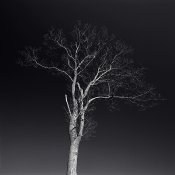
Dark sky also has a lot to do with time of day, weather and direction.

This is 95% of the answer.

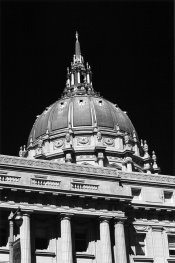
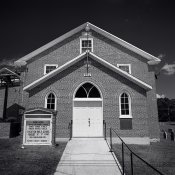
To obtain black or near black skies I need the above conditions to be just right, then it's an orange and polarizer stacked together. A red and polarizer would be even greater effect but you lose too much shadow detail. I meter through the filter stack, or if I'm in a hurry just dial in +3 stops of compensation.
 

Attachments

  • Park Head Church, Pecktonville MD 8-11-12 02.jpg
    Park Head Church, Pecktonville MD 8-11-12 02.jpg
    522.6 KB · Views: 131
  • Tree on Big Hill 02.jpg
    Tree on Big Hill 02.jpg
    229 KB · Views: 143

Vaughn

Subscriber
Allowing Ads
Joined
Dec 13, 2006
Messages
10,288
Location
Humboldt Co.
Format
Large Format
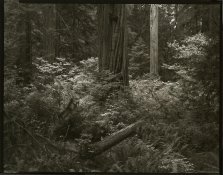
I rarely go for dark skies -- don't usually care for them.

But I usually have a yellow with me in the Fall -- to brighten up the fall leaves...
 

Attachments

  • 2_RedwoodVineMaple.jpg
    2_RedwoodVineMaple.jpg
    348.9 KB · Views: 116

bsdunek

Member
Allowing Ads
Joined
Jul 27, 2006
Messages
1,611
Location
Michigan
Format
Multi Format
Wouldn't leave home without my (too) many filters. One has to expirement and learn how to use them to achieve the desired results, which includes not using them.
 

Mainecoonmaniac

Member
Allowing Ads
Joined
Dec 10, 2009
Messages
6,297
Format
Multi Format
I carry in my bag a Cokin red, green, linear polarizer, adaptor rings and the holder. When I shoot landscapes, I use the red or the polarizer when I want to darken the sky. Saves burning in the sky in the darkroom sometimes. I shoot mostly BW film.
 

BrianShaw

Member
Allowing Ads
Joined
Nov 30, 2005
Messages
17,008
Location
La-la-land
Format
Multi Format
Haha.. Exactly!! Or you left the step up ring at home!

... or brought the wrong size step-up ring. After doing that once I just started buying filters in the correct sizes and not trying to economize by using step-up rings.
 
OP
OP
Helinophoto

Helinophoto

Member
Joined
Aug 19, 2011
Messages
1,091
Location
Norway
Format
Multi Format
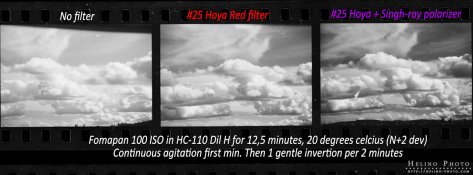
Allright, I put together a little test, based on the tips and ideas in this thread.

I just got my 100 ft Fomapan 100 bulk film loaded and ready and thought i's give it a go with a limited film-strip, to check the following:
- How various filters (the ones that I own anyway) influence the sky (with this film)
- Try HC-110 with Fomapan 100 (something that is "not recommended" for more reasons I care to remember)
- Try out n+2 development with said film, to see how it fared.

I metered, to the best of my ability, the darkest parts of the sky to zone III, the highlights were then at zone V (I used my Canon 1v's spot-meter) and took a photo without filter.
Metered again with a Hoya #25 red filter on and took another photo.
Then I mounted my Polarization filter on-top of my red filter, metered again and took another photo.

For development I googled around and found 8 minutes at EI 100 for foma in HC-110 dilution H to be a good starting point. (I've never used HC-110 with Fomapan 100 before).
I then added 25% to that time, to get to a theoretical n+1 development.
Then I added another 25% to that time to get to n+2 development. (12,5 minutes)
(This was a guestimate, I have no idea of it was correct, because I don't own a desiometer)

The reason why I shot this for a n+2 development, was that I wanted to keep the darkest parts of the sky and the clouds _dark_ and use the development process to pull up the highlights, as per the zone system (or the maybe the bit simplified one that I use).

I then developed the film for 12 minutes 30 seconds, 1 minute continuous agitation, then 1 gentle agitation at 3, 5, 7, 9 and 11 minutes (and a light "cheers" at 12 minutes), making sure to not agitate too hard or too much, but let the highlights get a batch of fresh developer now and then.

The result:

Filter effect:
Wow!
You can clearly see the difference between the unfiltered shot, to the #25 red filter shot, but look at the red + pola!
Ansel Adams go home, haha :tongue:

Fomapan 100 in HC-110:
What's the problem? The negatives look good and if you keep you fat fingers (and fat squeegees) away from it while wet, there is no problem!
Now, this was a "sky-test" alone, I have yet to test to see how trees and water will fare when I use this technique, most likely I'll have to stash a square ND filter on somewhere, to prevent the land part of the image to go too dark on me.

N+2 development with Fomapan 100:
I guess I got lucky, the negatives look very nice to my eye, scans well, not too thick, not too thin, will print well in the darkroom.
N+2 was maybe a bit much though, because the negatives (at least from my grain enhancing Nikon-scanner) are a bit grainy in 35mm. I need to print some in the dark-room to get a proper impression.

Conclusion:


If I was to do it again, I would place the shadow part of the clouds at around zone IV, so that the whites were at VI (may vary depending on conditions off course) and then do a n+1 development instead. (it can go really stark, very fast).
Result scan of the negative frames side by side as they appear on the negative is attached (photo darkened to where I typically do it when I make a proof-sheet in the dark room), this is a proof scan, scanned trough my negative sleeve, so never-mind the dust specs, they are on the outside of the neg-sleeve. Also, the neg-leader shows some unevenness in brightness, probably due to said sleeve.

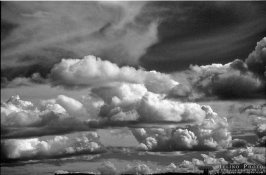
Also attached, a proper scan from the #25 filter + pola filter, made on my Nikon V.

I hope you enjoyed this totally unscientific test as much as I did ^^

 

Attachments

  • Foma_100_N+2_HC-110_Dil_H_12m_30s7-Edit.jpg
    Foma_100_N+2_HC-110_Dil_H_12m_30s7-Edit.jpg
    168.5 KB · Views: 144
  • Foma100_red_pola_n+2_dev_hc-110_h_12m_30_s.jpg
    Foma100_red_pola_n+2_dev_hc-110_h_12m_30_s.jpg
    342 KB · Views: 137
Last edited by a moderator:

Newt_on_Swings

Member
Allowing Ads
Joined
Mar 30, 2011
Messages
2,147
Location
NYC
Format
Multi Format
I have filters on pretty much all the time. I stick to the yellow and orange filters the most, but I always carry a filter pouch with me that has a red filter, a green (light and dark), a polarizer, and a nd.3 just in case.
 
Photrio.com contains affiliate links to products. We may receive a commission for purchases made through these links.
To read our full affiliate disclosure statement please click Here.

PHOTRIO PARTNERS EQUALLY FUNDING OUR COMMUNITY:


Ilford ADOX Freestyle Photographic Stearman Press Weldon Color Lab Blue Moon Camera & Machine
Top Bottom