
• Welcome to Photrio!
    Registration is fast and free. Join today to unlock search, see fewer ads, and access all forum features.
    Click here to sign up

Diffraction Question

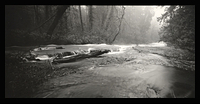
Millstone, High Water

A
Millstone, High Water

  • sly
  • Dec 17, 2025
  • 2
  • 4
  • 66
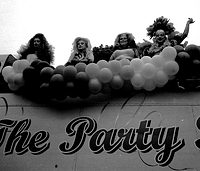
The Party

A
The Party

  • 0
  • 0
  • 51

Recent Classifieds

Forum statistics

Threads
201,243
Messages
2,821,094
Members
100,614
Latest member
generic
Recent bookmarks
0

Jack Lusted

Member
Allowing Ads
Joined
Aug 29, 2005
Messages
150
Location
Robertsbridg
Format
Multi Format
I've just got around to printing up a macro shot and I'm a little disappointed as it is not as sharp as it ought to be.

Equipment - Mamiya C330 with 80mm lens
Magnification ~75%
Exposure 2s @ f:22
film Ilford delta 400, dev in X-tol 1:1

Naturally the set up was properly supported on a good tripod.

My question is - by using the small f:22 stop to increase depth of field did I inadvertently introduce a noticeable diffraction effect sufficient to to take the edge of the sharpness? Would the image have been sharper had I used f:8?

Thanks for any feedback.

Jack
 

keithwms

Member
Allowing Ads
Joined
Oct 14, 2006
Messages
6,220
Location
Charlottesvi
Format
Multi Format
At what enlargement are you printing the image? If you are only enlarging a factor of say 3-5 or so and seeing softness then I doubt diffraction is your issue. Yes you will have some at f/22 but it really shouldn't be a shot killer in medium format. Can you post an example?

A couple basic questions (which I hope are not insulting!): is the neg itself sharp under loupe? Is it held flat in the enlarger? Is the enlarger well aligned? Are you stopping down the enlarging lens excessively?

P.S. One clue about diffraction softness is that it will affect the whole image pretty much equally, whereas many other sources of fuzz won't... that might help you diagnose the problem.
 
OP
OP
Jack Lusted

Jack Lusted

Member
Allowing Ads
Joined
Aug 29, 2005
Messages
150
Location
Robertsbridg
Format
Multi Format
Keith,
Thank you for replying.
I'm enlarging the neg about 5-6 times.
I don't have a strong lupe, so the neg looks okayish - it's a bit too soft for my liking and it could have done with a stop more exposure.
The enlarger is fine optically, properly aligned and pretty solid.
Lens stopped down to f;11 for exposure.

I hope that I've managed to attach a scan of the print.

Jack
 

Attachments

  • sc00089e6e.jpg
    sc00089e6e.jpg
    29.8 KB · Views: 328

keithwms

Member
Allowing Ads
Joined
Oct 14, 2006
Messages
6,220
Location
Charlottesvi
Format
Multi Format
Jack, you did manage to attach a scan! And I don't see any softness issues on my monitor. It'd be pretty hard to diagnose a problem, if there is one, unless you zoom in much more on the scan. But what I see looks fine.

A couple stray thoughts...

*Perhaps you might run the neg through KRST- it might give you a bit more tonal contrast; my assessment of the deltas is that they do tend to produce slightly soft-n-dreamy edge contrast, compared to the traditional b&ws. In my experience, if you go from a trad. grain film to a delta you might at first feel like sharpness is lacking. In my opinion, it isn't that the film is inherently less sharp, it's that it has less edge 'bite' so to speak.... If you want the appearance of more edge sharpness then you might consider fp4+ or hp5+.

*I'm not familiar with your lens and can't say offhand whether it is sufficiently optimized for close focus. This might be an issue but I would think it'd give you disappointing sharpness toward the edges, not across the whole image.

Again, I can't make out any issues in your attachment, really. I think it works well as is.
 

Q.G.

Member
Allowing Ads
Joined
Jul 23, 2007
Messages
5,535
Location
Netherlands
Format
Medium Format
Stopping down as far as possible in pursuit of DOF is indeed not a very good idea.
It will indeed reduce sharpness visibly.
But not increase DOF by enough to be useful.
 

ic-racer

Member
Joined
Feb 25, 2007
Messages
16,696
Location
USA
Format
Multi Format
I've just got around to printing up a macro shot and I'm a little disappointed as it is not as sharp as it ought to be.

Equipment - Mamiya C330 with 80mm lens
Magnification ~75%
Exposure 2s @ f:22
film Ilford delta 400, dev in X-tol 1:1

Naturally the set up was properly supported on a good tripod.

My question is - by using the small f:22 stop to increase depth of field did I inadvertently introduce a noticeable diffraction effect sufficient to to take the edge of the sharpness? Would the image have been sharper had I used f:8?

Thanks for any feedback.

Jack
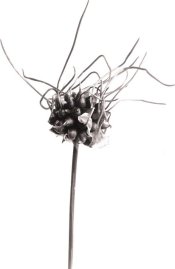
Simple answer = YES

The amount of diffraction will be related to your calculated relative aperture from your 'bellows extension', so your f22 was really much smaller.
 
OP
OP
Jack Lusted

Jack Lusted

Member
Allowing Ads
Joined
Aug 29, 2005
Messages
150
Location
Robertsbridg
Format
Multi Format
Keith,
Again, thank you for your comments.
Somehow the scan does seem to have sharpened things up a bit.
I'll give the negs a go in selenium toner - that certainly seems a good idea.
Previously I've tended to use HP5+ so your point about the deltas is well taken - it might be that and slight under exposure that may be the issue.

Jack
 

Jim Noel

Member
Allowing Ads
Joined
Mar 6, 2005
Messages
2,261
Format
Large Format
I suspect you neglected to take into account that lenses used at this magnification have a bellows factor to be considered. Most people only think of this for large format cameras,but it does come into play on the Mamiya twin lens cameras when the bellows is racked out for close ups.
Using this factor your effective aperture is somewhere around f32-f45 (I'm not in the mood to do the math work before breakfast). This would cause not only the under exposure to which you refer, but also is more likely to get you into the realm of diffraction.
There is a scale on the side of the Mamiya to help you compensate for the bellows.
 

ic-racer

Member
Joined
Feb 25, 2007
Messages
16,696
Location
USA
Format
Multi Format
Just another note on the diffraction/DOF problem. As you increase you film format size (for the same size 'macro' subject mater) you are in a LOOSE-LOOSE situation with diffraction and DOF!

This (macro and micro photography) may be one field where the eventual development of small sensor technology will favor the 'Dark Side' :sad:
 

Q.G.

Member
Allowing Ads
Joined
Jul 23, 2007
Messages
5,535
Location
Netherlands
Format
Medium Format
Just another note on the diffraction/DOF problem. As you increase you film format size (for the same size 'macro' subject mater) you are in a LOOSE-LOOSE situation with diffraction and DOF!

This (macro and micro photography) may be one field where the eventual development of small sensor technology will favor the 'Dark Side' :sad:

Well...
There are two ways to aproach photomacrography.

One is the 'frame-drive' approach, thinking of a frame as something to fill as its first goal.
Then you do indeed need higher magnification (= less DOF, but not necessarily more diffraction - depends on how much you stop down, of course) when switching to larger formats.

The other is the 'magnification-driven' approach, having a certain scale, and with it a certain level of detail, as its goal.
In this approach, larger formats mean more 'real estate' to fit the subject in.
Since DOF depends on magnification, not on format size, you do get the same DOF (assuming same f-stop). Diffraction then too does not change.
 

ic-racer

Member
Joined
Feb 25, 2007
Messages
16,696
Location
USA
Format
Multi Format
Well...
There are two ways to aproach photomacrography.

One is the 'frame-drive' approach, thinking of a frame as something to fill as its first goal.
Then you do indeed need higher magnification (= less DOF, but not necessarily more diffraction - depends on how much you stop down, of course) when switching to larger formats.

The other is the 'magnification-driven' approach, having a certain scale, and with it a certain level of detail, as its goal.
In this approach, larger formats mean more 'real estate' to fit the subject in.
Since DOF depends on magnification, not on format size, you do get the same DOF (assuming same f-stop). Diffraction then too does not change.

Exactly. If you want to shoot large format, you need a large subject. Though, I suspect most people interested in 'macro' photography want to take a picture of something small :smile:
 

Q.G.

Member
Allowing Ads
Joined
Jul 23, 2007
Messages
5,535
Location
Netherlands
Format
Medium Format
Sure.

I have taken pictures of small things that, at the desired scale, took up to 11 MF frames to fit all of it in.
Something in there tells me i needed a larger format. For a small thing.
:wink:
 

Q.G.

Member
Allowing Ads
Joined
Jul 23, 2007
Messages
5,535
Location
Netherlands
Format
Medium Format
I see absolutely zero advantage for small format when doing macro. Zero.

I do. Size (of the equipment to be used).

1:1 is 1:1, no matter what format.
And if the thing to be photographed fits inside a smaller format's frame, i rather use the smaller gear too.
:wink:
 

keithwms

Member
Allowing Ads
Joined
Oct 14, 2006
Messages
6,220
Location
Charlottesvi
Format
Multi Format
Fine, but I do flowers, which generally do not fit into the 35mm frame :wink:

Regarding the size of the equipment used, I'll just say that my rb and my cambo are very stable and allow me to use just about any lens for closeups well beyond 1:1, in fact, with the ability to tune magnification on the fly (no shuffling of extension tubes). And they use leaf shutters. Then there are the tilts that allow me to optimize DOF at wider apertures... All of which I consider to be very big bonuses.

Sure, when I am doing handheld macro shots of bugs, I'll use a 35mm. Incidentally, I am doing a fair amount of nonsense with a Mamiya 80/4 macro (for 645 format) mounted on a Nikon body. That lens is fabulous for macro, if you get sick of shuffling extension tubes (I do). Way more flexibility than a standard 35mm macro rig, and if there is any loss of sharpness, I am not seeing it (it's all a wash once you stop down anyway, how many 35mm macro shooters work at f/8? For a straight-down shot of a penny maybe...).

Bottom line, as usual, is that there are different tools for different tasks. My point was that there is no overriding reason why smaller formats are better for macro.

In the spirit of putting one's money where one's mouth is, I suppose I should end with an LF macro example. Shot on 5x7", with pushed hp5+. I do not think 35mm could have delivered the tonality I was after. Am I wrong? Really? If so then show me.

http://keithwilliamsphoto.net/Closer to Home/Full Moon.html
 
Last edited by a moderator:

ic-racer

Member
Joined
Feb 25, 2007
Messages
16,696
Location
USA
Format
Multi Format
I see absolutely zero advantage for small format when doing macro. Zero.

Like I posted previously, with the larger format your depth of field will be less and if you try to correct with a smaller f-stop your results will be limited by diffraction.

The reason your depth of field will be less is because you are focused CLOSER to the object (in terms of film format diagonals) with the large format camera. All else being equal (ie subject size, subject distance, final print size, absolute aperture 6mm or whatever, etc).

Indeed with pictoral subjects, the depth of field is nearly the same between large and small format cameras when absolute aperture diameter is the same. But once you move in close, the smaller format camera is always going to win in terms of depth of field. If you try to stop the larger format lens down to match the depth of field of the smaller camera, the smaller camera will win again, because its image will be sharper.

Here is a relevant thread: http://www.largeformatphotography.info/forum/showthread.php?t=38494
 
Last edited by a moderator:

Q.G.

Member
Allowing Ads
Joined
Jul 23, 2007
Messages
5,535
Location
Netherlands
Format
Medium Format
Bottom line, as usual, is that there are different tools for different tasks. My point was that there is no overriding reason why smaller formats are better for macro.
Absolutely true.
 

Q.G.

Member
Allowing Ads
Joined
Jul 23, 2007
Messages
5,535
Location
Netherlands
Format
Medium Format
Like I posted previously, with the larger format your depth of field will be less and if you try to correct with a smaller f-stop your results will be limited by diffraction.

The reason your depth of field will be less is because you are focused CLOSER to the object (in terms of film format diagonals) with the large format camera. All else being equal (ie subject size, subject distance, final print size, absolute aperture 6mm or whatever, etc).

Indeed with pictoral subjects, the depth of field is nearly the same between large and small format cameras when absolute aperture diameter is the same. But once you move in close, you are going to need to increase your subject size to maintain this relationship

Well...

A bellows, extended, say, 130 mm. On it, a 16 mm Luminar, stopped down 2 stops. A 35 mm camera on the rear.
That produces a magnification of about 10 times, with the DOF and diffraction that comes with it.

Now that same setup, but with a 6x6 camera on the bellows, with the bellows extension reduced to 'compensate' for the longer camera body.
Result: same (!) magnification, same (!) DOF and diffraction.
But on a larger (!) format... :wink:

That's the aformentioned 'magnification driven' approach.

But yes, if you want to fill the frame the same way, no matter what format is used, you need more magnification (= less DOF) using a larger format.
But for the reduced DOF you also get increased detail.
So it's not all bad at all with large(r) formats, even when using the "frame driven" approach. :wink:
 

keithwms

Member
Allowing Ads
Joined
Oct 14, 2006
Messages
6,220
Location
Charlottesvi
Format
Multi Format
Like I posted previously, with the larger format your depth of field will be less and if you try to correct with a smaller f-stop your results will be limited by diffraction.

The link I gave, to a 5x7 1:1 shot of a moonflower, was done at f/45. I contact print it so that the subject in the print is almost exactly the same size as the real flower... no enlargement. Diffraction plays no role whatsoever. I could've shot it at f/64 or f/128 and it still wouldn't play a role. I could enlarge it 2x or 3x and it still wouldn't play a role at f/45. Really, try it!

Now... would the absolute sharpest possible result be at f/8 or f/11 or so? Yes, sure. True of all formats. But for LF and some MF, that matters not one iota unless you are shooting res charts. The smoothness of the tonality and the focus transitions in medium and large formats matter a lot more (to me) than whether you can see some minor difference under a loupe.

Not to slam 35mm, which is wonderful for a great many things including some macro work, and which I also use happily, but... the transitions between in focus and OOF objects can be rather harsh in 35mm. You can see focus/defocus lines. With the larger formats, the transition from in- to out-of-focus portions is generally much smoother and more gradual.

Also, as I mentioned, a tiltable bellows gear can eke a lot more effective DOF from a wider aperture than a 35mm system with extension tubes. When I do macro with a view camera, I focus first of all with the lens wide open, then use tilts to bring as much into focus as I can, and then start stopping down, etc., if the DOF is insufficient.
 

JBrunner

Moderator
Moderator
Allowing Ads
Joined
Dec 14, 2005
Messages
7,429
Location
PNdub
Format
Medium Format
I don't believe it has anything to do with diffraction, nor do i think the effective stop due to bellows factor is doing anything to create increased diffraction. I believe it is either the sharpness of the lens as a macro, or subject movement, or perhaps camera vibration. Could even be the developing (heavy metal agitator? :D), but I'm betting on some kind of movement or vibration with a 2s exp.

 
Last edited by a moderator:

keithwms

Member
Allowing Ads
Joined
Oct 14, 2006
Messages
6,220
Location
Charlottesvi
Format
Multi Format
Jason, I also wondered about motion blur but supposed that even if there was some finger or shutter impulse, the OP's rig probably settled down in a small fraction of 2 sec. But you are absolutely right, if there was any continuous subject motion then it might well show up.

I am not familiar with this particular taking lens, is it really optimal at close focus? Does one use a diopter to get that kind of magnification? Is the focus match precise enough with a tlr to do this kind of thing?

(N.b. I still say that the scan looks good as far as I can tell!)
 

JBrunner

Moderator
Moderator
Allowing Ads
Joined
Dec 14, 2005
Messages
7,429
Location
PNdub
Format
Medium Format
Jason, I also wondered about motion blur but supposed that even if there was some finger or shutter impulse, the OP's rig probably settled down in a small fraction of 2 sec. But you are absolutely right, if there was any continuous subject motion then it might well show up.

Yes, I guess what I'm trying to communicate is that movement, focus, or some other part of the process is a far more likely culprit than diffraction, in my opinion.
 

Q.G.

Member
Allowing Ads
Joined
Jul 23, 2007
Messages
5,535
Location
Netherlands
Format
Medium Format
I don't believe it has anything to do with diffraction, nor do i think the effective stop due to bellows factor is doing anything to create increased diffraction. [...]
Perhaps not the culprit here, no.

Often ignored, but diffraction increases every time you stop a lens down, no matter what image scale it is set to.
So much so that with roughly every two stops you close a lens down, resolution* is halved.
That's quite something.

*maximum achievable resolution - there are more limiting factors, like motion blur, or lens aberrations, which often are (even) worse than diffraction.
 

JBrunner

Moderator
Moderator
Allowing Ads
Joined
Dec 14, 2005
Messages
7,429
Location
PNdub
Format
Medium Format
Perhaps not the culprit here, no.

Often ignored, but diffraction increases every time you stop a lens down, no matter what image scale it is set to.
So much so that with roughly every two stops you close a lens down, (maximum achievable - there are more limiting factors, like motion blur, or lens aberrations) resolution is halved.
That's quite something.

I would qualify that as starting at where the lens is made to be sharpest. Most real world sharpness limitations that I have encountered with quality optics are set by the technique, circumstance or equipment, not diffraction. I am not, of course denying the principle, or that it shouldn't be considered, I just find it unlikely in this case. In reviewing the OP, I have realized he is using a TLR and now suspect the calibration of the focusing lens, or focus issues as a side effect of parallax (taking lens closer than focusing lens) as my primary suspicion.
 

keithwms

Member
Allowing Ads
Joined
Oct 14, 2006
Messages
6,220
Location
Charlottesvi
Format
Multi Format
I think one simply has to meditate on the definition of circle of confusion and realize that with a larger format neg, the enlargement factor for the final print is much smaller than what is required for a print from a 35mm neg.

There simply is no free lunch with optics. Either you enlarge at capture time or you enlarge at print time. And before somebody says "yes but you can always drumscan the smaller neg thus bypassing print enlargement..." well, sure! you can! But the starting smaller-format neg contains far less tonal information and rougher transitions from in focus and OOF elements.... these are issues quite separate from ultimate resolution of high-frequency detail.

So, again, one simply must assess which tool is right for the particular job. If I thought that shot I posted could have been done on 35mm, well of course I would've done it on 35mm. I don't have any particular compulsion to spend extra time and money on LF... :wink:

Again, I worry about focus match with a tlr for macro. I mean, how do you know that it's right on the money.
 
Photrio.com contains affiliate links to products. We may receive a commission for purchases made through these links.
To read our full affiliate disclosure statement please click Here.

PHOTRIO PARTNERS EQUALLY FUNDING OUR COMMUNITY:


Ilford ADOX Freestyle Photographic Stearman Press Weldon Color Lab Blue Moon Camera & Machine
Top Bottom