

• Welcome to Photrio!
    Registration is fast and free. Join today to unlock search, see fewer ads, and access all forum features.
    Click here to sign up

Did the reel do this?

The Lone Arrow

A
The Lone Arrow

  • 0
  • 0
  • 5
Rail Station

D
Rail Station

  • 0
  • 0
  • 6

Recent Classifieds

Forum statistics

Threads
204,360
Messages
2,867,538
Members
102,233
Latest member
CristianSP
Recent bookmarks
0

cptrios

Member
Joined
Oct 26, 2020
Messages
428
Location
Boston
Format
Hybrid
Hi all,

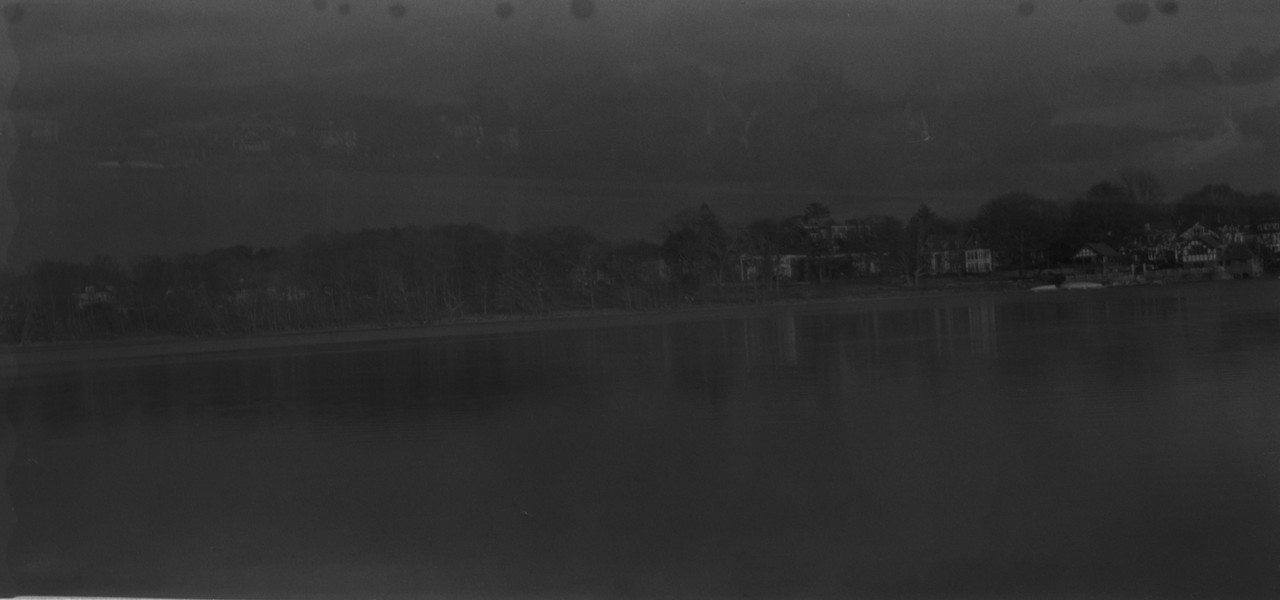
Just developed my first ever roll of film (well, first since a summer camp photography club in 1996). Not a big deal since it was just a test of hyperfocal quality on my Autocord, but there's a disconcerting issue going forward: a lightening along one edge and some spotty dis'color'ation on the other. It's very inconsistent from shot to shot, so I assume it's not a light leak.
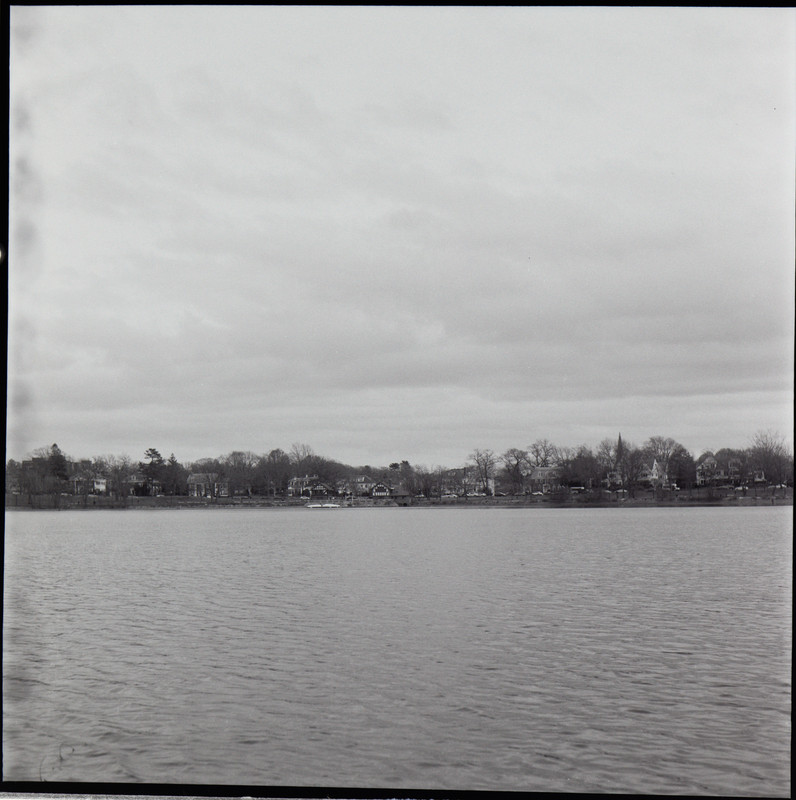
autocord-edgeissue.jpg


I'm pretty happy with how things turned out in general, since one is theoretically not supposed to use HC-110 with Arista EDU/Fomapan. But I'd like to get this issue nipped in the bud before I try a serious roll down the road! I'm assuming it stems from the Paterson SS4 included reel, which I keep reading is awful. Hopefully that's it, as it'd be an easy fix!

Process:
Arista EDU 100
HC-110 1:63
10 total minutes, 40 seconds initial inversion, 5 inversions each minute
68f

Should I just bite the bullet and get a stainless reel, even though loading it looks a bit scary? Or is there a similar reel to the Patersons that isn't junk?

Thanks!
 
Welcome! Looks like a solid first roll of film, so you should feel good about that.

I don't _know_ this is what happened, but it sure looks like air bubbles to me. Is the left hand side the side that was at the top of the reel? Did you use the swizzle stick agitation method, or inversions? If this was the side at the top, and you used the stick to agitate, I'd say it's air bubbles. It looks like one or more bubbles that got rotated around from the gentle turning from the stick.

Those Paterson tanks and reels are just fine. I used to use a Paterson tank all the time. It's one of those controversial topics, so you might get different suggestions, but I'd try to agitate using inversions instead of the stick and give the tank a solid thunk when you are done inverting, to free any bubbles.

As for the lighter line on the other side, is that on the negative? Looks like a scanner artifact to my eye.
 
I use Paterson plastic reels and nothing else, nothing wrong with them, but I agree with the above, possibly air bubbles, only use the twiddle stick for the first agation then switch to inversion, the light line on the other side of the negative could be the reel riding up slightly on the center colum, to counter that best to use a little more developer, I always use 600ml rather than 500ml, apart from that it looks a pretty good result to me,well done
Richard
 
I very strongly doubt it was caused by the reel. Looks more like not enough chemistry. Hard to say but, very unlikely it has anything to do with the reels.

Just curious though...why gave you the idea that one should not use HC-110 with Arista EDU 100? I think I would have used a little less dilute solution - I prefer 10mL + 390mL to make 400mL - but I would expect HC-110 to work quite well with Foma pan 100.

Anyway, your negative looks really very good. The issue is not likely the reels or the HC-110.
 
Last edited:
My gut instinct is the same as the others that it has nothing to do with the reel. Incidentally if anyone tells you that developer A does not go with film B, politely ask why and keep on asking until you are satisfied that they have some evidence that what they have said is based on facts.

pentaxuser
 
Paterson reels aren't really that bad-- although there's a "deluxe" version available from Freestyle, Adorama and B&H that has larger feed tabs, which is terribly useful for 120 film. The reels need to be kept clean, the ball bearings need to be able to move freely before you load the film, and you need to make sure you're using enough chemical to totally cover the reel. Like others have said, I would guess this was a little light on chemical. I actually tested how much liquid is needed (put in the reel, fill with water, pour it off into a beaker afterwards).

The other thing to make sure of is that the reel is absolutely dry-- not "fairly dry" or "seems OK", but bone dry. Otherwise the film will stick (and might have caused your lightness on the bottom edge. But that's a guess).
 
Be sure to tap the tank hard for the first 30 seconds. I just developed my first roll of film in a few decades (Fomopan 200 in HC110, 1:63) yesterday! I used a metal tank and reel. The technique is still with me. For the first 30 seconds I tap pretty hard on some towels (to keep noise down) and agitate a couple times, plus pop the cap to let excess air escape. Not sure if that is air bubbles (they are usually more distinct), but that could have contributed.
 
Looks like a good start to me.
May we please see a backlit photo of the negatives themselves.
A cel phone picture of the negatives held against a window or blank lit computer screen (try blank.org in your browser) works well.
We would like to see the entire negative - edges and the bit between the frames too - and preferably a strip with a few frames.
 
Thanks for the responses everyone! I don't remember which side was "down" in the tank (loading it onto the real was a bit of a calamity too) but the bubble thing definitely makes sense. I used 640ml total liquid, but the reel wasn't pushed all the way to the bottom of the column. And inversions only, no swizzle stick.

As for HC-110 and Arista EDU, I believe Arista itself lists the developer as "not recommended." Seems like it just works too quickly, hence the high dilution.

I'll probably have another roll to develop this weekend, so I'll try out the advice!
 
Foma does not recommend HC-110. Nevertheless, I have had good results with dilution B at 68F for 5 minutes. Generally I have developed with XTOL or Rodinal, however.
 
......but the reel wasn't pushed all the way to the bottom of the column.....


Ah, yeah...I do that too sometimes...even after all these many years.
Keep with it. You’re off to a very good start!
Thanks for the info on Arista EDU too. You’re probably correct that the standard 1+31 dilution works too fast. Your results show that HC-110 1+63 works well though.
 
I have a linoleum block from an art store that is used for carving. I place the block on the table top next to the sink and as soon as I put developer, stop bath, bleach, fixer, ... I give the plastic or metal tank several quick hard thumps [not damaging thumps] and then start the rotation, inversion, ... whatever your pattern of agitation. That knocks out the air bells [aka air bubbles] off the film. I was taught this when I was a teenager learning to develop film and this has never failed me. Also always make sure that you have enough chemistry added every time.
 
The artifacts on the left are surely due to air bubbles that moved around during processing or hung in place from one agitation to the next and then moved out. I've processed with the swizzle stick in Paterson tanks without seeing those, but inversion is less prone to having them hang in one place.

I've used HC-110 on Foma films many times. Works fine. Might be "not recommended" due to short development times; I always used to use high dilutions (F, G, and H) both to get the most use out of my syrup, and to prolong development time (improves consistency when ten seconds difference from one roll to the next isn't 5% of the total development = 1/2 stop push or pull).

03.JPG


Brownie Hawkeye Flash, .EDU Ultra 100 (= Fomapan 100), HC-110 F
 
Did two more rolls, one 135 and one 120. Used the same agitation scheme but with a bit more liquid and three sharp raps on the countertop instead of just one. The problem is still there but less pronounced on the 120 (this is from a Kodak 3A I picked up at the local thrift shop and completely failed to use correctly. It's triple-exposed!):

DSC01196.jpg

Interestingly, the 135 roll (9 minutes instead of 10 since it's Foma 200) wound up with some noticeable bromide drag, mostly in the middle section of the reel. I wonder if I should be inverting faster or more often?
vivitar-foma200-Nov20-12.jpg
 
Standard agitation with inversion tanks is continuous first minute, then five inversions in ten seconds each minute after. Different people will swear by their specific inversion movement, but I just turn invert through 360 degrees, to away from me, then rotate approximately 1/4 turn afterward to the next inversion (same direction for me) rolls the tank over a different section of the film. I've seen people use a fancy twist-and-flip, turn with one hand, over and back, etc. -- and all get good negatives.

Bromide drag is usually due to too little inversion, especially with partially exhausted developer, but flow marks (from too much or too vigorous inversion) can look much the same -- difference is bromide drag will decrease density from top (in the tank) perforations downward, while flow marks will increase density from some feature (often the suppor ribs on the film reel) in one or both directions.
 
Standard agitation with inversion tanks is continuous first minute, then five inversions in ten seconds each minute after.
That is the Ilford recommended procedure. The Kodak recommendation is continuous inversion agitation for the first 30 seconds, then continuous inversions for 5 seconds every 30 seconds thereafter.:D
Donald's Ilford procedures and my Kodak procedures will give the same results.
 
I don't invert those plastic Patterson tanks, especially here at school. The plastic lids never seal properly, and kids get solution everywhere, and on themselves. Five, figure 8 patterns every minutes works very well with HP5, and FP4 that we use. Find what works for you.
 
I don't invert those plastic Patterson tanks, especially here at school. The plastic lids never seal properly, and kids get solution everywhere, and on themselves. Five, figure 8 patterns every minutes works very well with HP5, and FP4 that we use. Find what works for you.

My lid does seal properly (with some force), but I feel like the inversions are introducing a lot of air into the liquid, and thus bubbles. I'd read that side-to-side-only agitation can develop the middle of the frame more than the top and bottom. Not true?
 
Please post a photo of a few frames of the negatives - not a film scan.
 
So it's solved. But I want to defend to humble swizzle stick that's been attacked here. Bubbles can't be attributed to it, it is excellent at getting rid of them, just try and watch when washing the film. And it is ready to use much faster than getting the lid on. Two reasons to use it for the initial agitation. I invert for the further agitation, as I don't completely trust its ability to create enough turbulence to get fresh dev to all the surface when there is more exhaustion and development byproducts. Probably it would be fine, I should try, it's so convenient.
 
My lid does seal properly (with some force), but I feel like the inversions are introducing a lot of air into the liquid, and thus bubbles. I'd read that side-to-side-only agitation can develop the middle of the frame more than the top and bottom. Not true?

No, not from air during inversion. The bubbles get attached when either liquid is first touching the film [one reason people presoak the film with water] and less likely when a new chemical touches the water. Hence my advice on post #13. Please reread post #13.
 
My lid does seal properly (with some force), but I feel like the inversions are introducing a lot of air into the liquid, and thus bubbles. I'd read that side-to-side-only agitation can develop the middle of the frame more than the top and bottom. Not true?
I don't think so. My students' films are coming out fine. It's also the way I agitate my own roll films. Overly aggressive agitation can cause flow patterns near the film perforations. So if you do invert, do it gently.
 
I don't invert those plastic Patterson tanks, especially here at school. The plastic lids never seal properly, and kids get solution everywhere, and on themselves. Five, figure 8 patterns every minutes works very well with HP5, and FP4 that we use. Find what works for you.

+1

I've never inverted the Paterson tank either. Have always (35+ years) done the figure eights or wobble or (rarely) swizzle stick method of agitation.

Never have I had an issue like those described by the OP.

I'm starting to suspect the circles may be some kind of manufacturer or storage related defect.
 
Photrio.com contains affiliate links to products. We may receive a commission for purchases made through these links.
To read our full affiliate disclosure statement please click Here.

PHOTRIO PARTNERS EQUALLY FUNDING OUR COMMUNITY:


Ilford ADOX Freestyle Photographic Stearman Press Weldon Color Lab Blue Moon Camera & Machine
Top Bottom