
• Welcome to Photrio!
    Registration is fast and free. Join today to unlock search, see fewer ads, and access all forum features.
    Click here to sign up

Development by inspection and night watch monocular

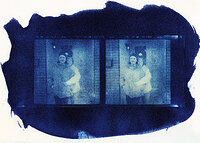
Cyanotype stereo card

A
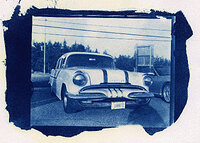
Cyanotype stereo card

  • 0
  • 0
  • 0
IMG_0025.jpeg

A
IMG_0025.jpeg

  • 0
  • 1
  • 0

Forum statistics

Threads
203,125
Messages
2,850,234
Members
101,690
Latest member
nisherii
Recent bookmarks
0
My biggest concern from such devices is the light it generates going to your eye.

I know that many have been successful with binocular types, but it would make me nervous.

As to illumination, there are many IR leds out there that one could use to light an area.
 
There are a couple of threads on LFPF about using night vision goggles(NVG) mono or binocular for developing LF films in general in trays. I don't know if the light source would damage the film or not.
 
Is there a particular reason you want to develop by inspection? It takes quite a bit of practice to become good at. The time/temperature method is much more accurate.

The resolution of scopes such as you mention is not very good. Good enough to see something as large as a deer but not sufficient to discern fine detail.
 
That model you highlighted is 2x magnification. It might not be as comfortable as the 1x viewers.

The green light directed at your eye does not appreciably fog the film. I "accidentally" had it about a half inch from my eye a few weekends ago on one run of film and thought it was causing a problem so I made sure it was snug to my eye for the next run. When I read the results on my densitometer, there was no difference in B+F between the green light leak versus more carefully snug.

Last weekend I ran a family of film tests. I get B+F 0.3 6 minutes to 0.05 16 minutes on TMY-2. Does anybody get less B+F in total darkness?

I use time and temperature developing, the scope is a "crutch" that reduces fumbling and makes me more efficient handling film. It is "fun" watching the image come up on negative, like watching a print come up.
 
Hi!

Im looking into the subject of development by inspection. Could these Night Watch Monocular help? They also have infrared illuminator. By the way how do I illuminate the room with infrared light?

http://www.opticsplanet.net/bushnell-night-vision-2x24-night-watch-260224.html

Thanks

I know photographers who do DBI very well in the traditional way with a 15 watt green safelight who have tried IR night vision goggles or a monocular mounted on a headset. They say that they see the highlights too soon and that it's impossible to tell when you're about to cross the threshold to blown highlights.

The whole point to traditional DBI is to stop development when the highlights first appear in the milky opalescence of the base side of the film sheet. I find it to be the most precise way of development for the printing I do. However, I can't do it with TMax because of the magenta sensitization dye which is complementary to the green safelight. All I ever see with TMY is pitch black. That's why I'm switching back to Ilford HP5+.

I know that Michael Kadillak does development with IR night vision equipment and seems to be quite successful with it. You may want to contact him. He's a member of this forum.
 
Ken Lee has written some on the Large Format Photography Forum and his web page about using an infrared monocular for DBI. Scroll down:

http://www.kenleegallery.com/html/tech/index.php

I'm sort of interested in getting one but not for DBI, rather for ease of handling and loading film and in case of dropping it. I mostly don't have problems and mostly don't drop anything but it can sure be frustrating when it happens.
 
Ken Lee has written some on the Large Format Photography Forum and his web page about using an infrared monocular for DBI.

Doesn't tell you what one needs to know, to wit: how to tell when to stop development in order to avoid blowing the highlights.
 
Doesn't tell you what one needs to know, to wit: how to tell when to stop development in order to avoid blowing the highlights.

Well he says to look at the shiny back side, not the emulsion. And I suppose it takes experience. Shrug - just providing the link. Perhaps someone interested in doing that could email him. I'm not interested in that so I'm not going to (though I may ask him some questions about the viewer itself if I get to that point.
 
Photrio.com contains affiliate links to products. We may receive a commission for purchases made through these links.
To read our full affiliate disclosure statement please click Here.

PHOTRIO PARTNERS EQUALLY FUNDING OUR COMMUNITY:


Ilford ADOX Freestyle Photographic Stearman Press Weldon Color Lab Blue Moon Camera & Machine
Top Bottom
