• Welcome to Photrio!
    Registration is fast and free. Join today to unlock search, see fewer ads, and access all forum features.
    Click here to sign up

Developer for T-max

Recent Classifieds

Forum statistics

Threads
202,069
Messages
2,834,588
Members
101,094
Latest member
not_cal
Recent bookmarks
0

revdocjim

Member
Allowing Ads
Joined
Nov 17, 2010
Messages
357
Location
Tokyo
Format
Multi Format
I've only been home developing for a year or so and feel like I'm just scratching the surface. So far I've used Fuji Neopan 100 & 400, Ilford HP5 and Tri-X 400. Today T-max 400 was on sale so I bought some (120) and picked up a bottle of Kodak T-Max developer. I was shocked by how expensive it was. Until now I've only used Fuji Super Prodol and it is much, much cheaper and available in powders.

So I guess the obvious question is, what kind of results would I get if I used Super Prodol on T-Max? The MDC doesn't have any data for this combo. I've heard that T-Max requires it's own proprietary developer to get optimum results, but then others say that's just marketing hype.

And one more beginner question. The instructions on the T-Max developer say to dilute it 1:4 but on the MDC I see various times for different dilutions. If I want to save money by diluting it thinner than 1:4 and using longer developing times should I expect significantly different results than doing it by the book?

All help greatly appreciated!
 
Joined
Jan 21, 2003
Messages
15,715
Location
Switzerland
Format
Multi Format
Any film will work with any developer (within reason, and excluding specialty films).

Just try it. There is nothing telling you you will like the results until you've tried it for yourself. Shoot a roll of the TMax 400 and bracket a normal and Plus/Minus a stop. Develop in the Fuji developer according to the Neopan 400 time. Focus on shadow detail only when you inspect the negs. Pick the film speed you like the shadow detail in best, and now shoot an entire roll at that speed.
In the dark cut the film in three pieces. Save two of them in a light tight container for later. Develop one third, and now inspect the entire tonal range. If contrast is too high, reduce developing time. If contrast is too low, increase time. Adjust until you have a good base line.

This approach is MUCH better than finding something on the internet that somebody else did.
 

Tim Gray

Member
Allowing Ads
Joined
Sep 2, 2006
Messages
1,882
Location
OH
Format
35mm
What Thomas said.

If you *are* looking for a new developer though, I really like XTOL for this film and others. One of the nice things about XTOL is there is a lot of data out there (from Kodak even) about using it with different films, at different dilutions, speeds, and temperatures. It also has a lot of other nice features.

Also, if you look at the T-Max 400 spec sheet, it gives you some different times for different dilutions (1:4, 1:7, and 1:9) of T-Max developer. The one without a listed dilution is 1:4. Look at page 4:

http://www.kodak.com/global/en/professional/support/techPubs/f4043/f4043.pdf
 

Rick A

Subscriber
Allowing Ads
Joined
Mar 31, 2009
Messages
10,038
Location
Laurel Highlands
Format
8x10 Format
Good old tried and true D-76 1+1 will give super results without breaking the bank.
 

jp498

Member
Allowing Ads
Joined
Oct 5, 2009
Messages
1,525
Location
Owls Head ME
Format
Multi Format
It's a very versatile film. I've tried and gotten nice results from d76, d76 1+1, xtol, xtol 1+1, xtol 1+2, PMK, pyrocat HD, dilute hc110, used pyrocat HD mixed with dilute hc110, etc...

One thing is that it is sensitive to changes in development; meaning you'll have to experiment a little to fine tune the time/temp/agitation for a particular developer if you are fussy about getting consistent results.
 

sandermarijn

Member
Allowing Ads
Joined
Oct 19, 2005
Messages
704
Location
Leiden, Neth
Format
35mm
Last edited by a moderator:

Jim Jones

Member
Allowing Ads
Joined
Jan 16, 2006
Messages
3,740
Location
Chillicothe MO
Format
Multi Format
When T-Max film first came out, I compared T-Max and D-76 developers, and prefered T-Max. I have only used T-Max developer since then. It keeps very well, even when diluted and stored in a partially full bottle. A slight increase in development time compensates for its aging and use. This is done not by any chart or formula, but by observing density and contrast of the negatives.
 

Konical

Member
Allowing Ads
Joined
Jun 1, 2003
Messages
1,824
Good Morning, Revdocjim,

As others have indicated above, there are plenty of options available. Should the price of T-Max in Japan be exorbitant, something else may make a lot of sense. I use T-Max for T-Max films and have done so since it became available. Yes, it is more expensive that some other developers, but it produces excellent results, and the concentrate has a very long life. Long ago, I settled on a 1:7 dilution for both TMX and TMY; that works very well and saves a little money.

Konical
 

freecom2

Member
Allowing Ads
Joined
Feb 7, 2011
Messages
116
Format
35mm
With the re-use numbers on the bottle, I find that T-Max developer works out to be one of the cheapest developers I can get hold of. It works out cheaper per roll than D76 for me, in the UK at least.
 

chriscrawfordphoto

Member
Allowing Ads
Joined
Mar 12, 2007
Messages
1,893
Location
Fort Wayne, Indiana, USA
Format
Medium Format
D-76 1+1 is excellent with either Tmax 400 or 100. The 3200 is the only Tmax film you really need Tmax Developer for, it does not do well in D-76. As others have said, Tmax Developer diluted 1+7 is very good too.
 

MattKing

Moderator
Moderator
Joined
Apr 24, 2005
Messages
55,352
Location
Delta, BC Canada
Format
Medium Format
If your volumes are reasonably consistent, T-Max RS developer used with replenishment works out to be quite economical.
 

Dan Dozer

Subscriber
Joined
Dec 10, 2004
Messages
414
Format
Large Format
I tried T-max 400 for a while (8 x 10 sheet film) and was amazed at the look of the negatives developed with PMK Pyro (they looked fabulous). Was there a difference in the look of the prints between something like PMK and HC110? Hard to tell since my enlargements are only 4x at the most. I never tried it with T-max developer.

However, I've heard from some people that Pyro with larger sheet film developed in trays might give different results that roll film in tanks.
 
OP
OP

revdocjim

Member
Allowing Ads
Joined
Nov 17, 2010
Messages
357
Location
Tokyo
Format
Multi Format
Well, my first roll is loaded in the RB and I'm just waiting for the sun to break through. I'll try the first roll with the T-Max developer and then try another roll with SPD, I guess.
 

dehk

Member
Allowing Ads
Joined
Aug 4, 2010
Messages
881
Location
W Michigan
Format
Multi Format
Off topic from your question but TMAX (especially 2TMY) and D76 is awesome.
 
OP
OP

revdocjim

Member
Allowing Ads
Joined
Nov 17, 2010
Messages
357
Location
Tokyo
Format
Multi Format
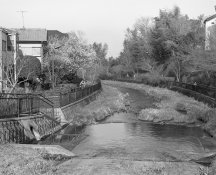
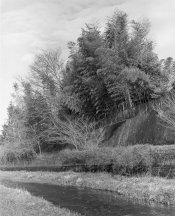
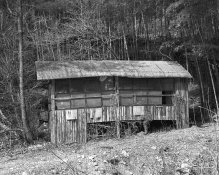
It didn't stop raining until late in the afternoon today but I took a quick stroll with T-Max 400 loaded in the RB. I developed it in T-Max dev. for 7 minutes at 20C. The photos weren't particularly spectacular but I was very happy with the film and the development seemed ok for a first try too.

original.jpg

original.jpg

original.jpg

I'll try developing the next roll in SPD and see how it looks.
 
OP
OP

revdocjim

Member
Allowing Ads
Joined
Nov 17, 2010
Messages
357
Location
Tokyo
Format
Multi Format
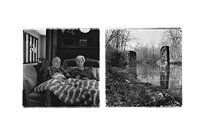
I developed the second roll of T-Max 400 in Fujifilm Super Prodol (SPD). I looked at various numbers on the MDC and found it all rather confusing. Anyway, I decided to use a very generic number and developed it for 7 minutes, the same as I did with the T-Max developer. The good news is that I thought the results were just fine!

0017.jpg

0044.jpg

0087.jpg
 
Joined
Jan 21, 2003
Messages
15,715
Location
Switzerland
Format
Multi Format
I developed the second roll of T-Max 400 in Fujifilm Super Prodol (SPD). I looked at various numbers on the MDC and found it all rather confusing. Anyway, I decided to use a very generic number and developed it for 7 minutes, the same as I did with the T-Max developer. The good news is that I thought the results were just fine!

And, when you take time to fine tune the results you will likely get something even better than 'just fine' and turn to excellent. A developer undeniably has some characteristics that make it unique. In reality though, most of those differences can be overcome by altering technique. It's mainly a thing of sinking your teeth into it and finding the best way.
 
OP
OP

revdocjim

Member
Allowing Ads
Joined
Nov 17, 2010
Messages
357
Location
Tokyo
Format
Multi Format
Any film will work with any developer (within reason, and excluding specialty films).

Just try it. There is nothing telling you you will like the results until you've tried it for yourself. Shoot a roll of the TMax 400 and bracket a normal and Plus/Minus a stop. Develop in the Fuji developer according to the Neopan 400 time. Focus on shadow detail only when you inspect the negs. Pick the film speed you like the shadow detail in best, and now shoot an entire roll at that speed.
In the dark cut the film in three pieces. Save two of them in a light tight container for later. Develop one third, and now inspect the entire tonal range. If contrast is too high, reduce developing time. If contrast is too low, increase time. Adjust until you have a good base line.

This approach is MUCH better than finding something on the internet that somebody else did.

Thomas,
As I've re-read this post of yours I find myself unclear about the procedure you suggest. When you talk about bracketing, I presume you mean three shots of each scene with different exposure settings. Of course I can achieve that by adjusting the shutter speed or the aperture; but then you talk about picking the film speed I like best for shadow detail. I'm not sure what you mean by "film speed". Are you talking about shutter speed? Or ISO? Sorry if I'm slow to catch on. You then go one to say I should "shoot an entire roll at that speed." So once again, by "at that speed" do you mean at a particular shutter speed, aperture. Or do you mean picking an exposure value or EV comp value such as "minus one stop", "plus one stop" or "normal exposure"?

Once again, sorry to trouble you with the elementary questions.
 
Joined
Jan 21, 2003
Messages
15,715
Location
Switzerland
Format
Multi Format
Thomas,
As I've re-read this post of yours I find myself unclear about the procedure you suggest. When you talk about bracketing, I presume you mean three shots of each scene with different exposure settings. Of course I can achieve that by adjusting the shutter speed or the aperture; but then you talk about picking the film speed I like best for shadow detail. I'm not sure what you mean by "film speed". Are you talking about shutter speed? Or ISO? Sorry if I'm slow to catch on. You then go one to say I should "shoot an entire roll at that speed." So once again, by "at that speed" do you mean at a particular shutter speed, aperture. Or do you mean picking an exposure value or EV comp value such as "minus one stop", "plus one stop" or "normal exposure"?

Once again, sorry to trouble you with the elementary questions.

Hello,

Film speed = shadow detail.

If you shoot ISO 400 film, photograph in normal contrast lighting conditions, and expose the same scene three times; once at EI 200, once at EI 400, and once at EI 800 (EI = Exposure Index). Don't change aperture, only exposure time (double for EI 200 and half for EI 800; this is called bracketing).
When you process the negatives, you judge shadow detail to see at which 'film speed' you had adequate shadow detail. It could be 200, 400, or 800, and you judge by printing the negatives, or making contact sheets. Use the same paper every time, for both contacts and prints. (If you scan it's a similar process, but I honestly don't know how to judge shadow detail with a scanner, so you're on your own if that's your process). Whatever your preferred film speed is (200, 400, or 800), for the results that you desire, that now becomes your 'normal' film speed (in normal contrast lighting). Exposure largely determines your shadow detail, which is why we're not focusing on developing time yet. This is half the part of "exposing for the shadows, and developing for the highlights".

After you establish your own film speed, you focus on the rest of the tone spectrum, and "develop for the highlights", which is why you expose a full roll at your chosen film speed, cutting the film strip into thirds, and adjusting your development time to get the highlights and mid-tones to look good.

With this approach of trial and error, you stand a much better chance at arriving at a film speed setting that works for you, and your personal film development time is also a bonus.

In time you will notice that high contrast lighting will require a different approach, and low contrast yet another. But finding a good solid method for getting the right speed out of your chosen emulsion, and a calibrated development time will save you tons of trouble in the darkroom when you print, or when you scan your treasures. It's the least amount of care we should give our films to begin to fully understand how everything works and hangs together. It's a good start.

If you change film, developer, or paper, you should do this process over again.
 
OP
OP

revdocjim

Member
Allowing Ads
Joined
Nov 17, 2010
Messages
357
Location
Tokyo
Format
Multi Format
Thomas, thanks so much! Your explanation makes perfect sense now and is very helpful. I will take some time to give it a careful try!
As you suspected, I am scanning my negatives but can do exactly as you describe because while I often let the software automatically make some adjustments to the contrast and levels when scanning I can just as easily tell it to do nothing and scan the negatives as is.
 
Photrio.com contains affiliate links to products. We may receive a commission for purchases made through these links.
To read our full affiliate disclosure statement please click Here.

PHOTRIO PARTNERS EQUALLY FUNDING OUR COMMUNITY:


Ilford ADOX Freestyle Photographic Stearman Press Weldon Color Lab Blue Moon Camera & Machine
Top Bottom