
I'm making the switch from Tri-X and T-Max 3200 to HP5+ and Delta 3200. I have been using home brew D-23, Thornton's divided developer, or D-76h. Of these, I only see D-76 listed on Ilford's tech sheets and only with stock for 3200. Are any of these usable diluted with 3200 at 1600? What about other home brews? I really don't want to go back to proprietary developers.
-
Welcome to Photrio!Registration is fast and free. Join today to unlock search, see fewer ads, and access all forum features.Click here to sign up
You are using an out of date browser. It may not display this or other websites correctly.
You should upgrade or use an alternative browser.
You should upgrade or use an alternative browser.
Developer for Ilford Delta 3200
-
A
- Thread starter presspass
- Start date
Recent Classifieds
-
For Sale Mint Nikon Lenses
- Started by Barlow
-
For Sale 3 Mint Nikon D2X Camera Bodies
- Started by Barlow
-
For Sale Minolta SR Extension Tube Set
- Started by Jon Shiu
-
For Sale Job Lot of Out of Production B&W Paper - UK only.
- Started by Gary Holliday
-
Sold Rollei RPX 135-36
- Started by Roger Thoms
Forum statistics

I've seen really nice results with Delta 3200 @ 1600 using perceptol. There's a simple home brew Perceptol-like formula too.
The most common is:
5g/L Metol
100g/L Sodium Sulphite (Anh)
30g/L Sodium Chloride
The most common is:
5g/L Metol
100g/L Sodium Sulphite (Anh)
30g/L Sodium Chloride


- Joined
- Dec 10, 2005
- Messages
- 495
- Format
- 35mm RF
Ilford DD-X or XTOL.

Tmax Developer. Kodak designed it to push Tmax films, and in my extensive experience with Tmax 3200, it was far and away the best developer for that fast film. When I began using Ilford's Delta 3200, I tried Tmax Developer since it worked so well for Kodak's very similar 3200 film. It worked just as beautifully for Delta 3200 as it did for the Tmax 3200. Here are some examples of the Ilford 3200 in Tmax Developer.
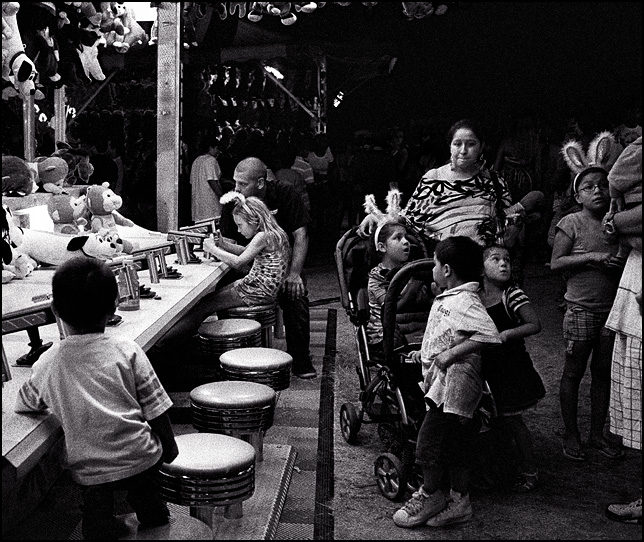
EI-3200
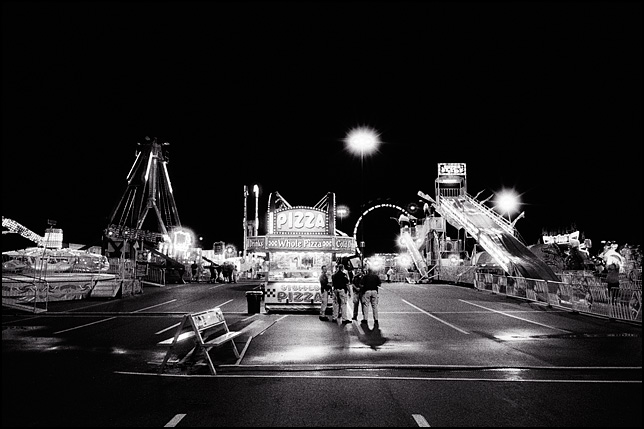
EI-1600
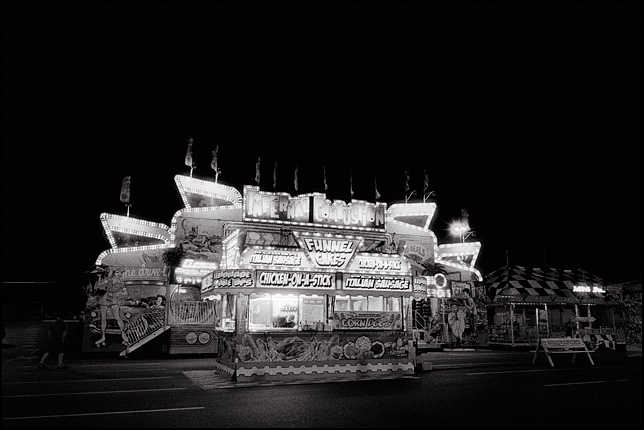
EI-1600
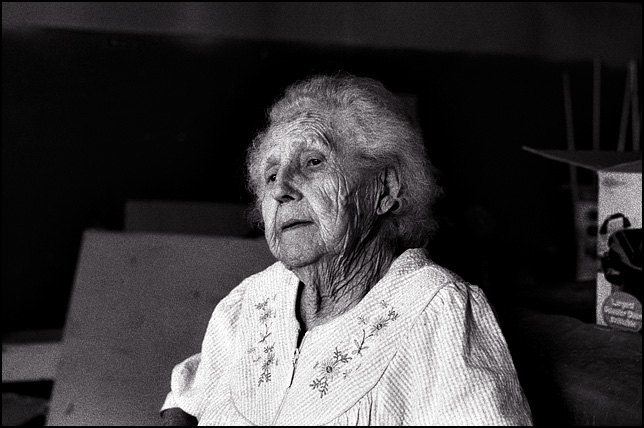
EI-1600. This is inside a VERY dark bar. The old woman is Mary Mora, the 96 year old owner of the bar in the tiny town of Cerrillos, New Mexico.
EI-3200
EI-1600
EI-1600
EI-1600. This is inside a VERY dark bar. The old woman is Mary Mora, the 96 year old owner of the bar in the tiny town of Cerrillos, New Mexico.

If I were picking one developer to use with both HP5 and Delta 3200 it'd be ID-11 (D-76). If just one developer for Delta 3200 it'd be Xtol, or DD-X.

Depends what you are trying to do with it. When I shoot Delta 3200 it's for speed. If 1250 will do it I shoot Tri-X in Diafine. So I typically shoot 3200 at 3200. I develop in T-Max developer but might switch to DD-X when I run out. T-Max works well for it though. I develop per instructions for 6400 when shot at 3200 with results I really like.
Tmax Developer. Kodak designed it to push Tmax films, and in my extensive experience with Tmax 3200, it was far and away the best developer for that fast film. When I began using Ilford's Delta 3200, I tried Tmax Developer since it worked so well for Kodak's very similar 3200 film. It worked just as beautifully for Delta 3200 as it did for the Tmax 3200. Here are some examples of the Ilford 3200 in Tmax Developer.
Saw the images before but skipped over your text - agree completely. It works great with Delta 3200.
I posted a few of my results before in another thread on Delta 3200:
http://home.comcast.net/~ragnar93/Temp/Anachrocon1b.jpg
Delta 3200 in T-Max developer, shot at EI 3200, developed per time for 6400:


Saw the images before but skipped over your text - agree completely. It works great with Delta 3200.
I posted a few of my results before in another thread on Delta 3200:
http://home.comcast.net/~ragnar93/Temp/Anachrocon1b.jpg
Delta 3200 in T-Max developer, shot at EI 3200, developed per time for 6400:
You guys are ruining my plans to get away from Kodak entirely... Tmax developer hmmm... Erg....
~Stone
The Noteworthy Ones - Mamiya: 7 II, RZ67 Pro II / Canon: 1V, AE-1 / Kodak: No 1 Pocket Autographic, No 1A Pocket Autographic
Sent from my iPhone using Tapatalk


Delta 3200 with its comparatively strong grain is preferably used when it is dark, so the choice of developer should account for that:
- You are ready to accept some grain but want to shoot at high EI, which calls for developers which can reach the maximum emulsion speed of this film. Think Microphen and its home brew variant ID-68, Xtol/Mytol/Mark Overton's (there was a url link here which no longer exists)/Ryuji Suzuki's DS-10, there are also some Crawley formulas for achieving maximum emulsion speed.
- You could want to go beyond emulsion speed, i.e. push the hell out of it, grain be damned. Look for developers recommended for pushing, either the ones listed above, or, as I have been told but those more knowledgeable than me, D76 supposedly pushes better than any other dev. If you like to experiment, someone pushed Tri-X to EI 25600 with his "push soup". He uses a mix of proprietary developers, though, but only the HC-110 part is difficult to impossible to home brew for mortals, and chances are it could be replaced if one tries.
- Another issue with night shots is their extreme contrast. It's not only from light sources in your frame, and from lack of a highly diffused fill light source (aka the sky), you also have to account for reciprocity failure with long exposures. To deal with this I had some very nice results with Delta 3200 and ultra low contrast developers (think POTA). The Dead Link Removed has a nice chapter on these developers, highly recommended!
If you look on the Ilford website they give recommended film/developer combinations for all their films. I think you will find somewhere in there the ubiquitous ID11 is listed.
Whilstm on the subject of film/developer combinations I found out a while ago that the times given on the inside of the box can be incorrect. That is how I know about the Ilford development sheets.
Whilstm on the subject of film/developer combinations I found out a while ago that the times given on the inside of the box can be incorrect. That is how I know about the Ilford development sheets.
I've been using the massive dev chart app in my iPhone for push times, it seems fairly accurate haha, talk about a non-film device helping keep my film usage happy...
~Stone
The Noteworthy Ones - Mamiya: 7 II, RZ67 Pro II / Canon: 1V, AE-1 / Kodak: No 1 Pocket Autographic, No 1A Pocket Autographic
Sent from my iPhone using Tapatalk
~Stone
The Noteworthy Ones - Mamiya: 7 II, RZ67 Pro II / Canon: 1V, AE-1 / Kodak: No 1 Pocket Autographic, No 1A Pocket Autographic
Sent from my iPhone using Tapatalk
Stand develop in rodinal 1:100 for more luminous shadows and controllable highlights. Or use a divided developer. In either event, a compensating developer will deliver the most printable results on traditional photo paper (ddx developed 3200 scanned is another story). If you don't like grain, shoot with slower film in more light.
- removed account8
- Deleted

If you are shooting 35mm, don't develop delta 3200 in Rodinal unless you like golfball sized grain.
I use DDX. I was lucky enough to get a couple of cases of it cheap when they closed down the darkroom at the local community college. I'm afraid I can't give you advice on home brew devs, as my only experience is with pyro for LF negs.
I use DDX. I was lucky enough to get a couple of cases of it cheap when they closed down the darkroom at the local community college. I'm afraid I can't give you advice on home brew devs, as my only experience is with pyro for LF negs.
You guys are ruining my plans to get away from Kodak entirely... Tmax developer hmmm... Erg....
~Stone
The Noteworthy Ones - Mamiya: 7 II, RZ67 Pro II / Canon: 1V, AE-1 / Kodak: No 1 Pocket Autographic, No 1A Pocket Autographic
Sent from my iPhone using Tapatalk
I'm sure DD-X, which is probably similar, works as well or better. I've just always liked T-Max developer for the T-Max films so I had it. If you're just buying something for this film, I'd go with it or DD-X myself, or possibly Xtol. I would heed the advice for pushing to develop for one stop more than you expose for, however. I think the recommendations are for the least development that will do the job to keep grain from growing too much but I think both Delta 3200 and TMZ look better when given more development.
I'm sure DD-X, which is probably similar, works as well or better. I've just always liked T-Max developer for the T-Max films so I had it. If you're just buying something for this film, I'd go with it or DD-X myself, or possibly Xtol. I would heed the advice for pushing to develop for one stop more than you expose for, however. I think the recommendations are for the least development that will do the job to keep grain from growing too much but I think both Delta 3200 and TMZ look better when given more development.
Wait is DD-X the equivalent developer to Tmax? I thought there was NO true equivalent?
~Stone
The Noteworthy Ones - Mamiya: 7 II, RZ67 Pro II / Canon: 1V, AE-1 / Kodak: No 1 Pocket Autographic, No 1A Pocket Autographic
Sent from my iPhone using Tapatalk
- removed account8
- Deleted
It is very similar in its working properties.
But I thought perceptol was better for fine grain? I'm about to put in an order so any info might change my purchase...
~Stone
The Noteworthy Ones - Mamiya: 7 II, RZ67 Pro II / Canon: 1V, AE-1 / Kodak: No 1 Pocket Autographic, No 1A Pocket Autographic
Sent from my iPhone using Tapatalk
- Joined
- Aug 31, 2006
- Messages
- 2,196
- Format
- Multi Format
Wait is DD-X the equivalent developer to Tmax?
Well, not really. Both are designed for high speed, and are very good for push processes.
But DDX delivers finer grain (I did side by side comparisons under identical test conditions).
I thought there was NO true equivalent?
There is one: Tetenal Ultrafin Plus. This developer has an almost identical formular compared to T-Max developer. You cannot distinguish the results of these two developers.
Best regards,
Henning
- removed account8
- Deleted
Well, not really. Both are designed for high speed, and are very good for push processes.
But DDX delivers finer grain (I did side by side comparisons under identical test conditions).
There is one: Tetenal Ultrafin Plus. This developer has an almost identical formular compared to T-Max developer. You cannot distinguish the results of these two developers.
Best regards,
Henning
So DD-X delivers finer grain than Kodak's T-Max? Is this the popular opinion? So DD-X with delta then for sure?
Except maybe D3200 which would go best with Microdol(or whatever the name is) and pan F with perceptol(or whatever the name is) but what about Ilfsol 3? I thought THAT was the best for low ASA fine grain?
~Stone
The Noteworthy Ones - Mamiya: 7 II, RZ67 Pro II / Canon: 1V, AE-1 / Kodak: No 1 Pocket Autographic, No 1A Pocket Autographic
Sent from my iPhone using Tapatalk
Stone: apples and oranges.
DDX, TMax RS are fine grain PQ general purpose developers. They are designed to give full emulsion speed, good sharpness and grain. TMax RS was originally developed to get the most out of TMax films (which are finer grained than more traditional films). Later XTOL became another option which still gives good speed but with finer grain. Ilford presumably developed DDX primarily for its tabular Delta films since it is recommended by Ilford for those films. Compared with say D76/ID11, DDX and TMax RS developers will tend to give slightly higher grain and slightly higher speed.
Perceptol is an extra-fine grain developer. It is a D23-variant designed for finer grain (Metol/Sulfite/Sodium Chloride) via lower pH and a high degree of solvent action. In exhange you get reduced sharpness and a speed loss of at least one stop. You can dilute it for slightly more grain and better sharpness but in my testing even at a 1+3 dilution it is best to accept at least 1 stop of lost speed or else you lose the extra fine grain effect and gain virtually nothing else.
Most people tend to favour sharper developers with more speed than Perceptol with tabular films since they are already relatively fine grained to begin with. I would say Perceptol with a fast tabular film like Delta 3200 is an odd match. It's not as though a super fine grain developer is going to make D3200 look fine grained. You'll just get mushier-looking grain. There's only so much you can do to alter a film's inherent image characteristics - and if you do you inevitably make compromises.
Michael
Sorry I had miss-typed, I meant Microdol with D3200...
Also, ok so then what exactly is "sharpness" I know being that I have done this for 18 years I should know but it's still confusing you would think finer grain would inherently give a sharper look, this is NOT true, so I would prefer my images look sharper (can i say crisper?) to finer grain since no one is looking at the grain on a wall.
Of all the ilford and Kodak films I've developed I found Pan F+ to be the sharpest/fine grain looking images and I developed it all in Ilfsol 3 because that's all I have since that's what B&H stocks on the shelves and I seem to like liquid over powers (all the color developing I have done was with powders).
But I'm ready to buy more developers and I just don't want to get stuck with something I don't like but I realize using Ilfsol 3 only is limiting and it's supposed to be best for low ASA films only. But should I even use it? No one ever talks about it, but it's ilfords newest developer I THINK so maybe it's better but no one has tried it?
~Stone
The Noteworthy Ones - Mamiya: 7 II, RZ67 Pro II / Canon: 1V, AE-1 / Kodak: No 1 Pocket Autographic, No 1A Pocket Autographic
Sent from my iPhone using Tapatalk
- removed account8
- Deleted
This is grainy film - no way around that. As such you should focus on tonality and acutance. Realize that the nominal asa is closer to 1000, not 3200. If you want good tonality, rate it at 1000. Someone has already rightly pointed out that low light scenes are inherently more contrasty than not. Attempting to squeeze more film speed with extended developer times will lead to insanely dense highlights, blocked middle tones and no increased density in the shadow areas.
I used to have a job shooting this stuff for aerial night photography. The preliminary part of the job was to test it with numerous developers. Surprise!...I discovered that compensating developers gave negs that yielded the most pleasing, easy to print results. At the time Cachet AB55 worked best(since discontinued) , followed by dilute ddx (gentle agitation scheme), and diafine. Now I prefer rodinal stand precisely for these reasons - eminently printable and razor-like acutance. There's really no point in using fine grain developers with high speed films like delta 3200. The results will look soft and blotchy.
Now, at some point you'll have to stop asking questions about the myriad developer formulas and try it out yourself - either shoot or get off the pot!
I used to have a job shooting this stuff for aerial night photography. The preliminary part of the job was to test it with numerous developers. Surprise!...I discovered that compensating developers gave negs that yielded the most pleasing, easy to print results. At the time Cachet AB55 worked best(since discontinued) , followed by dilute ddx (gentle agitation scheme), and diafine. Now I prefer rodinal stand precisely for these reasons - eminently printable and razor-like acutance. There's really no point in using fine grain developers with high speed films like delta 3200. The results will look soft and blotchy.
Now, at some point you'll have to stop asking questions about the myriad developer formulas and try it out yourself - either shoot or get off the pot!
- Joined
- Dec 10, 2005
- Messages
- 495
- Format
- 35mm RF
I've shot a lot of D3200. Probably a few hundred rolls. I tried everything from D76 to XTOL and ultimately I got the best results shooting it at 1600asa and developing in DD-X. As has been mentioned earlier Ilford kind of intended the two to go hand in hand. Tonality looks great and the grain is reasonable. As has been mentioned, this is not a fine grain film, but it's not going to look like popcorn either. Another advantage of DD-X is that it is a 1L liquid concentrate and easy to handle. XTOL is a powder that mixes up in 5L batches, which is a lot more work.

What is "sharpness"? What a wonderful question 
Sharpness is made up of three inter-related components, and should probably be referred to as "perceived sharpness" because it is both objective and subjective.
One of the components of "sharpness" is resolution - the capacity to render fine details. It can be objectively measured, and people tend to obsess over it, but relatively speaking resolution contributes the least amount to "sharpness".
Generally speaking, with respect to films the finer the grain, the higher the resolution. With respect to developers, see below.
The next component of "sharpness" is contrast. By contrast I refer to both overall range of light to dark - dynamic range - and so-called micro-contrast - the contrast between adjacent small details with different tones.
The perception of sharpness is strongly affected by both the overall dynamic range of the image and how clearly contrasts between adjacent tones reveal themselves. For this reason, high key images don't usually strike the viewer as being very "sharp" even when they reveal a tremendous amount of detail, whereas images that have both deep shadows and sparkling highlights tend to look sharp even when they reveal minimum amounts of detail.
High contrast films (like copy films) tend to give results that appear sharper for a number of reasons, including the fact that they have high inherent contrast.
Some developers enhance the contrast capabilities of films (think lithographer's materials).
The most important component of perceived sharpness is acutance - how accurately the film renders sharp edges of details. We perceive edges of details very well, and the rendering of those edges has the greatest effect on our perception of sharpness. Techniques such as unsharp masking are used to emphasize edges, and therefore enhance perceived sharpness.
Where edges are rendered using discrete film grains (more accurately: discrete clumps of grains) the smaller those grains are, the better they are at representing a fine edge. So one would think that finer grain film would inevitably appear sharper. There is, however, another factor that comes to play. Our ability to perceive edges is very advanced. So advanced, in fact, that the rendering of the individual clumps of grains influences us. If the edges of the grains appear sharp, the image will appear more sharp to us. This effect actually manifests itself in a way where film that exhibits sharp edged large grain will often appear sharper than film that exhibits softer edged small grain.
This is where the choice of developer is so important. Developer has a large effect on the appearance of grain. A higher acutance, normal grain developer used with a film that has larger grain (think Rodinal and Tri-X) appears sharper than a small grain film in a mid-level acutance developer (think X-Tol and TMY2), even though the resolution capability of the latter combination is much higher.
So-called "fine grain" developers do reduce the size of the grain somewhat, but more importantly they reduce the appearance of the grain by softening the appearance of the edge of the clumps of grain. The graininess of the image is reduced, at the expense of the acutance - thus reducing the appearance of sharpness.
When choosing films and developers, be careful about emphasizing "sharpness" or "graininess" over other concerns.
As an aside that is only slightly relevant to APUG, the "sharpen" controls available in photo editing software all work by artificially enhancing edges. Both analogue and digital capture methods disrupt the rendering of edges, due to the fact that they break the details into discrete entities (either film grains/dye clouds or pixels) so a tool that attempts to "repair" that disruption is needed, but any such tool really can only at best approximate reality.
Sharpness is made up of three inter-related components, and should probably be referred to as "perceived sharpness" because it is both objective and subjective.
One of the components of "sharpness" is resolution - the capacity to render fine details. It can be objectively measured, and people tend to obsess over it, but relatively speaking resolution contributes the least amount to "sharpness".
Generally speaking, with respect to films the finer the grain, the higher the resolution. With respect to developers, see below.
The next component of "sharpness" is contrast. By contrast I refer to both overall range of light to dark - dynamic range - and so-called micro-contrast - the contrast between adjacent small details with different tones.
The perception of sharpness is strongly affected by both the overall dynamic range of the image and how clearly contrasts between adjacent tones reveal themselves. For this reason, high key images don't usually strike the viewer as being very "sharp" even when they reveal a tremendous amount of detail, whereas images that have both deep shadows and sparkling highlights tend to look sharp even when they reveal minimum amounts of detail.
High contrast films (like copy films) tend to give results that appear sharper for a number of reasons, including the fact that they have high inherent contrast.
Some developers enhance the contrast capabilities of films (think lithographer's materials).
The most important component of perceived sharpness is acutance - how accurately the film renders sharp edges of details. We perceive edges of details very well, and the rendering of those edges has the greatest effect on our perception of sharpness. Techniques such as unsharp masking are used to emphasize edges, and therefore enhance perceived sharpness.
Where edges are rendered using discrete film grains (more accurately: discrete clumps of grains) the smaller those grains are, the better they are at representing a fine edge. So one would think that finer grain film would inevitably appear sharper. There is, however, another factor that comes to play. Our ability to perceive edges is very advanced. So advanced, in fact, that the rendering of the individual clumps of grains influences us. If the edges of the grains appear sharp, the image will appear more sharp to us. This effect actually manifests itself in a way where film that exhibits sharp edged large grain will often appear sharper than film that exhibits softer edged small grain.
This is where the choice of developer is so important. Developer has a large effect on the appearance of grain. A higher acutance, normal grain developer used with a film that has larger grain (think Rodinal and Tri-X) appears sharper than a small grain film in a mid-level acutance developer (think X-Tol and TMY2), even though the resolution capability of the latter combination is much higher.
So-called "fine grain" developers do reduce the size of the grain somewhat, but more importantly they reduce the appearance of the grain by softening the appearance of the edge of the clumps of grain. The graininess of the image is reduced, at the expense of the acutance - thus reducing the appearance of sharpness.
When choosing films and developers, be careful about emphasizing "sharpness" or "graininess" over other concerns.
As an aside that is only slightly relevant to APUG, the "sharpen" controls available in photo editing software all work by artificially enhancing edges. Both analogue and digital capture methods disrupt the rendering of edges, due to the fact that they break the details into discrete entities (either film grains/dye clouds or pixels) so a tool that attempts to "repair" that disruption is needed, but any such tool really can only at best approximate reality.
Stone, to a large degree yes fine grain and sharpness (you could call it crispness) are at opposite ends when balancing a developer's characteristics. It gets a little more complicated with more dilute developers where edge effects come into play, but don't worry about that. Just know that generally the finer grain a developer is formulated to produce, the less sharp the edges of the grain will be.
Most general purpose solvent developers like D76/ID11, DDX, XTOL, TMax RS, Ilfosol etc etc are designed to give a good balance of both fine grain and good sharpness, without going too far in either direction. Developers like Rodinal, FX2, Beutler, and Pyro favour sharpness over fine grain. Developers like Microdol/Perceptol favour fine grain over sharpness.
The differences become a little less clear if you alter dilutions, agitation etc. Generally the more you dilute a solvent developer the sharper it will get, with the tradeoff of higher graininess.
What I would say is that from a grain or sharpness perspective you won't have a whole lot to gain or lose by switching from Ilfosol to DDX or TMax. What DDX or TMax RS offer is somewhat higher speed, at least with tabular grained films.
How you use the developer is important and gives you some flexibility with respect to graininess and sharpness. And of course you can also control contrast (and film speed to some extent). So it is more about how you practice using the film/developer combination than switching developers. Many of the differences between similar types of developers are quite small. So I would not consider yourself limited in any way with Ilfosol. I have not used it myself but I'm sure it can do whatever you need it to do.
If you want to learn a little more about the general types of developers, films and how they work together consider buying a copy of The Film Developing Cookbook. It's a pretty good compilation of information from good sources, and is easy to follow. This might help you decide whether you should stick with what you are using or perhaps go in a different direction.
That was a very easy to understand and thorough explanation thanks! I wish you could "favorite" certain parts of a thread and save them so you don't lose them and can refer back to them without reading through 20 pages of response... Alas...
Ok (and sorry to hijack this thread) but I am not an optical printer, I use a scanner, so scanability is HUGE for me, if a scanner reads grain better, I can always sharpen in post (which I'm slowly learning how to do) but if a scanner likes sharpness over grain I would go that rout, all I know is for B&W of TX400@400, tmax400@400, Pan F+@50, D3200@3200 and TX400@3200 and a few others, all developed in Ilfsol 3, the best was pan F in both crisp looking at full image and grain at 1:1 viewing, D3200 was better at 1:1 in the grain not having a blurry edge over everything but tmax which was still blurrier than pan F.
This whole system is crazy haha I never used to think about this when I sent everything out, so I never really knew much and it's a bit overwhelming at times and if I had more $ I could risk just trying out different combo's but instead need to be more careful before I jump in.
I'm going to re-read your post a few times more, but, I thought Ilfsol 3 wasn't as good for high ASA's and only good for 50-100, at least I read that on ilfords site somewhere, I also get turned off by the words "general purpose" because I often equate that to CRAP like you would call Kodak Gold film a general purpose film... Haha.
I just want to know if I can get any more out of my Pan F+ from a different developer is all.
I also have some tech pan and some plus-x that I want to take advantage of so I was thinking Adonol and Acros is cheaper than Delta 100 so I don't know if acros is traditional or Tgrain and what best to use with that?
So, if I understand things, I've listed film combo's, would you change any of the following? And if its an OR, can you suggest a preferred choice?
New Stuff I'll use a lot...
Pan F+ - Ilfsol 3 OR Adonol?
Acros - Ilfsol 3 OR Adonol? OR ID-II?
Delta 400 - DD-X
Delta 3200 - DD-X
Old stock I want to take full advantage of...
Technical Pan - Adonol?
Plus-X - Adonol? OR ID-II?
I have a lot of 70mm C-41 (like a few hundred feet) that I think I may cross process as B&W so if one of the developers that would be best for only say one type of film up there, but I could also use for the x-process it would be ok to say get THIS lol.
Few! Ok I'll look at getting that book, thanks in advance for a second reply as well

~Stone
The Noteworthy Ones - Mamiya: 7 II, RZ67 Pro II / Canon: 1V, AE-1 / Kodak: No 1 Pocket Autographic, No 1A Pocket Autographic
Sent from my iPhone using Tapatalk
| Photrio.com contains affiliate links to products. We may receive a commission for purchases made through these links. To read our full affiliate disclosure statement please click Here. |
PHOTRIO PARTNERS EQUALLY FUNDING OUR COMMUNITY:  |