• Welcome to Photrio!
    Registration is fast and free. Join today to unlock search, see fewer ads, and access all forum features.
    Click here to sign up

Daylight lamps in lightbox to test film for use in daylight?

feeling grey

A
feeling grey

  • 1
  • 0
  • 25
Inconsequential

H
Inconsequential

  • 2
  • 0
  • 38

Recent Classifieds

Forum statistics

Threads
201,800
Messages
2,830,394
Members
100,961
Latest member
pisimimail
Recent bookmarks
0

Oscar Carlsson

Member
Allowing Ads
Joined
Oct 15, 2009
Messages
231
Location
Stockholm, Sweden
Format
Multi Format
Daylight is not very long here, so I'm trying to understand if I can use a few daylight balanced lamps in a lightbox to photograph a step tablet. The goal is to test film which I mainly use for daylight work, and I'll be testing with the method described in Way Beyond Monochrome. I'll use my RH Analyzer as my densitometer (under my enlarger).

Will it be good enough?

Since I have to do my testing with full tanks (mod54) it will be 30 sheets in total so I'd like to avoid wasting my time and my film. I combine the test sheets with normal sheets so it's not a total waste but still. :smile:
 

MattKing

Moderator
Moderator
Allowing Ads
Joined
Apr 24, 2005
Messages
55,167
Location
Delta, BC Canada
Format
Medium Format
What type of bulbs - incandescent, fluorescent or LED?
 

MattKing

Moderator
Moderator
Allowing Ads
Joined
Apr 24, 2005
Messages
55,167
Location
Delta, BC Canada
Format
Medium Format
If you look at the product data sheet you will see that it has a CRI of "greater than or equal than 80" and a fairly discontinuous spectrum. I would be concerned about using it for your intended purpose.

That being said, there may be others who have actually tried what you want to do, and had good results.

Here is a link to the data sheet: http://www.osram.com.au/appsinfo/pd...813&mpid=ZMP_58705&vid=PP_APAC_AU_eCat&lid=EN
 

darkroommike

Subscriber
Allowing Ads
Joined
Mar 22, 2007
Messages
1,738
Location
Iowa
Format
Multi Format
Traditionally this was done with incandescent photofloods and an 80A filter but the stinker to all these methods is that the bulbs start to change as soon as you run the current through them the first time. Ditto for florescent lamps. LED's are better that way but many are not full spectrum light sources.
 

Gerald C Koch

Member
Allowing Ads
Joined
Jul 12, 2010
Messages
8,131
Location
Southern USA
Format
Multi Format
I don't understand the purpose of your test using a step wedge with regard to a particular light source. Daylight and tungsten illumination differ only by the color temperature. The color temperature would have little effect on a panchromatic B&W film as regards to film speed. Your concern should be with the total number of lumens that the bulb produces.
 
Last edited:
OP
OP
Oscar Carlsson

Oscar Carlsson

Member
Allowing Ads
Joined
Oct 15, 2009
Messages
231
Location
Stockholm, Sweden
Format
Multi Format
I don't understand the purpose of your test using a step wedge with regard to a particular light source. Daylight and tungsten illumination differ only by the color temperature. The color temperature would have little effect on a panchromatic B&W film as regards to film speed. Your concern should be with the total number of lumens that the bulb produces.

I think I have to read up on lumens, then. My concern was that different light sources would yield different results for this calibration, that I would have a lower effective EI when calibrated with fluorescent light than with daylight etc

I might have some time in daylight available tomorrow so I could probably setup the necessary bits then. I think taping a step wedge to some diffuser and then put it on a window, and mask the area around the step wedge to reduce flare.
 

Gerald C Koch

Member
Allowing Ads
Joined
Jul 12, 2010
Messages
8,131
Location
Southern USA
Format
Multi Format
With the phasing out of incandescent light bulbs the watt can no longer be used as a measure of light output. The number of lumens that a bulb produces should now be conspicuously displayed on the box. You could measure the light output of a particular bulb with a meter and then use the sunny-16 rules to calculate an exposure value.
 

ic-racer

Member
Joined
Feb 25, 2007
Messages
16,728
Location
USA
Format
Multi Format
Use 3200k lamps and an 80A. That is how I did it before I got a white-light sensitometer.
 

ME Super

Member
Allowing Ads
Joined
Apr 17, 2011
Messages
1,479
Location
Central Illinois, USA
Format
Multi Format
Last year at Christmastime I relit two rooms in my house with daylight balanced (5000K) LED bulbs. I proceeded to shoot some Portra 400 under those bulbs. The results turned out pretty well (I pushed 3 stops). You can see results here: (there was a url link here which no longer exists).

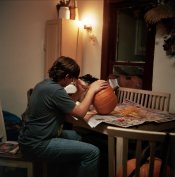
I also shot some Portra 400 in 120 under these same bulbs around Halloween. Here's a sample of that, no push (it may be slightly underexposed):
img.jpg
The bulb in the background is an ordinary incandescent (we still have a few around) but the primary light was the aforementioned 5000K LED bulbs. There are 3 in this room, 800 lumens each (60W equivalent bulbs).

I haven't tried it with E-6 film yet, since E-6 only comes in ISO 50 and 100 right now. :sad: But IMHO it looks pretty good with color negative film.
 
Last edited:

wiltw

Subscriber
Allowing Ads
Joined
Oct 4, 2008
Messages
6,701
Location
SF Bay area
Format
Multi Format
With the phasing out of incandescent light bulbs the watt can no longer be used as a measure of light output. The number of lumens that a bulb produces should now be conspicuously displayed on the box.

Long, long before the phase out of incandescent bulbs, the Watt rating merely conveyed the consumption of electricity (Volts * Amps) and had NO CORRELATION to light output (measured in lux or lumens). So-called 60W bulbs differed dramatically in Lux rating, even from the same manufacturer...for example, 'Long life' vs. standard bulb Lux values differed when both were supplied by G.E.
 
Last edited:

ic-racer

Member
Joined
Feb 25, 2007
Messages
16,728
Location
USA
Format
Multi Format
I'm not phasing out incandescent lamps. I have plenty.
 

MattKing

Moderator
Moderator
Allowing Ads
Joined
Apr 24, 2005
Messages
55,167
Location
Delta, BC Canada
Format
Medium Format
Just for clarity, the problem that arises from using certain non-daylight light sources arises because of the differences in response of film and light meters to the light source. If you calibrate everything (your metering, your development, your printing) using one light source and then use another light source to expose most of your pictures, your calibration may be off.
 

DREW WILEY

Member
Allowing Ads
Joined
Jul 14, 2011
Messages
14,872
Format
8x10 Format
"Daylight" lamps are just an old half-baked marketing tweak to fool the eye into something less harsh than sick ole cool white. Don't expect these kinds of tubes to behave like actual sunlight. And talking to a lighting expert a few days ago on this very them, don't expect LED lighting to be even
close yet either, even the expensive bulbs. CFL's are the worst of all. You can buy very high CRI (up to 98) tube fluorescent color matching bulbs in
5000 Kelvin. But exposing a step tablet this way isn't quite so simple unless you have an electronically stabilized ballast or other suitable manner to
control all the flicker your own eyesight doesn't necessarily detect. True blackbody sources like ordinary photoflood lamps (appropriately filtered) are
going to give better results, but a lot more heat. Nice for a cold winter day project.
 

Gerald C Koch

Member
Allowing Ads
Joined
Jul 12, 2010
Messages
8,131
Location
Southern USA
Format
Multi Format
Long, long before the phase out of incandescent bulbs, the Watt rating merely conveyed the consumption of electricity (Volts * Amps) and had NO CORRELATION to light output (measured in lux or lumens). So-called 60W bulbs differed dramatically in Lux rating, even from the same manufacturer...for example, 'Long life' vs. standard bulb Lux values differed when both were supplied by G.E.

All well and good but the average consumer bought bulbs based on the stated wattage. Old habits die very slowly.
 

bernard_L

Member
Allowing Ads
Joined
Feb 17, 2008
Messages
2,132
Format
Multi Format
Oscar,
I can only guess you intend to test BW film (mention of RH analyzer). In that case, the issue of color balance and CRI is nowhere as critical as for testing color film (someone mentioned Portra 400). And using incandescent bulbs as a lumen calibrated source is out of the question. Matt King nailed it down:
Just for clarity, the problem that arises from using certain non-daylight light sources arises because of the differences in response of film and light meters to the light source.
+1 ! The problem would be especially pronounced if you would use an (un-corrected) CdS meter, with predominant red sensitivity.

If it were me (I have been remotely considering to do the same as you) I would be happy with "daylight" CFL's and worry a lot more about achieving uniform illumination (ideally 0.01 in log illuimination) over the step tablet. And about specular reflections.
 
OP
OP
Oscar Carlsson

Oscar Carlsson

Member
Allowing Ads
Joined
Oct 15, 2009
Messages
231
Location
Stockholm, Sweden
Format
Multi Format
The goal is testing B&W film, yes. I'm wondering if I can use my old tablet (Google Nexus 7 gen 2) with some appropriate app to produce an even light. I will have to diffuse the pixel grid pattern but that should be fairly easy.
 

kreeger

Member
Allowing Ads
Joined
Jun 21, 2009
Messages
207
Location
Missouri
Format
Multi Format
Oscar it's always best to test in actual field conditions, isn't it better to wait till another time in the year when you can photograph more?
 
Last edited:

Bill Burk

Subscriber
Allowing Ads
Joined
Feb 9, 2010
Messages
9,464
Format
4x5 Format
I saw some great graphs on popular mechanics website, I'd share the link but the pages are difficult to see on some devices.

Basically the graphs convinced me that a tungsten light source (with an 80B filter) would be a good choice.

Another type of light I'd recommend is electronic flash, if you can avoid short flash duration times. I use a box with an electronic flash that has a setting for flash duration 1/100th second which helps me minimize reciprocity law problems.

How much does the spectral quality of the light source matter when testing black and white film? It depends how much you are going to worry about the results that you get. I don't worry too much, but to explain what I mean, I'll tell a story.

I've tested 400 speed film with my electronic flash system and found the speed to be closer to 320, even when developed to ASA criteria. I've also tested Panatomic-X which has a rated speed of 32 and I find the speed to be closer to 50. Some of this remains a mystery, but as part of the test for faster film, I have a Kodak No.96 ND filter and another ND filter of unknown characteristics... which brings the light down enough for me to get the right densities to measure the film speed of 400 speed films. These two filters might alter the spectral characteristics of my light and it might be simply that Panatomic-X is more sensitive to a part of the spectrum of light that my filters transmit readily (for example Infrared light might pass easily through the ND filter).

If these little mysteries won't bother you, then really, any light source can be used.

An extreme example of the color of light problem is if you filtered the light with a color separation blue filter. It is well-known that the film exposed through the blue filter for color separation results in an image with less contrast, and the film needs to be developed longer to maintain color balance with the red and green filter negatives. So if you were to pick a very predominantly blue light, your tests for development time would be skewed significantly. You might conclude that your development times are longer than everyone else's.

So when you pick lights with different characteristics, you may get different test results... most of the time it won't be a dramatic issue. You obviously won't filter the light for pure blue. But you might end up with little mysteries like I found.

 

MartinP

Member
Allowing Ads
Joined
Jun 23, 2007
Messages
1,569
Location
Netherlands
Format
Medium Format
Household 'daylight' fluorescents are less unpleasant than plain ones, but there are much higher CRI fluorescent bulbs available for continuous-lighting of video or still photography. Those bulbs are also tolerably cheap, available with different light outputs and current ratings, and fit in standard ES photo-light holders. As you are testing 'panchromatic' black-and-white film, it could well be worth a check of the spectrum graphs of the high CRI lamps as they may be good enough (while filtered tungsten could be better I suppose).
 

darkroommike

Subscriber
Allowing Ads
Joined
Mar 22, 2007
Messages
1,738
Location
Iowa
Format
Multi Format
Use strobe.
If it's good enough for the E G & G sensitometer it's good enough for me. "Doc" Edgerton knew a thing or two (million) about "strobe" lighting. The only thing is to keep the flash duration between 1 second and 1/10,000 sec to avoid reciprocity departure in your testing. And more conservatively 1/10 second and 1/1000 second.
 
Photrio.com contains affiliate links to products. We may receive a commission for purchases made through these links.
To read our full affiliate disclosure statement please click Here.

PHOTRIO PARTNERS EQUALLY FUNDING OUR COMMUNITY:


Ilford ADOX Freestyle Photographic Stearman Press Weldon Color Lab Blue Moon Camera & Machine
Top Bottom