
• Welcome to Photrio!
    Registration is fast and free. Join today to unlock search, see fewer ads, and access all forum features.
    Click here to sign up

D23 vs Pyrocat HD

Rainy Day Trees

A
Rainy Day Trees

  • 4
  • 0
  • 42
One Way

A
One Way

  • 1
  • 1
  • 34

Forum statistics

Threads
203,148
Messages
2,850,562
Members
101,698
Latest member
Weishampel
Recent bookmarks
0

jordanstarr

Member
Allowing Ads
Joined
Apr 30, 2007
Messages
781
Location
Ontario
Format
Multi Format
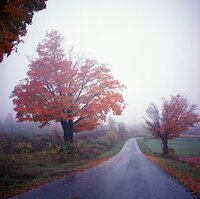
I felt like I needed to post some results as I was curious as to how much detail in the shadows D23 and Pyrocat-HD developer show on film. So, I shot these and basically found out there is little difference and I can't tell the winner.

I used the same lens, camera, angle, film, etc. My development time for the Pyro was 18min agitate ever 3 min for 1 min. For D23 it was solution A for 5 minutes, solution B for 3 minutes. The D23 negative looks a little "more developed" than the pyro, which might tip it over to being the winner.

I'm not sure if my test was 100% perfect or anything, but I figured I rarely have anything new to contribute to the forum, so I thought I'd try to throw out some new information because I couldn't find any comparisons between the two. Maybe one day I'll do a whole day just to test all my films with all my developers of choice and post it, but I somehow doubt I'll ever have the time and money to do it.
 

Attachments

  • d23.jpg
    d23.jpg
    235.1 KB · Views: 403
  • pyro.jpg
    pyro.jpg
    232.6 KB · Views: 361
It's really hard to tell from these scans, but the Pyro neg looks sharper on my monitor. The D23 has a nice soft quality to it, though.

Did you print them and then compare? I trust these are neg scans. If you really want to compare, print in both graded and VC and see if you can tell any difference.

- Thomas
 
How much time have you spent dialing in these two developers? The pyro one looks a little flat (on my monitor). Just wondering if you got it dialed in for your way of shooting, or was a first use test.

I edited this after reading Thomas' post, I agree the pyro does look a little sharper on my screen also.

Thanks for posting.

Mike
 
Last edited by a moderator:
Yes, it is a neg scan and I figured as much that a print will tell better, but considering it is so close, I probably won't bother. I was under the impression that it was going to be a big difference, so I figured the scan would be enough. Both were shot on the same settings and same sharpness adjustments in....I'd rather not say the word.

Maybe someone has had a different experience than I have with it?
 
Pyrocat-HD is a fine developer, but in these examples the D-23 looks sharper to me. They are very close, in any case. The shadow detail looks similar in both examples, but the shadows are just a bit more open in the D-23 shot. It may just be a matter of effective film speed being a hair higher in D-23. There are some things for which I would definitely prefer Pyrocat-HD to D-23, but here it is the other way around. I think that local contrast in the midtones can sometimes (not always) get a bit exaggerated with D-23, and in those cases Pyrocat-HD is generally better. In scenes where a staining developer has an advantage, Pyrocat-HD has an obvious advantange. But D-23 works well and seems to be the right choice for many people's work.
 
I am confused a little bit. You say, "...For D23 it was solution A for 5 minutes, solution B for 3 minutes.

but, D-23 is not a two solution developer...:confused:
 
Unless you've really figured out the very best times/temps/iso for each film/dev combination you're not really showing the difference between anything but negatives not reaching their full potential... developed in different developers.

If the d23 negs looks "more developed" than the pyro that's probably because the neg in pyro needs more development... Not to mention, if you're looking for what makes the best print then you should probably include that step as well. The stain of pyro negs and it's effects upon the print can be hard to judge looking at the negatives alone.

That said... it's always fun to experiment.
 
I have not worked with D23 that much, but my experience with Pyrocat leads me to believe that you would see a visibly "sharper" image from the Pyrocat developed negative at any reasonable enlargement.
 
Unless you've really figured out the very best times/temps/iso for each film/dev combination you're not really showing the difference between anything but negatives not reaching their full potential... developed in different developers.

If the d23 negs looks "more developed" than the pyro that's probably because the neg in pyro needs more development... Not to mention, if you're looking for what makes the best print then you should probably include that step as well. The stain of pyro negs and it's effects upon the print can be hard to judge looking at the negatives alone.


This is a great critique. I know it's not flawless by any means and the developers will obviously react differently with other films (in this case I used TXP320). But as I said before, I was hoping for a huge difference, but didn't get it. I'm not sure how much "potential" can be made with the negatives to make a huge difference. I also realize that I need to make a print to have a more accurate result, but I'm so far behind in my work that I have little time for experiments. I've found what works for me, so I'm sticking with it for now until I hit a wall and start some real experiments.
 
D23 can be used with a sodium carbonate second bath as well. grainier though, I am told. I use D23 straight and use replenisher. Lasts forever. And the replenisher DK-25R can be used as a clone of Beutler's using fresh sodium carbonate solution. Pretty handy, really. Great stuff, D23.
 
I used the D-23 as a one shot developer because it was relatively inexpensive. The developing times I used were from a Palladio Company brochure. D-23 was recommended because it kept shadow detail well with relatively long developing times needed for a platinum negative. There are those that said the amount of sulfite in the formula caused softer edges because of the solvent nature of the sulfite. This really didn't apply to me because I was making contact prints. I never worried about it with projection prints because I never really make big enlargements.
 
Kodalk and borax are not the same.

i always mess this stuff up ..

Sodium Metaborate = kadalk
Sodium Tetaborate = borax

gainer, can you tell me what the difference is,
and if you subsituted borax for kodalk in the second bath of DD23
what the outcome might be ?

as you can tell, i don't know much about this sort of stuff ...

thanks in advance!

john
 
Kodalk is equivalent to a mixture of borax and sodium hydroxide. 69 grams of borax plus 14.5 grams of NaOH in water to make a liter is a pretty good simulation of 100 grams of Kodalk in a liter of solution. One can get an initial pH between 9.3 and 14 by varying the ratios and fractions of borax and sodium hydroxide.
 
Interesting thread.
I have used D23 sol. A at 1:1 and am satisfied with the results only Sandy King suggests that it should be used as a two soln. developer.
I note that Ed Buffaloe gives bath B as 2gms. borax/ li. water. Is this much the same as using Kodalk?
Regards,
John.
 
Earlier in the thread I pointed out that there are two differing Divided D23 formula, in fact a number of other variants have been published.

Divided D23 is very similar to the Stoeckler two bath, the Leitz 2 bath, barry Thormton tweaked D23 etc. Some use Borax others use Metaborate. All these formulae pre-date Sandy King, he's quite late to the scene :D

Ian
 
Photrio.com contains affiliate links to products. We may receive a commission for purchases made through these links.
To read our full affiliate disclosure statement please click Here.

PHOTRIO PARTNERS EQUALLY FUNDING OUR COMMUNITY:


Ilford ADOX Freestyle Photographic Stearman Press Weldon Color Lab Blue Moon Camera & Machine
Top Bottom