• Welcome to Photrio!
    Registration is fast and free. Join today to unlock search, see fewer ads, and access all forum features.
    Click here to sign up

Crazy idea: Developing film in the wild?

Forum statistics

Threads
201,815
Messages
2,830,595
Members
100,968
Latest member
Enrico_S
Recent bookmarks
1

rubbernglue

Member
Allowing Ads
Joined
Aug 24, 2013
Messages
177
Format
Multi Format
Me and some friends are planning a trip in the mountains of norway in about a month, personally the whole idea came out of shooting 4x5" overthere and I would love if it was possible to develop sheets over there too!
I really dont like the idea of disposing chemicals in the wild which is why I searched and found "Rodinal Spezial" which seems to be able to develop a whole bunch of sheets in a single mix! For which I can think of right now, problematic situations include rinsing of the film before development since a lot of film uses a layer (annihilation?) and perhaps it is better to use a film which does not use such layer? Also the question regarding rinsing before and after fixing..

Films I currently have:
Ilford Delta 100
Bergger Panchro 400
Rollei RPX 400
Rollei Infrared

I have had thoughts of using like coffe filters or equivalent when rinsing but I am not convinced that it will make a difference.

Is there any experiences or thoughts with doing this or any other possibilites??
 

Gerald C Koch

Member
Allowing Ads
Joined
Jul 12, 2010
Messages
8,131
Location
Southern USA
Format
Multi Format
Agfa Studional is a fairly conventional PQ developer which uses TEA as the alkali. I wouldn't say that it is any more environmentally friendly than other developers of its type. BTW Rodinal Spezial is an incredibly stupid name dreamed up by Agfa marketing to play off Rodinal's reputation. However the new name only managed to confuse people
 

BAC1967

Subscriber
Joined
Oct 30, 2014
Messages
1,456
Location
Bothell, WA
Format
Medium Format
I don't know anything about Rodinal Spezial but Caffenol or Beerenol plus a salt fix would be non-hazardous. You could also filter water with one of those ceramic camping filters.
 

AgX

Member
Allowing Ads
Joined
Apr 5, 2007
Messages
29,972
Location
Germany
Format
Multi Format
Rinsing before development is a process I never ever heard of before joining Apug.
 

DREW WILEY

Member
Allowing Ads
Joined
Jul 14, 2011
Messages
14,873
Format
8x10 Format
Go back to the time when they not only had to develop film on the frontier, but coat their glass plates, expose them, and develop them before the
plate dried. I value the work put into getting my shots too much to gamble with anything other than developing under fully controlled conditions back
in the lab.
 
OP
OP
rubbernglue

rubbernglue

Member
Allowing Ads
Joined
Aug 24, 2013
Messages
177
Format
Multi Format
I am perfectly aware of that "Rodinal Spezial" is not teh same as Rodinal or R09, I have not tesdtes the "spezial" on my available film either, but I hope :smile:
There is also monobath, but I suppose it is not reusable?

rinsing before developing is something I have always done, and as anything else - the annihilation layer is also chemicals which may affect other chemicals - not the least when re-using the developer!

Go back to the time when they not only had to develop film on the frontier, but coat their glass plates, expose them, and develop them before the
plate dried. I value the work put into getting my shots too much to gamble with anything other than developing under fully controlled conditions back
in the lab.

Differences come in place where thinking of the environment was not an issue until we actually were aware about this... Many years ago people could just dispose of chemicals wherever and had no second thought about it.
I know well that it is fully possible to do this, but can nI do it without disposing of chemicals and be practical about it?
 

Gerald C Koch

Member
Allowing Ads
Joined
Jul 12, 2010
Messages
8,131
Location
Southern USA
Format
Multi Format
I don't know anything about Rodinal Spezial but Caffenol or Beerenol plus a salt fix would be non-hazardous. You could also filter water with one of those ceramic camping filters.

Enough already. You cannot fix film using salt. Any attempt to do so would seriously damage the film. This idea has been bashed in several threads.
 

Colin Corneau

Member
Allowing Ads
Joined
Nov 20, 2007
Messages
2,365
Location
Winnipeg MB Canada
Format
35mm RF
I'm assuming "annihilation layer" is an autocorrect for "anti-halation layer"..?

I seriously challenge anyone to spot a difference between film that was pre-rinsed and not. Ilford and Kodak don't recommend it, so...I'm inclined to agree with them!
 

BAC1967

Subscriber
Joined
Oct 30, 2014
Messages
1,456
Location
Bothell, WA
Format
Medium Format

NedL

Subscriber
Allowing Ads
Joined
Aug 23, 2012
Messages
3,420
Location
Sonoma County, California
Format
Multi Format
Which is beside the point because there's nothing toxic about sodium thiosulfate anyway. It's the dissolved silver after use that probably should not just be poured on the ground. Same would be true of the silver chloride if fixed with salt!
 
OP
OP
rubbernglue

rubbernglue

Member
Allowing Ads
Joined
Aug 24, 2013
Messages
177
Format
Multi Format
Which is beside the point because there's nothing toxic about sodium thiosulfate anyway. It's the dissolved silver after use that probably should not just be poured on the ground. Same would be true of the silver chloride if fixed with salt!

sodium thiosulfate, thats the antihallation layer or what? :redface:
 

Photo Engineer

Subscriber
Allowing Ads
Joined
Apr 19, 2005
Messages
29,018
Location
Rochester, NY
Format
Multi Format
Time will tell if the salt treatment gives permanence to films or papers. In the mean time don't be so accepting of this method.

As for use in the wilderness, Mark Osterman and Nick Brandreth run several types of workshops in the Adirondacks and Letchworth State Park in NY that are oriented towards getting good plates "out there".

See what they do.

PE
 
OP
OP
rubbernglue

rubbernglue

Member
Allowing Ads
Joined
Aug 24, 2013
Messages
177
Format
Multi Format
I'm assuming "annihilation layer" is an autocorrect for "anti-halation layer"..?

I seriously challenge anyone to spot a difference between film that was pre-rinsed and not. Ilford and Kodak don't recommend it, so...I'm inclined to agree with them!

When developing one-shot, I have hard to believe that it may be a problem but imagine the antihilation stuff being stored in the developer from one sheet to the next when re-using it, do you still think it will make no effect? Personally I seriously have no idea since I have no clue about what the anti-hallation stuff is.


Time will tell if the salt treatment gives permanence to films or papers. In the mean time don't be so accepting of this method.

As for use in the wilderness, Mark Osterman and Nick Brandreth run several types of workshops in the Adirondacks and Letchworth State Park in NY that are oriented towards getting good plates "out there".

See what they do.

PE
Interesting! I found about their workshop but yet to find anything about their methods or if they dispose of anything or if they have a car nearby or whatever to make help to dispose of used chemicals.. :wink:
 

Arklatexian

Member
Allowing Ads
Joined
Jul 28, 2014
Messages
1,777
Location
Shreveport,
Format
Multi Format
sodium thiosulfate, thats the antihallation layer or what? :redface:

Sodium thiosulfate, formerly known as sodium hyposulfate (which is not chemically correct), sometimes known as HYPO, used since the middle of the 19th century as FIXER. With the addition of other chemical/chemicals known as acid fixer. The latter is what is in the Kodak pouch with the label:"FIXER" on it........Regards!
 

Gerald C Koch

Member
Allowing Ads
Joined
Jul 12, 2010
Messages
8,131
Location
Southern USA
Format
Multi Format
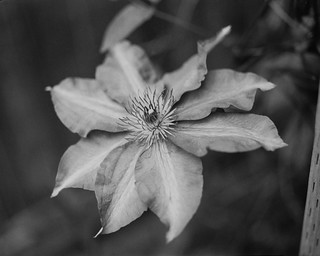
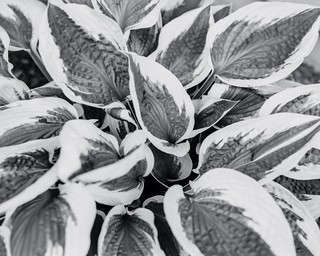
That's how I fixed this one:
Clematis in Caffenol by Bryan Chernick, on Flickr

And this one:
Hosta by Bryan Chernick, on Flickr

Both were a 48 hour fix in super saturated saltwater solution at room temperature. Mortons Iodized table salt from the grocery store.

Did you test for silver retention in the film? If not then you cannot say anything about whether the process is safe or effective.

After 48 hours I am amazed that the emulsion did not slough off the base.
 
Last edited:

BAC1967

Subscriber
Joined
Oct 30, 2014
Messages
1,456
Location
Bothell, WA
Format
Medium Format
Did you test for silver retention in the film? If not then you cannot say anything about whether the process is safe or effective.

After 48 hours I am amazed that the emulsion did not slough off the base.

If you want to do non-hazardous or less-hazardous developing in the mountains you're probably going to have to make some sacrifices in quality. I have no idea if salt fix is archival, probably not, mine look good after a year. The emultion stayed on fine after soaking for 48 hours with the films I used, nothing sloughed off.
 

MattKing

Moderator
Moderator
Joined
Apr 24, 2005
Messages
55,182
Location
Delta, BC Canada
Format
Medium Format
If you want to seriously damage a fresh water stream, dump a bunch of salt into it.

I would guess that the salt treatment doesn't fix film, but rather that it stabilizes it.

Most black and white photographic chemicals are quite benign. Damage will occur if concentrations are allowed to become to high, but if the concentrations are dilute, the impact will be negligible.
 

NedL

Subscriber
Allowing Ads
Joined
Aug 23, 2012
Messages
3,420
Location
Sonoma County, California
Format
Multi Format
It's the fixer.
Answered by the right person, thanks Theo! :smile:

I've been thinking quite a lot lately about something similar. There is a chance that in a couple years I will get a chance to go to India, specifically to Hampi where a photographer named Alexander Greenlaw made calotypes in the 1850's. If it happens, I would like to make some calotypes there too. The problem is that calotypes, especially the process that Greenlaw used, only last for about one day after being prepared. I doubt I can figure out a responsible way to discard used gallic acid, silver nitrate and used hypo in a relatively remote part of India. So I am going to put some efforts into trying to make the calotypes last longer, so that I might be able to makes some and then bring them home to develop.

One of the wonderful features of modern film is that you can expose your film and the latent image is stable for a long time. Even Pan-F is fine if you develop it reasonably soon ( weeks or a few months, not hours!! )

Coincidentally, I might also go to Norway next summer, and if I do I'm hoping to try to make some "long lasting" calotypes. Even when we stay in Oslo, I won't try to develop my film or calotypes... they will be fine if I bring them home.

I understand that it would be fun to develop film in the mountains. I guess if I had my heart set on doing that, I'd probably plan to carry 250ml of fixer in and back out with me, and maybe try to use a "friendly" developer (xtol?).
 
Last edited:

Gerald C Koch

Member
Allowing Ads
Joined
Jul 12, 2010
Messages
8,131
Location
Southern USA
Format
Multi Format
Mathew Brady had a portable darkroom which he used when photographing civil war battle fields. It was a necessity in the time of wet plates.
 

BAC1967

Subscriber
Joined
Oct 30, 2014
Messages
1,456
Location
Bothell, WA
Format
Medium Format
If you want to seriously damage a fresh water stream, dump a bunch of salt into it.

Or Silver for that matter. There is probably no way to dispose of any type of developing chemistry in the mountains without having some adverse affect. I definately wouldn't dump it directly into a stream. Pack it in, pack it out.
 
OP
OP
rubbernglue

rubbernglue

Member
Allowing Ads
Joined
Aug 24, 2013
Messages
177
Format
Multi Format
Answered by the right person, thanks Theo! :smile:

I've been thinking quite a lot lately about something similar. There is a chance that in a couple years I will get a chance to go to India, specifically to Hampi where a photographer named Alexander Greenlaw made calotypes in the 1850's. If it happens, I would like to make some calotypes there too. The problem is that calotypes, especially the process that Greenlaw used, only last for about one day after being prepared. I doubt I can figure out a responsible way to discard used gallic acid, silver nitrate and used hypo in a relatively remote part of India. So I am going to put some efforts into trying to make the calotypes last longer, so that I might be able to makes some and then bring them home to develop.

One of the wonderful features of modern film is that you can expose your film and the latent image is stable for a long time. Even Pan-F is fine if you develop it reasonably soon ( weeks or a few months, not hours!! )

Coincidentally, I might also go to Norway next summer, and if I do I'm hoping to try to make some "long lasting" calotypes. Even when we stay in Oslo, I won't try to develop my film or calotypes... they will be fine if I bring them home.

I understand that it would be fun to develop film in the mountains. I guess if I had my heart set on doing that, I'd probably plan to carry 250ml of fixer in and back out with me, and maybe try to use a "friendly" developer (xtol?).

Funny, I came home from India (bengaluru -> Ooty -> mysuru) just about two weeks ago, no calotypes done though :wink:
There will be a bunch of sheets and I need to keep track of all the sheets in order to replace the holders... well I really want to try and see how it works ... some how.
 

DREW WILEY

Member
Allowing Ads
Joined
Jul 14, 2011
Messages
14,873
Format
8x10 Format
Dumping any chemical into a creek in a National Park or Wilderness Area or protected watershed can deservedly get you in trouble. What you regard
as harmless might be viewed with horror by a limnologist or field biologist, not to mention the fellow filling his canteen a hundred yards down the creek. Silver salts can be quite bad for those tiny aquatic critters you don't even notice, on which fish depend, and I can think of various entire categories of popular "nontoxic" products (nontoxic to humans) that play utter havoc with aquatic life.
 

MartinP

Member
Allowing Ads
Joined
Jun 23, 2007
Messages
1,569
Location
Netherlands
Format
Medium Format
Dumping a developer containing phenidone in to an aquatic environment is vandalism. The safety sheet for these products mention the effects on fish and water life, so pretending that you didn't know will not work in court. Last time I went there, Norway was a country with a government and laws. Check local regulations concerning disposal of waste and then abide by them.

Developing negatives before leaving a country is not necessarily a bad idea, especially as you avoid many of the transportation questions associated with film by doing so. Check around for a hire-darkroom that you can use before leaving the country. Possibly the Ilford darkroom resource would have something, or ask here for suggestions of art-centres, colleges etc.
 

RauschenOderKorn

Member
Allowing Ads
Joined
Apr 14, 2016
Messages
814
Location
Bavaria, Germany
Format
Medium Format
Dont´t get me wrong, I do not advocate dumping chemicals from a B&W process in the wilderness. But we should look at this issue with some common sense: If one person develops a few sheets and dumps let´s say one or two quarts of spent fixer into a not too small stream, it gets diluted very quickly. A hundred yards down the stream, it would be probably so diluted you could not trace it any more. It is a different story if everybody does it, or if a large scale chemicals production facility or a B&W processing plant does it. The latter two being a problem for sewage water plants and the environment.

If you want to be environmentally friendly (and most probably compliant with environmental regulations), you can develop and fix during your trip and you evaporate most of the water from the fixer and the developer. That way, you can have a small bottle with spent fixer & developer you can dispose of properly. Yet this way, you still have to carry around all equipment and chemicals. Alternatively, look for a darkroom or two which are on your trip. Then you have a decent working environment and - if arranged beforehand - the chemicals you want/need will be available, and no carrying around of equipment.
 
Photrio.com contains affiliate links to products. We may receive a commission for purchases made through these links.
To read our full affiliate disclosure statement please click Here.

PHOTRIO PARTNERS EQUALLY FUNDING OUR COMMUNITY:


Ilford ADOX Freestyle Photographic Stearman Press Weldon Color Lab Blue Moon Camera & Machine
Top Bottom