• Welcome to Photrio!
    Registration is fast and free. Join today to unlock search, see fewer ads, and access all forum features.
    Click here to sign up

Conventional photos using X-ray film?

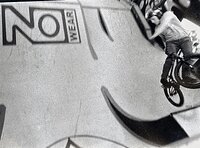
Lowlight freestyle

A
Lowlight freestyle

  • 0
  • 0
  • 54
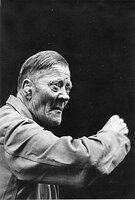
man arguing 1972

A
man arguing 1972

  • 7
  • 4
  • 114

Recent Classifieds

Forum statistics

Threads
203,026
Messages
2,848,775
Members
101,603
Latest member
xil
Recent bookmarks
0
Almost all the X-ray film I have used professional (in a lab) was double coated. Once we had ordered single coated by mistake, and this film was notched, just like regulair sheet film,

Best,

Cor
 
hI all

Here is a little add in to my first message here. In fact I answer to a PM from Murray but think it may help other.

Here is a list of Xray film photography made with kodak or Agfa Xray film coated on both face
Dead Link Removed
Dead Link Removed
Dead Link Removed
Dead Link Removed
Dead Link Removed
Dead Link Removed
Dead Link Removed
Dead Link Removed
Dead Link Removed
Dead Link Removed

All the print are quite charp even on glossy gelatin silver emulsion as there is an emulsion in contact to the paper . it seems to have more effect on the paper. Surely the second image may add some blur around the sharp image, but It is really hard to find.

there is different X ray film but most of them are double side coated to minimize the power of x-ray.

I use it and still use some for still life, not for outisde image due to the orthochromatic effect. It take me 2 film to calibrate with the kodak and 4 film for the agfa . at start I think kodak was 100 iso and it is 50 and when I switch to agfa I try the same but agfa is closer to 1000iso so I was a bit disturb , thinking it was my developer and that the film was fogged.


hope this help
 
I've never used x-ray film for pictorial purposes, but it looks like it could be interesting for still lifes if you can find some of the single coated stuff. The double coated materials would cause a bit of softness when exposed to visible light focused through a lens. After all, one the "back" side of the film is not in the same plane as the "front" side and that will lead to a focusing error. Granted, it's a small, but possibly significant, amount that will be exaggerated in an enlargment. Probably fine if you're confining the negatives to making contact prints.

But I noticed one thing missing in this thread that some folks might not know. The primary exposure on a piece of xray film is not made directly by the film's exposure to gamma radiation. The films are placed in holders that floresce in the presence of far smaller amounts of gamma radiation than would be otherwise needed to form the image directly. So you can think of an x-ray as a contact print. That's why a double coated piece of film doesn't loose much resolution in that application.
 
Even with double sided film there is no signifiant loss in resolution. All my still life work are quite similar in resolution to the work I did on clasic photo film. By the way I use platinum as final contact print which is less precise than GSP . But the few try I made on GSP show me that it is hard to see the loss of resolution.
 
Pedropolis, I'd bet that there are some European suppliers that'll send you samples. They may not be easy to find; it took me weeks to find CXS.

Don't get your hopes up from Mackie, either. I never got a response from them after my initial request.
 
Just got a free sample from CXS (see link in previous post above). I filled out online request. Came very fast. Will be testing it out in a few days. I requested and got the 8x10" size high-speed blue sensitive. To sound more "medical" like I called myself "McCluney Imaging" rather than McCluney Photography".
 
Just got a free sample from CXS (see link in previous post above). I filled out online request. Came very fast. Will be testing it out in a few days. I requested and got the 8x10" size high-speed blue sensitive. To sound more "medical" like I called myself "McCluney Imaging" rather than McCluney Photography".

Really excited to know how well this comes out, I've been tossing around the idea of using XRay film for portraits for a little bit now, and if 'high-speed' translates into anything around 100-400 ISO, I'll be very happy.
Not to mention, I love what that blue wavelength does to peoples faces.
 
Good to hear you had a good experience with the CXS free samples; though you really don't need to sound medical. I told them exactly what I was doing with it (photography). They sent the samples to me anyway.

I'll mention again that the film's base is blue and that the emulsion scratches really easily, so you'll have to take care with processing it.

And RobBo, I believe that the word is that the high-speed stuff is ISO 100-ish; my testing proves otherwise, but I'm most likely doing it incorrectly.
 
Gene,
Take a look at Judith McMillan’s 8x10 X Ray work. She is active in the Cleveland Museum of Art’s Friends of Photography group, draws her subjects from her day job at the Museum of Natural History, and is a great person. http://www.judithkmcmillan.com/. There is contact information on her site.

John Powers
 
I checked out JUDITH McMillans X-ray photography, and that is what it is, using an X-ray machine to expose the film. Not really relevant to what I want to do, which is using the film as camera film to street archictecture, and other objects in sunlight.
 
If it does any good, the x-ray films for mammographies have the emulsion in an only face.
 
Photrio.com contains affiliate links to products. We may receive a commission for purchases made through these links.
To read our full affiliate disclosure statement please click Here.

PHOTRIO PARTNERS EQUALLY FUNDING OUR COMMUNITY:



Ilford ADOX Freestyle Photographic Stearman Press Weldon Color Lab Blue Moon Camera & Machine
Top Bottom