
• Welcome to Photrio!
    Registration is fast and free. Join today to unlock search, see fewer ads, and access all forum features.
    Click here to sign up

Contacts look better than enlargements.

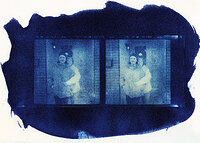
Cyanotype stereo card

A
Cyanotype stereo card

  • 0
  • 0
  • 0
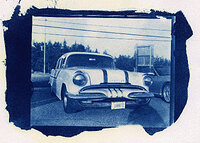
IMG_0025.jpeg

A
IMG_0025.jpeg

  • 0
  • 1
  • 0

Forum statistics

Threads
203,125
Messages
2,850,234
Members
101,690
Latest member
nisherii
Recent bookmarks
0

aste

Member
Allowing Ads
Joined
Apr 3, 2010
Messages
61
Location
Eastern Sier
Format
Medium Format
My contact prints (proofs) have a tendency to look better than my enlargements. My enlargements aren't very large 5x7 for 35mm and 8x10 for medium format. Enlargements start at same grade, lens height and time as the contact, but the enlargement never seems to look as good somehow. I'm not even sure how the enlargement looks worse, but somehow it loses something.

Is this just in my head, or is there something real going on here?

For that matter, why do my negatives look so much better than even the contact prints from them?
 
It might be going on in your head; if so, it is also going on in mine.

Now and then I get an enlargement that looks as good as a contact side by side, but it is only due to extensive effort to get there, along with luck. Contact prints seem to print readily and look great.

Often I will think I have made a fine enlargement, only to be disappointed the next day. Not due to "dry-down," more due to wishful thinking the day before as I was focusing on incremental improvements. Contacts rarely disappoint.
 
You may just like the look of a contact print. I see larger cameras in your future...
 
i have recently sold the last of my enlarger gear and now only contact print from 8x10 and 4x5 , for the same reasons as you mention.

contacts look better and allow for alt processes , and my darkroom now consists of a light bulb and a nice chair
 
Yes, contacts are nice but... if a 35mm contact looks better than a 5x7 enlargement, then there is probably something amiss. Perhaps you are seeing more contrast in your little contacts?
 
opposite way round , contact prints are more tonal, enlargement lose this appearance

I guess the OP's issue depends on what he means by "look better". A contact print should have nice tonality, but to my eyes a 35mm contact is so small that it will almost never "look better" than a decent enlargement at a modest size.
As David G said above, it may just be that the OP likes a good contact print and can deal with the fact that you almost need a magnifying glass to appreciate a 35mm contact.
On the other hand, there may be a problem, in which case contrast is a good place to start looking. A good contact print and a good enlargement will both display appropriate contrast. My suggestion is that the OP's contact prints may have appropriate contrast, while his enlargements do not. Just a thought.

Ian
 
My suggestion is that the OP's contact prints may have appropriate contrast, while his enlargements do not. Just a thought.

Ian

I agree with Ian, and will add another possibility. The contacts are no doubt sharp; but it's possible that the enlargements are not, and that can be due to multiple factors.
 
A good contact print will usually have better local contrast than a good enlargement even at the same size, and I think that counts for a lot of the attraction of contact prints.
 
Am I correct in reading that contrast, in general, varies based, not only on paper grade, but enlargement?
 
Am I correct in reading that contrast, in general, varies based, not only on paper grade, but enlargement?

It's not just enlargement, per se. You are adding another light source and optical system in the enlarger. Print contrast can be effected by the lens, the color of the light source, and whether it is a condenser or diffusion enlarger. Several variables, here.
 
It's not just enlargement, per se. You are adding another light source and optical system in the enlarger. Print contrast can be effected by the lens, the color of the light source, and whether it is a condenser or diffusion enlarger. Several variables, here.

So true. I think Brett Weston said that contact printing is a direct method of working. Of course, I thoroughly enjoy both enlarging and contact printing. The latter is certainly the more direct path.
 
Funny, I was thinking of asking the same question as the OP. I never paid much attention with 35mm, but since I started 4x5 and 6x7 I can really notice the difference. It's not sharpness. Hard to explain, but the contacts seem to jump out at you more. The tonal range and distribution seems different and better with the contacts.
 
Well, I'm glad to know I'm not the only one with this problem.

Anyway, as David said, there might be a bigger camera in my future. Until then, at least I have some ideas on where to look for improvements in my enlargements.
 
A good contact print will usually have better local contrast than a good enlargement even at the same size, and I think that counts for a lot of the attraction of contact prints.

indeed
 
A good contact print will usually have better local contrast than a good enlargement even at the same size, and I think that counts for a lot of the attraction of contact prints.

I will have to try this

how many poeple make 24x36 mm PRINTS?
 
Posted wirelessly..

Denis R said:
A good contact print will usually have better local contrast than a good enlargement even at the same size, and I think that counts for a lot of the attraction of contact prints.

I will have to try this

how many poeple make 24x36 mm PRINTS?

It's a bit easier if you shoot 4x5 or larger and can compare a contact print to a 1:1 enlargement.
 
I will have to try this

how many people make 24x36 mm PRINTS?

I have a Diana Camera neg I made a very nice carbon print from -- those negs are about 1.75"x1.75" (their image size are actually 42mmx43mm in size -- just measured). Window mounted on a 12x16 board.

And I have made platinum/palladium prints from 2.25"x2.25" (60mm square) negs from my Rolleiflex. With these I would like to explore hand-made books.

Vaughn

PS -- both processes are contact printing processes.
 
Another extremely small printer was Andre Kertesz - for most of his early years he was too poor and too mobile to have a permanent darkroom with enlarger, so many of his famous images are less than 3" on the long axis (he shot with a number of folding rollfilm cameras as well as 35mm).
 
If I'm not mistaken, all if not most of Edward Weston's prints are contact prints. I've heard his darkroom doesn't even have an enlarger, but just a bare light bulb and a switch. I do love the look of contact prints.
 
There are a lot of pitfalls to overcome in projection printing. A good projection print should compare favorably with a same-size contact print. You give up a little dynamic range to enlarger lens flare and give up some sharpness but you get better control over the edges (crop out 'evil black dust' and processing edge defects) and get less 'white dust' if you use a diffuser head. Also, dodging and burning are easier when projection printing and perspective control can be used. So, in my hands I prefer my 8x10 1:1 projection prints to contacts in most cases when both are done with silver based enlarging paper.

Picture shows the making of a 1:1 print using a process lens and perspective control.
DSCF4801.jpg
 
Last edited by a moderator:
One of the reasons a contact print looks better is the edge sharpness is greater. This is due to less light scatter since the negative is right on the paper, also it takes any "defects" in the lens out of the picture. Even columnated light does "bend" around the edges of the silver crystals in a negative, the more distance between the negative and the paper the more scatter and the "softer" the image.

You can see this by taking a piece of black paper, contact print it across a piece of paper, then place it in the negative carrier of your enlarger and make a print, you will notice the line is not as sharp on the enlargement.
 
One of the reasons a contact print looks better is the edge sharpness is greater. This is due to less light scatter since the negative is right on the paper, also it takes any "defects" in the lens out of the picture. Even columnated light does "bend" around the edges of the silver crystals in a negative, the more distance between the negative and the paper the more scatter and the "softer" the image.

You can see this by taking a piece of black paper, contact print it across a piece of paper, then place it in the negative carrier of your enlarger and make a print, you will notice the line is not as sharp on the enlargement.

Based on my experience at 1:1 the optical resolution of the projected line from the light/dark interface is going to exceed the resolution of the silver enlarging paper. So you won't be able to tell them apart.

Since the OP did mention "enlargement" or magnification, then I agree you are going to have less resolution, thats just easy math.

I guess my point is that comparing a contact to an enlargement is an apples-to-oranges comparison.
 
Last edited by a moderator:
Catherine Opie has a series of very small, and very beautiful, platinum prints. I think they were 6x9cm or something similar.
 
Look up "Callier effect" to understand why, if I'm not mistaken and my memory's totally shot - which is also possible...!
 
Photrio.com contains affiliate links to products. We may receive a commission for purchases made through these links.
To read our full affiliate disclosure statement please click Here.

PHOTRIO PARTNERS EQUALLY FUNDING OUR COMMUNITY:


Ilford ADOX Freestyle Photographic Stearman Press Weldon Color Lab Blue Moon Camera & Machine
Top Bottom
